

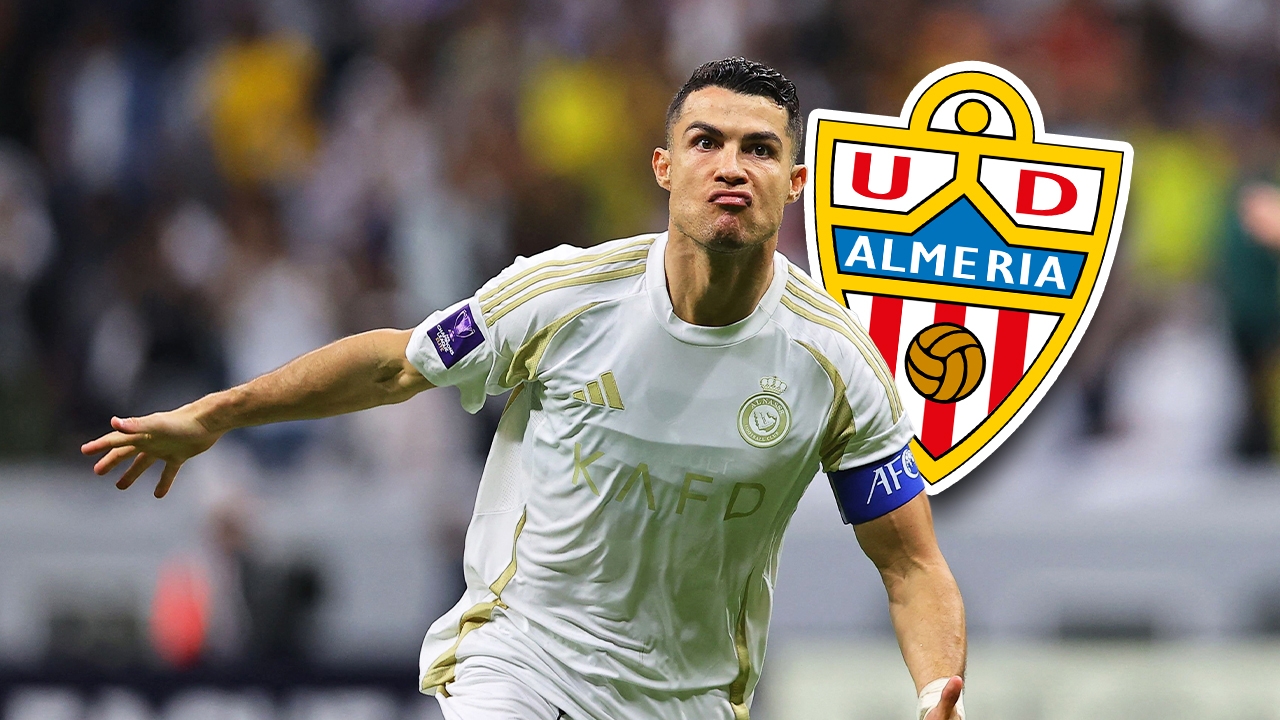
5 Reasons Why Cristiano Ronaldo Invested in Shares of Almeria, the Former Club of Thai Star Teerasil
On 26 Feb 2026 GMT+7, Cristiano Ronaldo purchased a 25% stake in UD Almería, managed by the Saudi investment group SMC Group. The club currently ranks third in Spain's Segunda División, the second tier, and is on track to challenge for promotion back to La Liga after relegation in the 2023–2024 season.
By acquiring a 25% stake, Ronaldo officially became one of the club's owners through his new company, CR7 Sports Investments.
Many may wonder: What kind of team is UD Almería, and why did CR7 invest in this club?
UD Almería is a professional football club from Spain, founded in 1989 originally as Almería Club de Fútbol before rebranding to UD Almería in 2001. Their home ground is the Power Horse Stadium (formerly Estadio de los Juegos Mediterráneos) with a capacity of about 15,000 seats, similar in size to the Thunderdome Stadium, home of Muangthong United.
For Thai football fans, UD Almería is familiar as the former club of Teerasil Dangda, known as “Mui,” the Thai national team striker.
Teerasil joined the team on loan in 2014 and had the opportunity to play in La Liga, becoming one of the few Thai players to experience Spain’s top league.
Where is UD Almería located within Spain?
The club is based in the city of Almería on the Mediterranean coast in the Andalusia region. Regional rivals include Sevilla, Málaga, and Granada.
Almería is a medium-sized city with strong tourism and agricultural sectors but is not a major football hub like Madrid or Barcelona. This means UD Almería has significant room for growth and development in the future.
History and Football Journey
Football in Almería dates back to 1909 with the founding of Almería Football Club. Since then, several clubs have emerged and dissolved, including AD Almería, which competed in La Liga between 1979 and 1981 before dissolving in 1982.
In 1989, UD Almería was founded to continue the city’s football tradition after the previous club ceased operations.
The club started in lower leagues and earned promotion to La Liga for the first time in the 2007–08 season, marking a key milestone and earning a reputation as a small club playing exciting attacking football.
Their first season in the top flight exceeded expectations, finishing 8th under coach Unai Emery, with Álvaro Negredo as the leading scorer with 13 goals—one of the club’s best seasons.
However, after this success, Almería struggled to compete with bigger clubs, resulting in multiple relegations back to the second division, earning a reputation as a “yo-yo” club moving between the top tier and the second.
With limited budgets, Almería has focused on a strategy of “low investment but player development,” becoming known for nurturing talent before selling players to bigger clubs. Notable players like Diego Costa and Álvaro Negredo started their careers here before moving on.
After SMC Group’s takeover, the club restructured its management and increased investment, aiming to return to La Liga and secure long-term stability in the top division.
Why did Ronaldo buy a 25% stake?
Key reasons include:
1. The club’s valuation is still modest
As a smaller team, its price is not as high as big clubs, offering significant growth potential.
2. A buy-and-sell model can generate profit
Spain’s football market is ideal for developing players who can then move to Europe’s major leagues.
3. The city is developing
Almería is growing in infrastructure and tourism.
4. La Liga remains a global brand
Despite being a smaller club, being part of the Spanish league system provides high exposure.
5. Modern football is an asset growth business
Investors view clubs as assets that can appreciate in value, not just trophies.
Is there growth potential? The answer is yes, but it requires good management.
Positive factors
Low wage base
Room to develop an academy
Spain’s league has a strong South American player market, a strength for Ronaldo.
The city lacks major regional football competition.
Risks
Relegation would cause immediate revenue loss.
The fan base is not very large.
The club depends heavily on player sales.
In summary, Almería is not a club focused on chasing championships but rather on seeking opportunities to increase value. If managed by acquiring young players at low cost, developing them into key team members, and selling them at two to three times profit, the club’s value could multiply significantly over the next 5 to 10 years.