

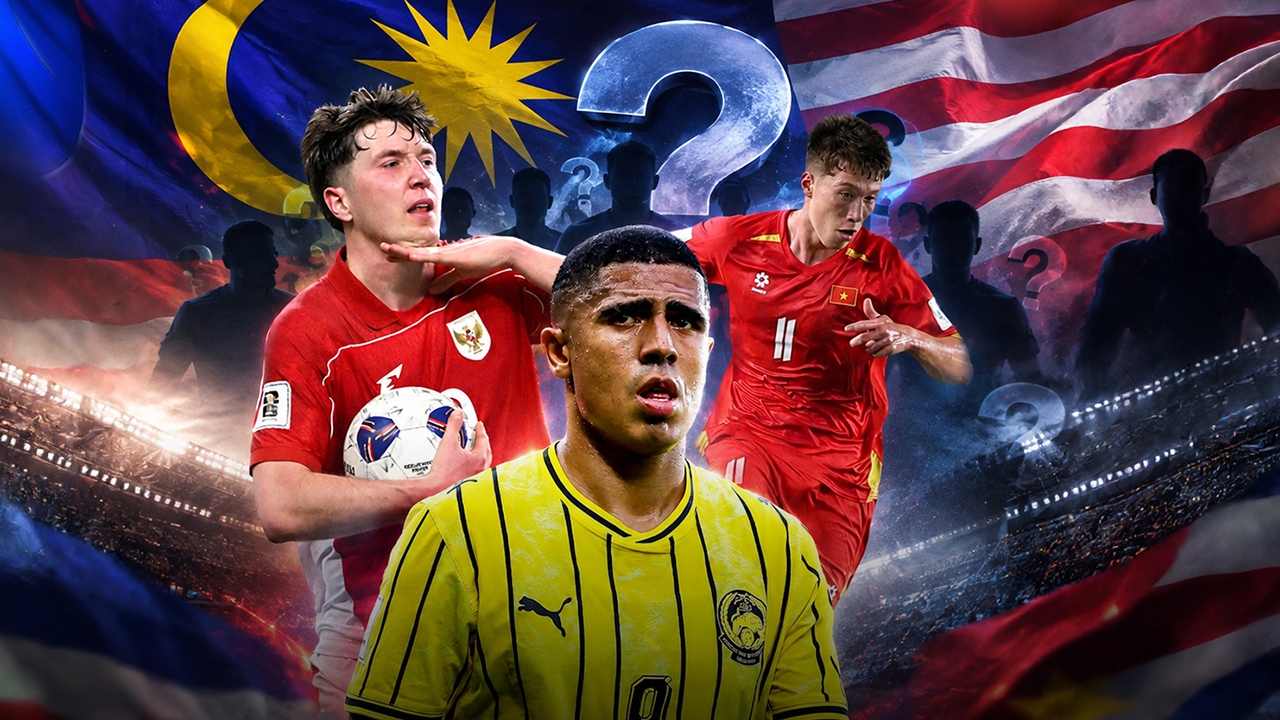
Malaysian media question whether using naturalized players might lead to a complete loss of football identity after the FIFA ASEAN Cup.
On 8 October 2026, following the conclusion of the FIFA ASEAN Cup 2026, Indonesia claimed the championship after defeating Thailand 4-2 on penalties (2-2 after 120 minutes). In this tournament, several nations fielded players of European descent or directly naturalized players, such as Indonesia and Vietnam, to elevate team performance in accordance with FIFA rules.
However, Malaysian media outlet The Straits Times published an intriguing article questioning the use of naturalized players, headlined "The New Face of ASEAN Football as National Teams Fill Up with Naturalized Players."
The article revealed that Indonesia has 18 players of foreign descent, all Dutch, making the team resemble a “Netherlands B team.”
The Philippines has 19 foreign-descended players, Malaysia 12 (9 of Malaysian descent and 3 born abroad), Vietnam and Bangladesh each have 8, Pakistan 7, Singapore 5, while Thailand has the fewest with only 3 players, all of Thai descent.
The question is, what is wrong with having naturalized players? France and Morocco are often cited as examples of national teams with players from diverse backgrounds. The key issue is whether naturalization is part of a football system or merely used to replace one.
For ASEAN football, it seems to be moving increasingly toward the latter. France’s national team is built on multiple generations of immigrant-born players, supported by a large and strong domestic football system. Players from immigrant families rising to the national team are part of a long-established football foundation.
Comparing this to Malaysia is like ethnic Chinese or Indian Malaysians born and raised locally joining the national team. This differs from ASEAN nations searching abroad for players because their own development systems fail to produce enough quality players.
If every national team weakness can be fixed by recruiting foreign players, then what are football associations developing? National teams differ from clubs; fans accept clubs signing players from anywhere globally, as that is the nature of club football.
Malaysian media further analyzed, asking readers to imagine a Brazilian player in Malaysia’s national jersey competing against a Dutch player in Indonesia’s shirt during the tournament. Some fans might wonder if they are watching a match between South American and European teams instead.
That Brazilian player is Bergson da Silva, who performed impressively. In his first tournament with the “Yellow Tigers,” he became the team’s top scorer with 4 goals. Coach Tan Cheng Hoe’s team scored 10 goals in the tournament, 7 of which came from naturalized players.
The article concludes that national teams should reflect the strength of their domestic football systems, not be used to mask system weaknesses. ASEAN football is showing fans the direction it is heading, and if this trend continues, ASEAN football might lose its identity entirely within the next 100 years.