

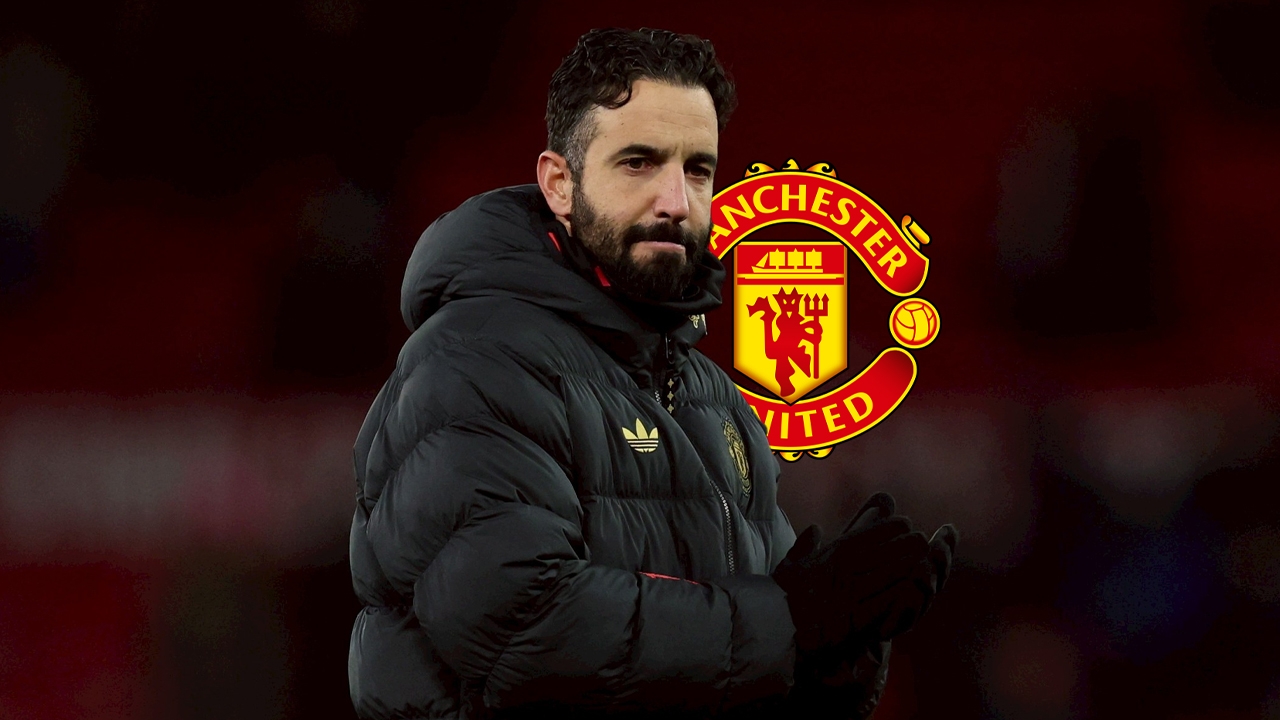
What happened? Manchester United has sacked Rúben Amorim as manager, revealing the reasons for his dismissal.
On 5 Jan 2026 GMT+7, David Ornstein and Fabrizio Romano, two renowned football journalists, reported that Manchester United, a prominent Premier League club, has decided to dismiss Rúben Amorim from his managerial position.
Rúben Amorim hinted at conflicts with the club’s executives in a post-match interview after a 1-1 draw away at Leeds United, stating, "I came here to be the manager of Manchester United, not just the head coach. I know my name isn’t Antonio Conte, Thomas Tuchel, or José Mourinho, but I am the manager of Manchester United."
"This situation will continue for another 18 months or until the board decides to make a change. I will not resign. I will continue to fulfill my duties until someone else replaces me."
Ornstein and Romano both confirmed that Manchester United decided to immediately remove Rúben Amorim, appointing former player Darren Fletcher, currently the U-18 coach, as interim manager.
Meanwhile, another well-known journalist, Ben Jacobs, revealed that senior executives were unimpressed by Amorim’s recent interview remarks, where the Portuguese coach clearly expressed that he should have more authority within the club.
Furthermore, Rúben Amorim was dissatisfied with Manchester United’s lack of activity in the January transfer market, contrary to the club’s earlier promises, especially after missing out on signing Antoine Semenyo, who appeared set to move from Bournemouth to Manchester City, their city rivals.
At the same time, the relationship between Rúben Amorim and Manchester United’s football director Jason Wilcox has deteriorated due to Wilcox’s frustration with Amorim’s inflexibility in tactics, as Amorim insisted on a three-defender system rather than adapting to a four-defender formation.