

A structural analysis of why "Manchester United" frequently changes coaches, spends heavily, but lacks direction after the era of "Sir Alex Ferguson".
The "Red Devils," Manchester United, have declined from being one of the world's greatest teams to merely competing for European qualification spots, eventually slipping to the bottom of the table since the departure of Scottish legendary manager Sir Alex Ferguson in 2013. This current state is not due to budget constraints but stems from a genuine structural failure in the club's management. This can be analyzed into five main points.
1. The club expanded based on "individuals," not a "system": Going back to Sir Alex Ferguson's era, the club was not managed like a modern football club with a sporting director system. All matters—player transfers, scouting young talents, discipline management, and tactics—depended solely on Ferguson himself.
When Ferguson and former executive chairman David Gill both resigned in 2013, the club entered a "structural vacuum," lacking a blueprint or central football philosophy to adhere to. As a result, every time a new manager was appointed, the club’s direction shifted entirely based on that individual.
2. Power structure focusing more on commerce than football: Under the Glazer family and Ed Woodward's leadership, the club prioritized financial performance and sponsorship acquisition over building a football team. Senior executives lacked deep football knowledge, leading to interference in coach appointments and player signings based mainly on "market value" or "reputation," alongside a lack of a technical structure. Despite being one of Europe's last top clubs to formally establish a sporting director role, this move lagged behind clubs like Manchester City, Liverpool, and Real Madrid by a decade.
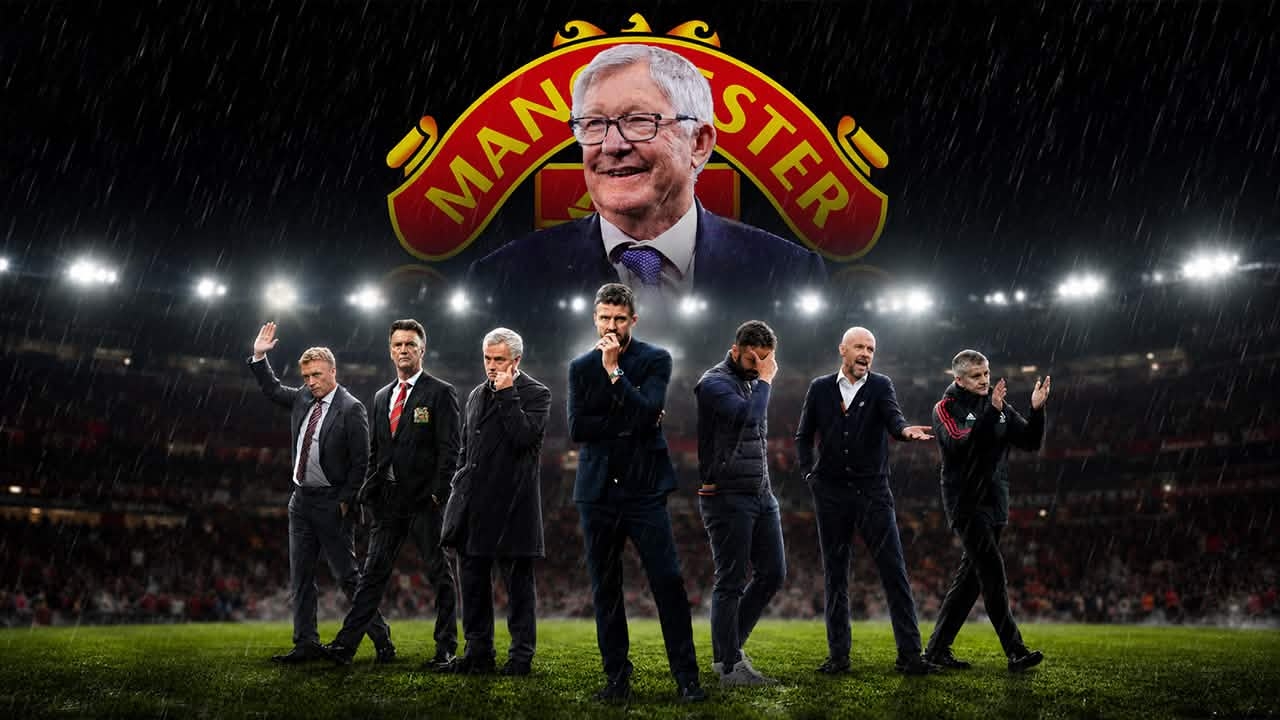
3. A "vicious cycle" in coach appointments and player transfers: Frequent managerial changes disrupted team building and caused huge financial losses without benefits. Tactically, the club shifted styles drastically from David Moyes, Louis van Gaal, Jose Mourinho, Ole Gunnar Solskjaer, to Erik ten Hag, each with vastly different approaches. This left a "multi-era" squad struggling to play cohesively. New coaches often had to overhaul the squad and repeatedly buy new players.
4. Distorted wage structure: Massive spending was not only on transfer fees but also on inflated wages. The club offered world-class salaries to players without proven long-term success or excessively high wages to attract star names.
This caused two problems: players locked into long, high-paying contracts lost motivation on the pitch, and when the club wanted to offload players not in the plans, no other club could match their wages. Manchester United thus had to bear wage burdens or regularly release players on free transfers.
5. Outdated organizational culture and facilities: Facilities like the Carrington training center and Old Trafford stadium lacked modern investments compared to rivals like Manchester City or Tottenham Hotspur. The culture tended to protect players over the club, with the club often siding with star players rather than managers, weakening coaching discipline and authority.
Over the past decade, Manchester United has spent like a "big club" but managed its structure and direction like a club without a blueprint. Reforming football management by involving the INEOS group to establish a direct football executive team, including sporting and technical directors, is a crucial first step toward fundamentally resolving these structural issues.