

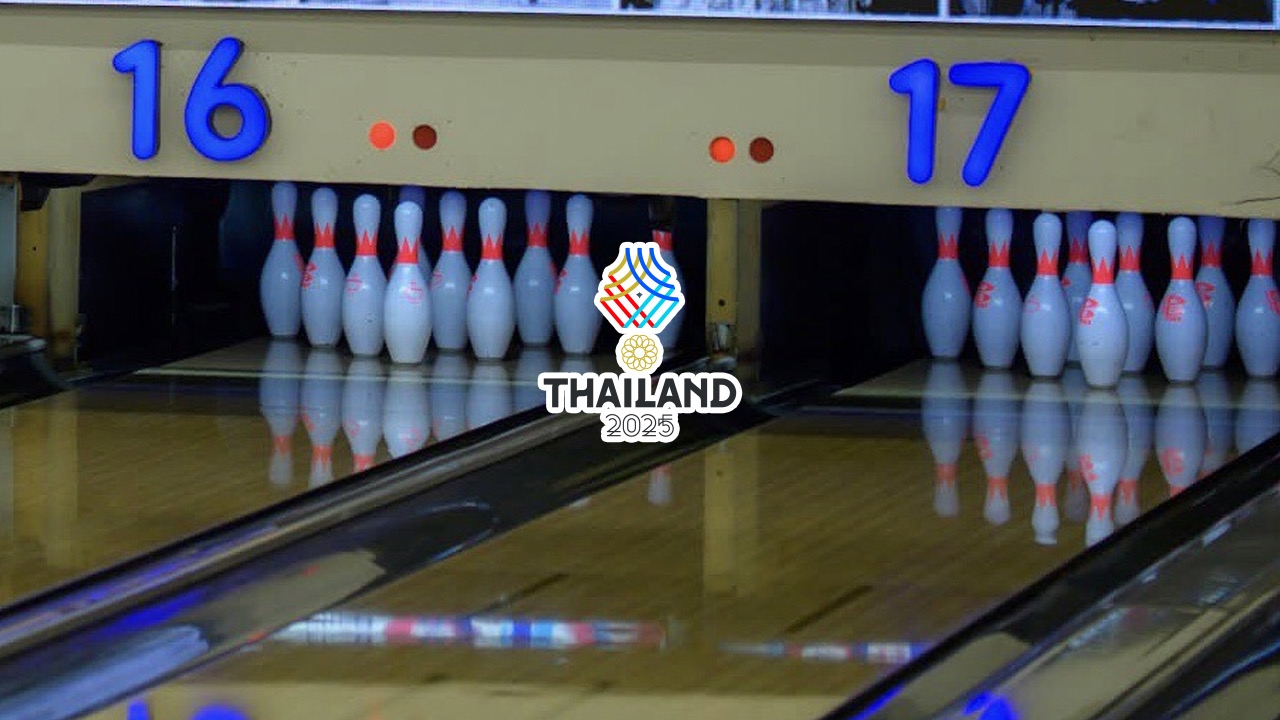
The Bowling Association clarifies the incorrect matchups at the 2025 SEA Games that led to a replay of the competition.
On 15 Dec 2025 GMT+7, the Bowling Association of Thailand explained that the incorrect pairing in the men's singles semifinals at the 33rd SEA Games was due to a technical error by the competition organizers, a responsibility directly under the Asian Bowling Federation. However, corrections were made according to the rules to ensure transparency, and all parties accepted the resolution without controversy.
Mrs. Suwalai Satruli, Secretary-General of the Bowling Association of Thailand, revealed that following reports of incorrect matchups in the men's singles bowling semifinals at the 33rd SEA Games, which led to a replay, the competition's organization was handled by the Asian Bowling Federation's competition department, supervised by Danny Santos. The Thai Bowling Association was not involved in this matter as it fell under the Asian Bowling Federation, with Vivian Liu, honorary lifetime president of the federation, and Michael Seymour, CEO of the World Bowling Federation, acting as referees.
For this SEA Games bowling event, the competition format changed to that used in the Asian Indoor Games, where eight athletes from the first round are paired off, with winners advancing to the semifinals and then narrowed to two for the final. Previously, the SEA Games awarded gold, silver, and bronze medals simultaneously to the top three finishers.
Mrs. Suwalai further explained that the root cause was a technical mistake in pairing. When the scoring department submitted names to the organizers, the pairs were swapped contrary to the initially set rules. The semifinals proceeded without verifying the correct rules because the SEA Games adopted the Asian Indoor Games format. The federation's rules department later checked the matchups and found that athletes competed in the wrong lanes and against incorrect opponents.
Allowing the competition to continue to completion would have caused greater damage than halting it mid-event. The athletes were explained the mistake and understood why the matches couldn't be finished as originally played, necessitating a replay with correct pairings. Ending the competition halfway was deemed better, and after the explanation, all athletes, officials, and spectators understood the situation fully.
"Reporters present at the event should have inquired about the cause before reporting, rather than guessing and publishing inaccurate information. They should seek the facts first to avoid misunderstandings among those unaware of the full context," she said.