

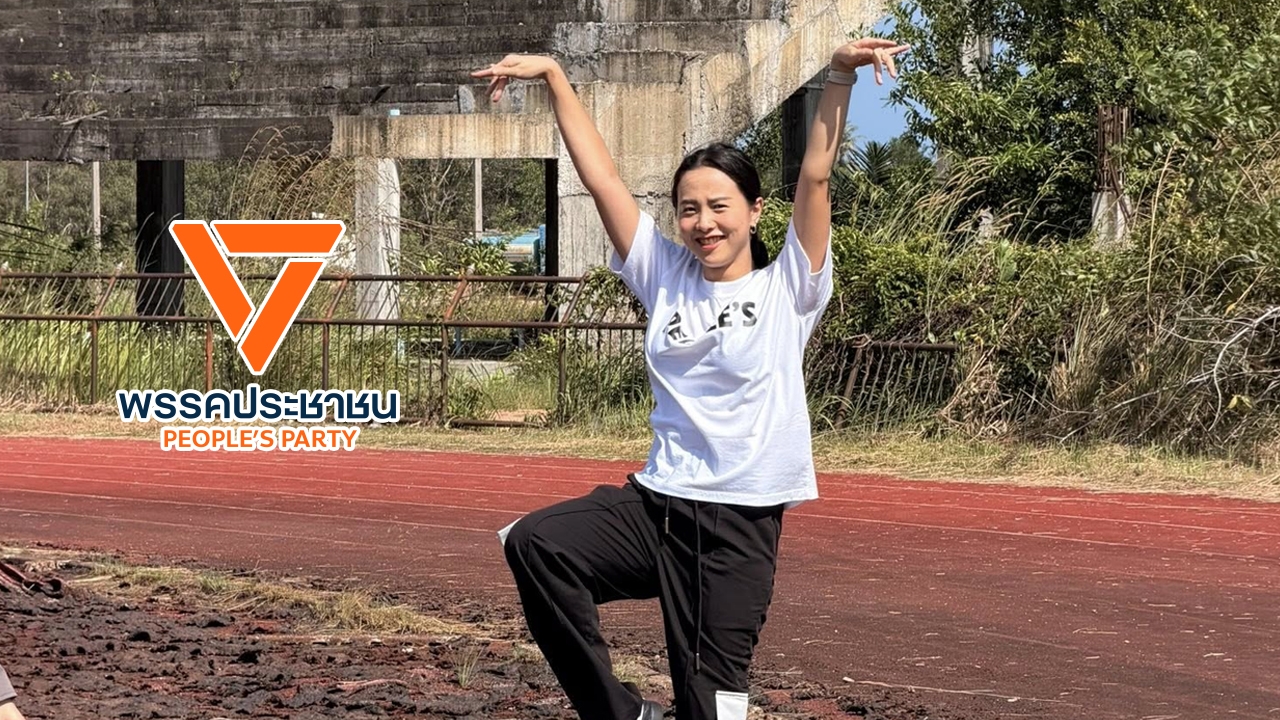
2026 Election: The People's Party's sports policy highlights professional sports management to stimulate the economy.
On 2 Feb 2026 GMT+7, we examine the sports policy of the People's Party ahead of the general election for the House of Representatives and referendum, both scheduled on the same day at the same polling stations, Sunday, 8 Feb 2026 GMT+7, from 08:00 to 17:00.
The People's Party promotes a professional approach to sports management to boost the economy, linking sports with tourism, hosting international-standard events in secondary cities to spread income, and subsidizing budgets to create strong professional leagues through broadcast rights.
Why address these issues?
The vulnerability of athletes' careers: The lack of a strong professional league system leaves athletes with unstable incomes, short career paths, and often facing difficulties after retirement.
Substandard infrastructure: Many sports stadiums and exercise areas suffer from neglect, abandonment, or incomplete construction due to corruption, resulting in a shortage of standard facilities for competitions, training, and public recreational activities.
Patronage system and corruption: Non-transparent athlete selection and budget management mean resources do not fully reach the athletes themselves.
Loss of economic opportunities: Thailand has yet to fully capitalize on "sport tourism," particularly hosting world-class events in secondary cities to distribute income and stimulate local economies.
What will be done?
Four key developments for Thailand's sports:
- Promote professional domestic sports by subsidizing budgets to support competitive leagues for popular team sports in Thailand, such as football, volleyball, and basketball.
- Develop youth systems by supporting state sports schools and private sports academies, and regularly holding national youth sports competitions annually to provide consistent competition opportunities for young athletes.
- Link sports with tourism by supporting competitions that both athletes and the public can join, held in major and secondary cities to promote tourism, such as running and triathlon events, organized to meet international sports event standards.
- Upgrade sports stadiums to meet standards for international competitions and improve recreational sports facilities to serve the needs of local communities.
How to achieve success?
1. Provide special subsidies to targeted sports associations to support their affiliated sports clubs, possibly by purchasing broadcast rights and airing through state TV channels, enabling associations to allocate benefits to clubs for team management.
2. Hold annual national youth sports competitions to ensure continuous training and competition, including government-prioritized sports like football, which would be organized separately.
3. Employ professionals to organize events to international standards by contracting qualified private companies certified by international organizations to hold sports competitions that support tourism.
4. Group and rehabilitate sports stadiums, allocating budgets to upgrade each type of stadium according to goals, divided into:
Competition stadiums: invest in upgrading technology and standards to support international-level competitions.
Recreational stadiums: focus on cleanliness, safety, and accessibility for local people, with clear maintenance budgets to prevent neglect.
