

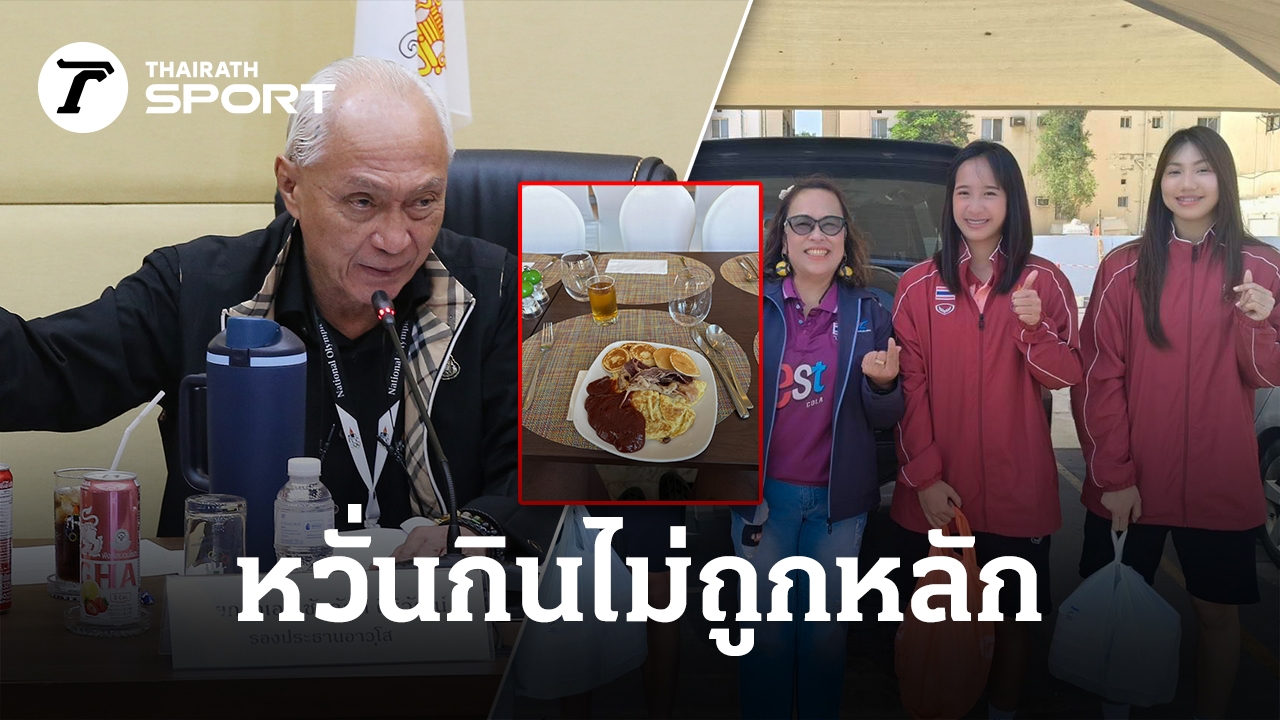
"Chaipak," Vice President of the Thai Olympic Committee, warned the Sports Development Fund against transferring allowances directly to athletes, pointing out this approach misses the real problem and is misguided.,
On 24 Feb 2026 GMT+7, "Big Nat," Colonel Chaipak Siriwat, led the association's executives to discuss the Sports Development Fund board's policy to adjust the method of transferring allowances directly to athletes, to be tested in the National Youth Games and the Asian Beach Games. He indicated this method does not address the core issue.
He emphasized that the main problem has been delayed allowance payments, causing cash flow shortages for all associations. He warned this new approach might create fresh problems due to unclear systems regarding payment schedules, meal management, accommodation, and training expenses.
"Big Nat," Colonel Chaipak Siriwat, Vice President of the National Olympic Committee of Thailand, chaired the meeting in place of Mr. Thana Chaiprasit, Secretary-General of the committee, at the National Olympic Committee meeting room on 24 Feb 2026 GMT+7. Also attending were Mr. Chonlirat Jantrubeksa, Deputy Secretary-General and Head of the Thai National Team for the Asian Beach Games, along with presidents and representatives from all 16 sports associations sending athletes to compete.
At the meeting, Colonel Chaipak informed attendees that the Minister of Tourism and Sports, Mr. Attakorn Sirilayakorn, who chairs the Sports Development Fund, has a policy to revise the allowance and compensation payment plan to athletes by transferring funds directly to their bank accounts instead of through sports associations as before. This system will be piloted with athletes competing in the 41st National Youth Games in Surat Thani and the 6th Asian Beach Games. The minister aims to prevent issues of withheld athlete allowances.
"Personally, I believe this payment system needs a clear framework. The daily athlete allowance of 900 baht is divided into 300 baht for accommodation, 300 baht for food, and 300 baht for training allowance. According to the Sports Authority’s high-performance sports development division, the fund combines the food and training allowances into 600 baht, which will be transferred directly to athletes. I foresee problems, especially for team sports, since training camps gather the whole team, and associations arrange nutritionally balanced meals based on sports science. If the fund pays directly to athletes, I'm unsure if they will use the money to purchase proper, scientifically appropriate nutrition."
Colonel Chaipak further stated that the real issue with direct transfers is the timing and frequency of payments. In many sports, if athlete lineups change or athletes receive money but do not attend training, what is the protocol? These concerns stem from the ongoing problem of delayed payments by the fund, which has prompted complaints from all sports associations.
"For example, the Asian Beach Games last about one month and 17 days starting 1 March. When will the fund pay the athletes? If payment is made early, how can they be sure athletes will actually attend training? If payment is mid-month or end-month, athletes still need to cover daily expenses beforehand. Who is responsible for that? It falls to the sports associations to advance those costs, yet funds will be transferred directly to athletes. How will this be managed?"
The sports association executives attending the meeting agreed the policy attempts to solve one problem but creates new ones. They stressed that associations do not have issues with the fund itself, but consistently demand timely payment of athlete allowances every month without delays like those experienced during the 33rd SEA Games, which required repeated follow-ups and left payments outstanding for months.
Mr. Nipon Chawalitmontri, President of the Basketball Association of Thailand, said that association presidents and boards serve with honor and dignity, not to exploit athlete allowances. The basketball association prioritizes sports science and athlete nutrition, as it directly affects their physical condition. Beyond the 300 baht daily food allowance from the fund, the association budgets additional funds to hire foreign sports scientists and provide meals that meet professional athlete nutritional standards, as the 300 baht alone is insufficient.
"If allowances are transferred directly to athletes, they will receive the full amount, but how can the fund ensure the 300 baht for food is spent on proper nutrition according to sports science? Team sports athletes train and rest together; how will this be managed? While I do not oppose piloting the system, in my opinion and that of all association executives, we do not support it."
Mr. Chonlirat Jantrubeksa, Head of the Thai National Team for the 6th Asian Beach Games, said he also disagrees with direct allowance transfers to all athletes. He believes this does not address the real problem, as each association already has good management systems. The main issue has been delayed payments and outstanding allowances from the fund, which cause financial difficulties for the associations.
Mr. Chonlirat added that preparations for Thai athletes at the 6th Asian Beach Games are complete with participation from 16 sports associations, totaling 188 athletes and 275 including staff. Based on goals set with the high-performance sports division, Thailand is expected to win at least 15 gold medals: 3 in sepak takraw, 3 in sailing, 3 in athletics, 2 in jujitsu, 2 in rowing, and 1 each in volleyball and kabaddi. The event is scheduled for 22-30 April 2026 GMT+7 in Sanya, People's Republic of China.
Photo credits for food images: Mine Wai Run Malee V2 and Thailand Volleyball Association.