

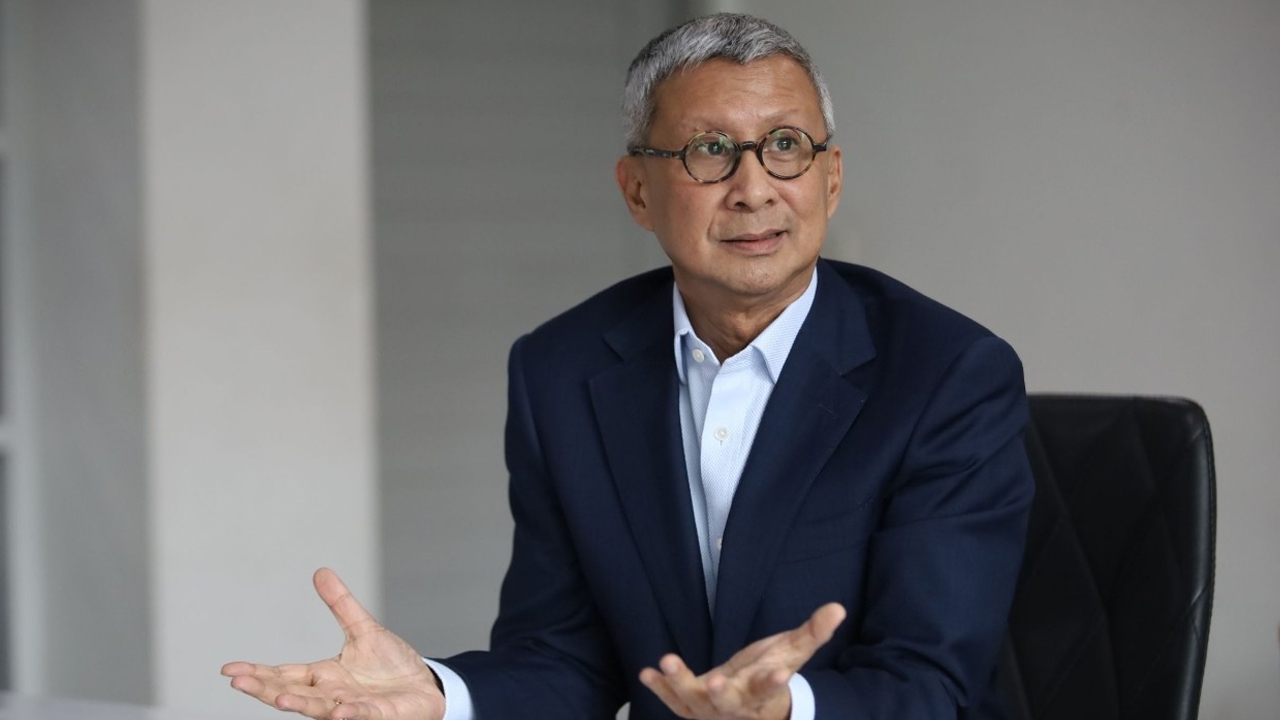
The Thai Sports Association has reached a breaking point, uniting to submit a protest letter to the "Ministry of Sports," demanding changes to the "fund allocation" due to receiving insufficient funds causing widespread hardship.
On 5 March 2026, at Meeting Room 1 of the National Olympic Committee of Thailand under the Royal Patronage (Amphawan House), Associate Professor Pimon Srivikorn, Chair of the National Olympic Committee of Thailand, presided over the committee meeting.
Associate Professor Pimon Srivikorn said a key agenda was that Her Royal Highness Princess Sirivannavari Nariratana Rajakanya accepted the role of honorary advisory chair of the National Olympic Committee under Royal Patronage. Today, she sent Major General Ratjai Yuenyao, the royal sports scientist, to represent her at the meeting and bring her messages. The princess sent encouragement to all committee members in their sports work and urged more international-standard operations, comprehensive system development, and greater involvement of sports association executives at the international level to advance the nation's sports sector, especially sports that previously achieved international success. She hopes such sports will regain achievements, like swimming, which performed well in the 33rd SEA Games. The Olympic Committee will take these suggestions for future improvements.
Additionally, the meeting resolved to appoint Mr. Suchai Pornchaisakudom, president of the Lawn Tennis Association of Thailand and former Olympic Committee presidential candidate, as an advisor to the National Olympic Committee. Mr. Thana Chaiprasit was also appointed as an expert advisor.
Regarding Thailand’s bid to host the 5th Summer Youth Olympic Games in 2030, Associate Professor Pimon said discussions on the likelihood of being selected as host have taken place. A working group will meet Prime Minister Anutin Charnvirakul on 11 March to determine if the government wishes to host the event. The budget required is substantial—around 6 to 7 billion baht—covering commitments up to the event year. The decision ultimately depends on government approval.
“Big A” revealed that the meeting discussed various sports associations’ hardships due to reduced funding from the National Sports Development Fund, which has made it impossible for associations to operate normally. Typically, the Elite Sports Development division of the Sports Authority of Thailand (SAT) receives over 2 billion baht annually, but this year the amount was cut to just over 1 billion baht. Each association is facing serious problems. Despite requests to reconsider the budget allocation, only slight increases were granted. Consequently, many associations are preparing to collectively submit a letter to the Ministry of Tourism and Sports, urging a review and reallocation of the fund.
The Olympic Committee chair said, “Many associations are in deep trouble because the Sports Development Fund’s allocation is insufficient. The problem is that the fund’s structure has become quite distorted. The fund decides how much budget the SAT receives and for what activities, causing many issues.”
“We discussed the Elite Sports division, and spoke with Deputy Preecha Lalun (Deputy Governor of SAT for Elite Sports). Originally, over 2 billion baht was needed to support all associations—covering competitions, participation, scoring, prize money, training camps, and national championships. This was from over 4 billion baht that the fund holds annually. However, the fund allocated only a bit over 1 billion baht, which is insufficient, making operations impossible. About 1-2 weeks ago, I learned that the budget for organizing national championships—which every association must hold to select national team athletes—was only around 10 million baht for 90 associations.”
“Naturally, we have protested to the fund. We have “Sergeant Major Yod,” Major General Intharat Yodbangtoey (Honorary President of the Weightlifting Association), as the Olympic Committee’s representative on the fund. He has tried to negotiate adjustments, cutting here and increasing there, but the issue remains unresolved. Although the allocation increased somewhat, it is still not enough to operate properly. Many associations have united and signed a letter on behalf of their associations—almost all 90 have signed—to send to the ministry, expressing their distress and hoping for change.”
“From our perspective, many activities seem less important compared to elite sports, which earn international medals. For activities aligned with government policy, we urge the fund to reconsider and suspend those, redirecting funds to support athletes instead. We will have to wait and see. The situation was already difficult in 2025 after the SEA Games, and in 2026 the problems remain unresolved.”
The latest resolution from the National Sports Development Fund board approved trial payments of allowances and meal fees directly to athletes participating in the National Youth Games and Asian Beach Games. Associate Professor Pimon Srivikorn, chair of the National Olympic Committee and president of the Taekwondo Association, expressed disagreement with this approach. He noted that the 600 baht direct payment includes 300 baht for meals. While the 300 baht allowance can be paid directly without issue, many associations oppose the direct payment of meal fees because they manage nutrition for athletes. For example, in taekwondo, which he oversees, meals are scientifically planned according to sport type, with athletes eating together three times daily. The actual meal value exceeds the 300 baht allocated per athlete.
“I see that the main problem in the past was the fund’s delayed payments, which caused difficulties in associations’ management of athlete care. Each association is responsible for developing athletes with potential and efficiency toward excellence. Paying athletes directly with meals included affects associations’ management flexibility, meal control, training attendance, absences, and athlete substitutions—all requiring document changes. Recovering overpaid money could be difficult, creating further problems. This complicates the work of sports associations.”
Associate Professor Pimon added that, personally, the previous system—disbursing payments via sports associations, especially for meals—worked well. Direct payment of the 300 baht allowance to athletes is acceptable. However, the fund should improve payment procedures to be faster and timely. The past delays caused months of arrears, forcing associations to advance payments to athletes, as happened during the SEA Games, when athletes only received full payments after the event concluded.
The senior Olympic official firmly opposed the direct transfer of meal money to athletes, stating that only allowances should be paid directly. Meal management is best handled by sports associations, allowing proper control and nutritional care across three meals daily. The actual meal cost exceeds the 300 baht budget per day. He emphasized that the best solution is for the fund to pay on time and avoid past delays.
Furthermore, Associate Professor Pimon reiterated the fund board’s recent decision to trial direct payments of allowances and meal fees to athletes participating in the National Youth Games and Asian Beach Games. He voiced disagreement with this approach, explaining that the 600 baht payment includes 300 baht for meals and 300 baht for allowances. While direct payment of allowances poses no problem, many associations oppose direct meal payments because they manage athletes’ nutritional needs. For example, in taekwondo, meals are scientifically tailored to the sport, with athletes eating together three times daily. The meal cost exceeds the allocated 300 baht per athlete.
“I believe the main issue has been the fund’s delayed payments, which have hampered associations’ management of athletes. Each association’s role is to nurture athletes to achieve potential and excellence. Direct payment including meals affects associations’ operational flexibility, meal supervision, training attendance, absences, and athlete changes—all requiring documentation updates. Recovering overpayments could be problematic, creating additional challenges for sports associations.”
Associate Professor Pimon added that, in his view, the previous fund payment system was effective—funds flowed through sports associations, especially for meals. The 300 baht allowance could be paid directly to athletes. However, the fund should improve payment procedures to ensure prompt and timely disbursement. Past delays caused months of arrears, forcing associations to advance payments to athletes. For example, after the SEA Games, athletes only received full payments well after the event had ended.