

The Thailand national team has an important mission in the final qualifying match of the 2027 Asian Cup against Turkmenistan on 31 Mar.
The sole objective is to "win" to secure a spot in the final tournament; anything less guarantees "chaos in the squad!!!"
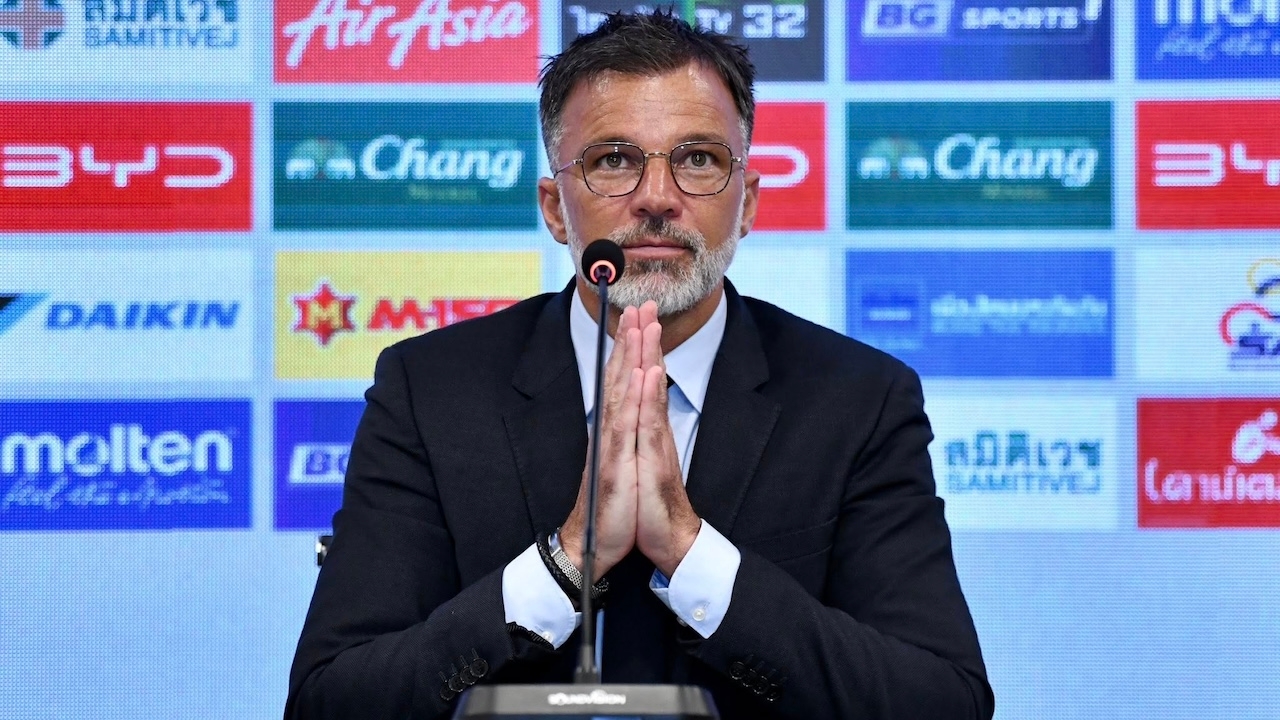
Anthony Hudson, head coach of the "War Elephants," plans to announce the 23-man squad to face Turkmenistan on 12 Mar.
Currently, everyone—from insiders to outsiders—is discussing the list of potential players who might be selected.
This issue has been discussed many times before, highlighting dissatisfaction with the way Thailand’s national team call-ups are handled.
The process requires the Football Association to send a letter to the clubs listing preliminary players under consideration.
Then, clubs must reply in writing to the Association to "confirm release of players to join the national team."
Once clubs respond, the national team staff reviews who has been cleared before officially announcing the squad.
This step is where significant issues arise.
First, it’s unclear if other countries do this, but in Thailand it’s common to publicly reveal who is on the preliminary list before official call-ups.
Some clubs proudly publicize this as an honor, celebrating their players’ potential selection to the national team.
However, this sometimes causes misunderstandings among fans or stakeholders, who assume the players are definitely selected when they are only on a preliminary list.
This topic has been controversial for a long time, but lately people have come to accept that this is how Thailand’s national team operates, so the drama has lessened.
More importantly, sending letters to clubs first can sometimes lead to refusals that leave unresolved questions.
The concept of “FIFA Days” requiring clubs to release players doesn’t really apply in Thailand; this has been an ongoing issue.
Whatever the reasons, the process often ends at the stage where the Association requests players from clubs—if the club refuses, that’s the end of it.
Fans often wonder and don’t understand why some in-form players are not called up, sometimes even criticizing the national coach.
What they don’t realize is that the national team wants those players, but the clubs refuse to release them.
Therefore, this call-up method should be abolished and replaced with a more standardized, international approach.
It is correct for the national team to coordinate with clubs to check who is available or not, rather than blindly selecting injured players.
But ultimately, if the national team wants certain players, they should officially announce the final squad.
The public will then clearly know which players the team intends to have—clear and unambiguous.
If a player is truly unavailable, the club should submit an official refusal letter following proper procedures.
Whether an injury is genuine or not should be assessed by the national team’s medical staff to keep everything transparent.
When similar issues arose strongly before, the Association said they would revise the call-up system, but so far nothing has changed.
So, we wait to see if this time "Hudson" will get all the players he wants.
It appears that Hudson’s squad will not differ much from before, mostly the team that routed Sri Lanka in the previous game.
However, there will be changes in positions, such as forward Teerasil Deenadayalueng being suspended.
Fortunately, attackers Supachai Jaided and Suphanat Mueanta have recovered in time and are likely to return.
Also, Anan Yodsangwal, who withdrew last time due to injury after being called up, is expected to be ready.
In defense, Jonathan Khemdee, who had personal commitments last round, is likely to be considered again.
The fitness of Teerathon Bunmathan, who has a broken nose, remains uncertain for timely recovery.
The final 23-man Thailand squad for the match against Turkmenistan will be announced on 12 Mar.
-Bubble-