

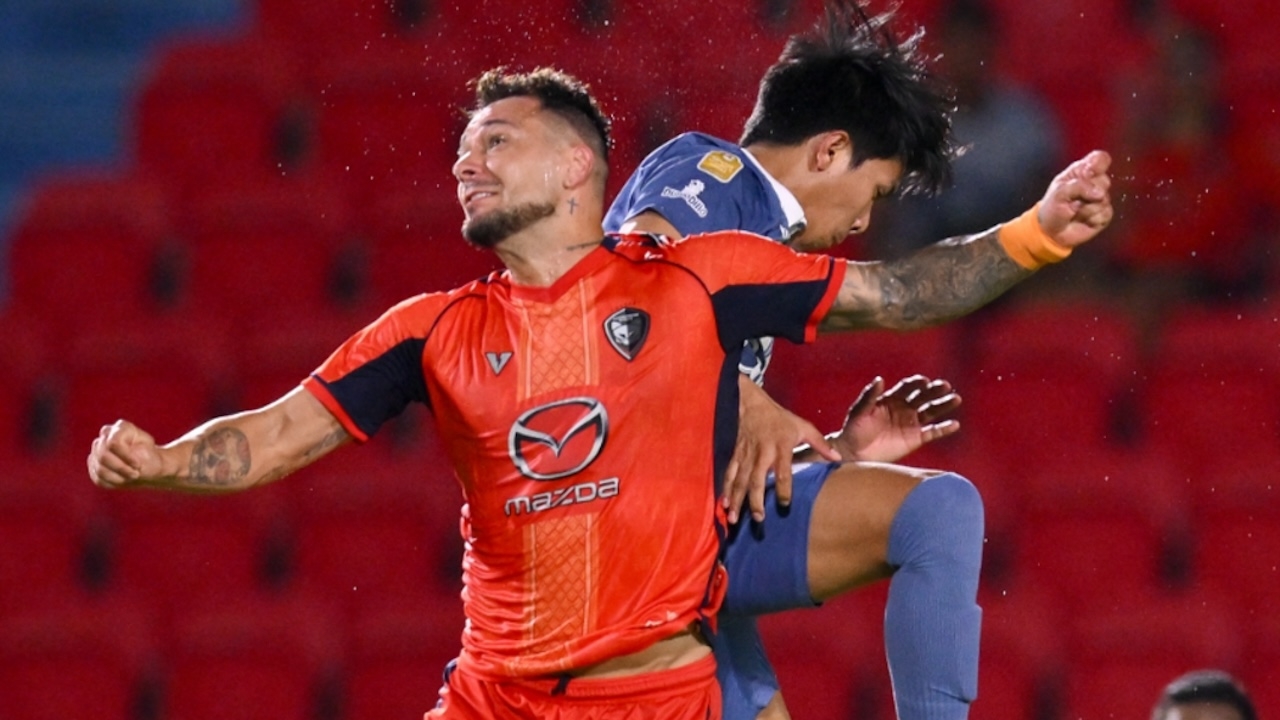
Thailand's top football league, Thai League, just turned 30 years old on 17 March.
The historic first match of the Thai League took place on 17 March 1996, featuring a game between Air Force and Kasikorn Bank.
Since that day until now, Thai League football has experienced a wide range of stories, truly encompassing every flavor.
The Football Association of Thailand started the Thai League by transforming football from a tournament format into a league system.
In earlier times, the King's Cup Class A football was the highest honor for Thai club football.
The early Thai League thus took teams from the King's Cup, which had played in tournament groups, and placed them into a league format.
Most clubs were organizations, including both long-established teams in Thai football and newer teams just starting to form.
The competition was organized with efforts to become professional football, emphasizing rights and revenue generation.
However, it must be admitted that in the beginning, Thai League was still difficult to be fully professional for both organizers and players.
Especially the organizers, the Football Association of Thailand, who continuously experimented and learned through trial and error.
From the competition format where in the first season the top four teams played playoffs to determine the champion,
later changing to deciding the champion by total points at the end of the season as is usual.
But the points system caused drama with abnormally high goal tallies, so the tiebreaker changed from goal difference to head-to-head results.
Until the current season, they have reverted to using goal difference again as the tiebreaker when points are equal.
Thai League also once changed the competition to be played at a neutral venue to try to boost attendance and make it easier to watch multiple matches.
This was an attempt during the league's lowest popularity to increase ratings, but after trying without success, it returned to the home-and-away format.
Two major turning points helped Thai League develop strongly and grow.
The first was the merger that combined the Provincial League into Thai League.
Thai League's strength was in team and player quality, while the Provincial League was known for its local fanbases attracting supporters.
When both leagues merged, Thai League became a truly nationwide league, a professional football league with a solid structure.
The second was the Asian Football Confederation's directive to establish Thai League Company and require all clubs to register as legal entities and obtain club licensing.
This forced many organizational clubs to close as they could not register as companies.
More importantly, club licensing, or the license to participate, compelled every team to elevate their standards.
If clubs did not meet the club licensing standards set by the AFC for all member countries, they were ineligible to compete.
The league merger combined with club licensing standards allowed Thai League to grow stronger and more robust.
The golden era of Thai League was very prosperous, with many provinces establishing teams across the country and players commanding salaries in the hundreds of thousands to millions.
Broadcast rights value rose from zero to billions of baht, with additional benefits greatly increasing its value.
Unfortunately, Thai League has not been able to capitalize fully and has declined over recent years, causing dismay within the football community.
Currently, Thai League appears to be on the rise again, with improving momentum and the resurgence of valuable benefits.
However, whether Thai League is fully professional remains uncertain.
Most clubs likely operate at a loss, so if measured purely as a business, survival would be difficult.
Therefore, everyone involved in Thailand's football industry must work together to make Thai League truly strong and sustainable, not just superficial.
Most importantly, the organizers must be truly professional for Thai League to be genuinely professional football.
Bubble