

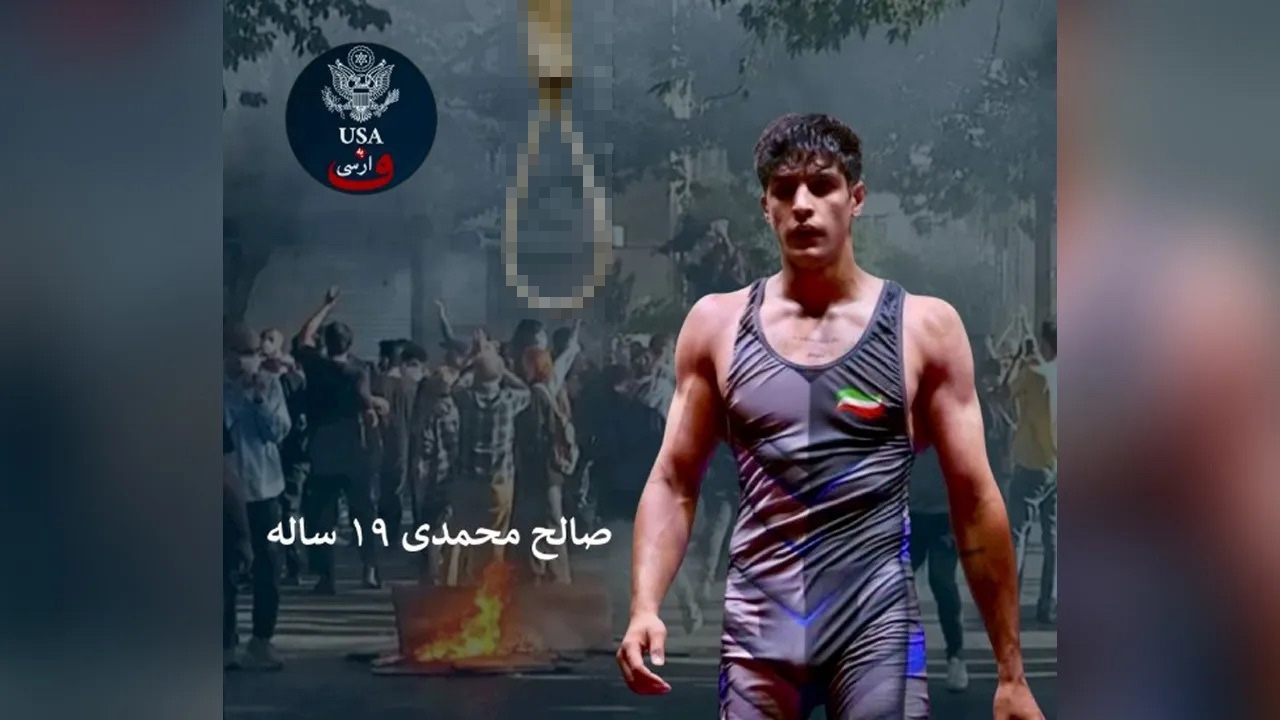
Meet Saleh Mohammadi, a 19-year-old Iranian wrestler who protested against the government before being executed by authorities for his actions.
On 20 March 2026, Iran executed three men accused of killing police officers during anti-government protests in January, according to state media. This marked the first hanging related to these demonstrations. Among them was Saleh Mohammadi, a 19-year-old wrestler.
Who is Saleh Mohammadi?
Saleh Mohammadi was born on 11 March 2007 in Saveh, Iran. He grew up in freestyle wrestling and eventually advanced to join Iran’s national team.
He was regarded as one of the most promising talents in the country’s sports scene. In September 2024, he won a bronze medal at the Buvaisar Saitiev International Tournament in Krasnoyarsk, Russia, representing Iran.
His last Instagram post
Just three months before his execution, Mohammadi’s final Instagram post was a video of him returning to training after months of injury recovery, captioned: “And we stood stronger than we ever imagined for ourselves.” Today, this message feels like a chilling foreshadowing of his tragic fate.
The case begins — January 2026 protests
Nationwide protests erupted in late December 2025 after Iran’s currency hit a record low, food prices surged 72% year-on-year, and inflation reached about 40%. The demonstrations escalated into widespread anti-government protests, peaking on 8–9 January.
Mohammadi was arrested on 15 January 2026 and charged with Moharebeh (enmity against God) and intentional murder for allegedly participating in the killing of two police officers during the protests in Qom on 8 January.
A case full of doubts
The evidence raised many doubts because CCTV footage did not clearly show his face. Family, teammates, and coaches all testified that he was not at Nabut Square that night but at his uncle’s home. Mohammadi denied all charges in court, claiming his confession was coerced under duress. When his family sought to hire a private lawyer, the court refused and appointed a state lawyer instead.
Although Mohammadi testified in court that his confession was extracted through torture and coercion, the court rejected this testimony and upheld the confession obtained during the investigation as key evidence.
The execution
Mohammadi had just celebrated his 19th birthday a week earlier before being hanged alongside Mehdi Ghasemi and Saeed Davoodi in Qom, south of Tehran. Iran Human Rights stated that all three were “sentenced to death following an unfair trial based on confessions obtained under torture.” The Iranian legal group Dadban said denying access to lawyers made the executions tantamount to “extrajudicial killings.”
International condemnation
Amnesty International, an NGO, said Mohammadi was denied the right to proper legal counsel and was forced to “confess” in a rushed trial lacking any meaningful judicial process.
Former wrestling star Sardar Pashaei said, “My heart breaks for this young wrestler.” Athlete and human rights activist Nima Far has called on United World Wrestling to ban Iran from international competitions until executions of protesting athletes cease.
Similar cases have happened before
Mohammadi’s case has been compared to the 2020 execution of wrestler Navid Afkari, who was convicted of killing a security officer during the 2018 protests and became a symbol of the use of the death penalty against demonstrators. At least 65 athletes, coaches, and officials have been identified among those killed during the January crackdown, with many others still detained.