

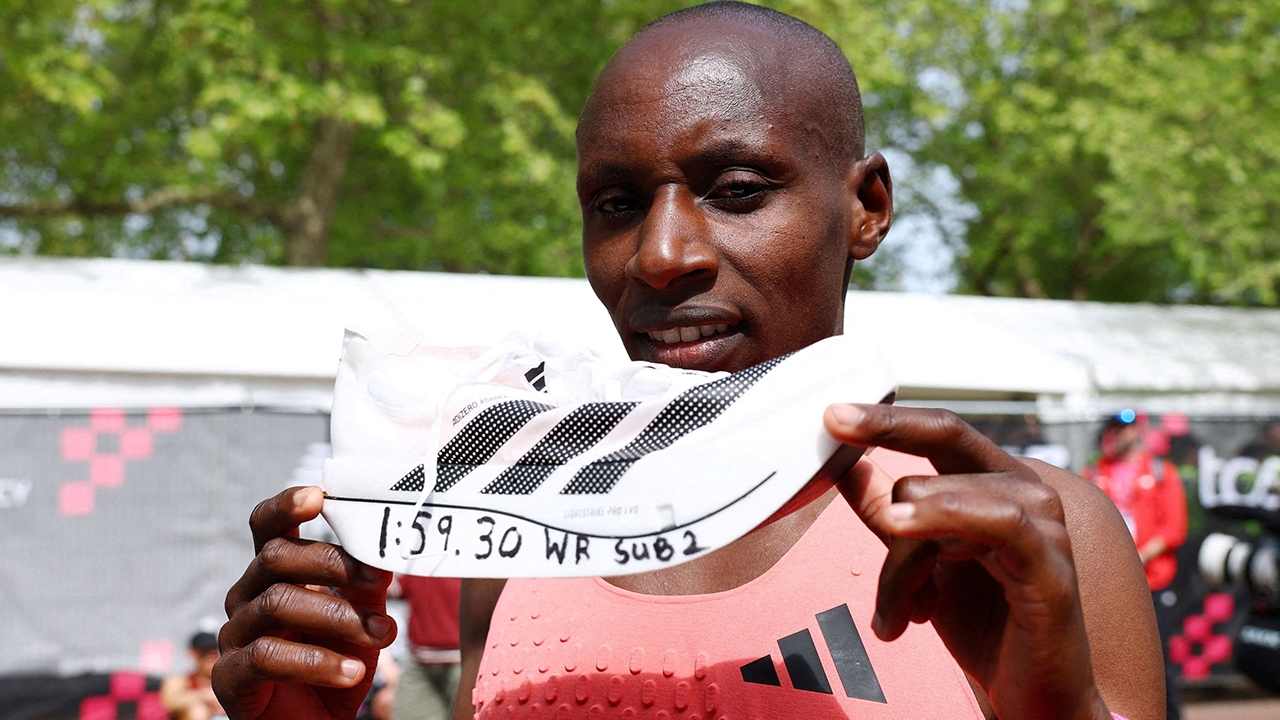
Sebastian Co, president of World Athletics, affirmed that the organization will not "block innovation" despite debates around "high-tech running shoes" that helped Kenyan runner Sebastian Save make history as the first human to run a marathon in under two hours in an official race.
On 2 May 2026, the 31-year-old runner won the London Marathon with a time of 1 hour, 59 minutes, and 30 seconds, breaking a barrier many once thought impossible.
Co stated, "No society, civilization, or economic sector benefits from trying to block innovation."
"World Athletics' duty is to support innovation, but at the same time provide proper oversight," he added.
In the London Marathon, Save, Ethiopia's Yomif Kejelcha, and new women's world record holder Tigist Assefa all competed wearing the Adidas Adizero Adios Pro Evo 3 shoes.
Save expressed gratitude to Adidas, calling the shoes the best he has ever worn, especially praising their very light weight and running stability.
This model is considered the first high-tech running shoe weighing under 100 grams, with the manufacturer claiming it can improve running efficiency by 1.6 percent.
However, users must pay around 18,000 baht per pair. Although many see the shoes as a key factor in the new record, Co believes they are not the primary factor.
"Shoes play a part, but not the most important one. What matters most is mental condition, physical strength, world-class coaching, and the athlete support system. These are what truly elevate performance," he said.
Save revealed that he trains about 200 kilometers per week at high altitude and emphasizes nutrition, consuming up to 115 grams of carbohydrates per hour during races.
Over the past decade, advancements in high-tech running shoes have prompted World Athletics to implement more regulations on sole thickness, carbon fiber plate design, and sales conditions to prevent excessive technological advantages.
Co acknowledged that these rules might change in the future to maintain balance between innovation and fairness in competition.
He also noted that modern shoe technology reduces injury risk, allowing athletes to train and compete longer and extending their athletic careers.
Despite criticism that technology may diminish the charm of long-distance running, Co believes athletics currently maintains an appropriate balance.