

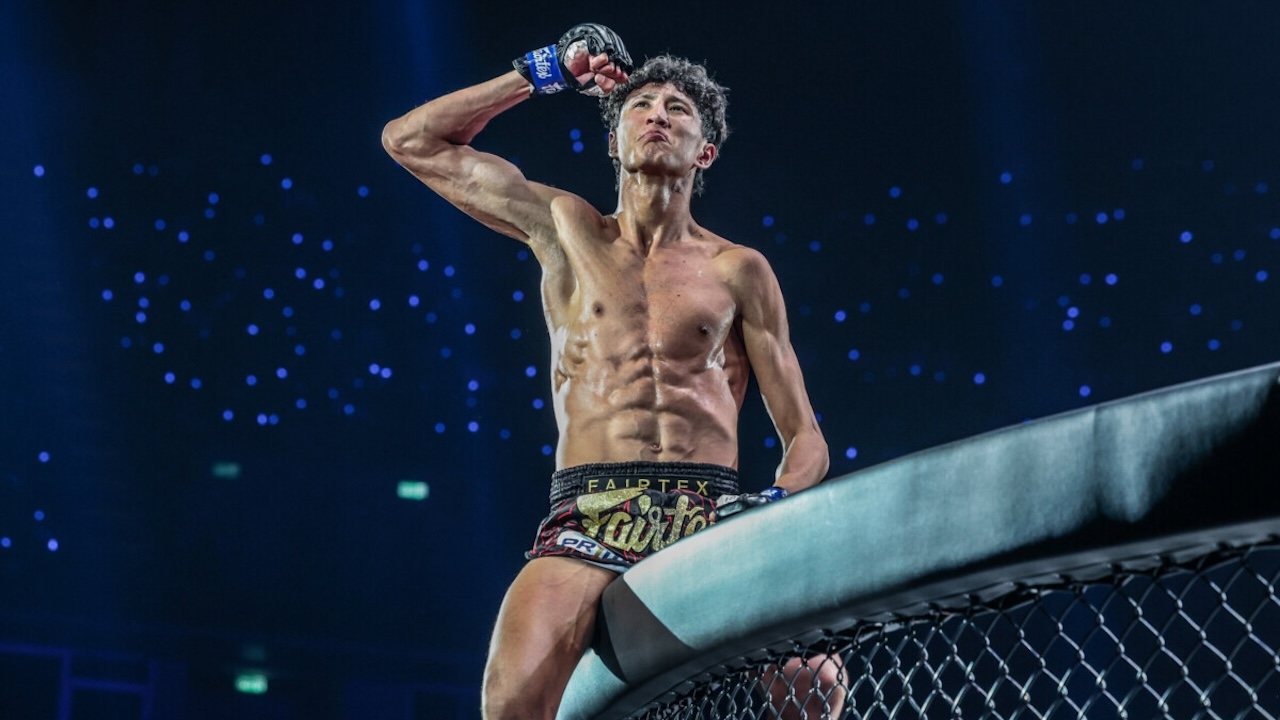
The news began with reports that the Boxing Association of Thailand is interested in recruiting Nabil Anan, former ONE Muay Thai world champion, and Rodtang Jitmuangnon to join the national team for a shot at the 2028 Olympic quota. This sparked heated debate within the Thai boxing community, with both supporters and skeptics questioning the feasibility. Meanwhile, Nabil himself has been labeled by some in society as a 'connected kid,' despite no official statement having been made.
Somrak Khamsing, Thailand’s first Olympic gold medalist and now an advisor to the association, admitted he proposed this idea 2-3 years ago. He pointed out that Nabil has a physical advantage, good punching fundamentals, and experience on big stages using small gloves. He believes Nabil could adapt to the modern amateur boxing rules without headgear fairly easily. Rodtang has also expressed interest in representing the country. However, Somrak emphasized that recruitment does not guarantee a place on the national team; athletes must prove themselves against current national boxers first.
Somjit Jongjohor, Olympic gold medalist from Beijing, posted a video expressing a contrary view. He questioned the difficulty of competing in a lower weight class and recalled past lessons when the association spent hundreds of thousands to millions of baht recruiting famous Thai boxers like Saengmanee and Superbank, who ultimately failed to achieve their Olympic dreams and returned to Muay Thai.
Nabil himself, before having a chance to speak, was branded by some as a 'connected kid' and responded by posting a video to express his feelings. He affirmed that he understands the need to pass official selection processes and announced he would hold an official press conference on Friday, 14 August, at the Evolve MMA gym.
Why does the association want him?
The main reason is to save time in developing Olympic-level athletes. Additionally, the fame and fan bases of both athletes might help attract more attention and sponsors to amateur boxing, which normally receives less popularity than Muay Thai.
The counter-question: Why not develop athletes internally? The actual performance at the 2024 Olympics may provide an answer.
Having to recruit boxers from Muay Thai camps could reflect that Thailand’s domestic amateur boxing development system is still not strong enough.
At the 2024 Paris Olympics, Thailand sent eight boxers: three men and five women. All the men were eliminated without medals, as follows:
* Thitisan Panmod (51 kg category) — eliminated in the round of 16
* Banjong Sinsiri (63.5 kg category) — eliminated in the quarterfinals
* Weerapol Jongjohor (80 kg category) — eliminated in the first round
Meanwhile, the women performed better, with Janjaem Suwanpeng (66 kg category) winning a bronze medal after losing to Iman Kelifa from Algeria in the semifinals — Thailand’s only medal in boxing that year.
These results clearly show the weakness of the Thai male boxing team, which may be why the association is exploring alternatives by recruiting famous Muay Thai boxers to strengthen the team. The existing system has yet to produce male boxers strong enough to compete at the world level.
Technical adaptation concerns remain a major challenge because the rules and scoring of modern amateur boxing emphasize quick footwork, precise in-and-out movement, and combinations of punches, differing significantly from Muay Thai’s focus on power and counterattacks.
However, switching from Muay Thai to success in amateur boxing is not unprecedented and has been achieved spectacularly in the past.
- Somrak Khamsing: grew up in Muay Thai before adapting his style with vision and boxing tactics to win Olympic gold in 1996.
- Manus Boonjumnong: Olympic gold medalist in 2004 and silver in 2008, with a strong Muay Thai background, who applied his eye skills and counterpunching flawlessly.
- Somjit Jongjohor: 2008 Olympic gold medalist who also came from a Muay Thai background.
Mr. Pong, Thailand’s top boxing commentator, views the path to the Olympics as long and challenging, with many hurdles. He said those in the boxing community, including Nabil, understand this well.
If Nabil competes, he can reduce his weight to 60 kilograms.
Nabil’s height and reach advantage are significant. Standing 192 cm tall at 60 kg, he would tower over the average 168–175 cm height of world-class boxers in that weight class. This gives him a huge reach advantage to use jabs and maintain distance, making it very difficult for opponents to get inside.
Finally, according to the association’s rules, Olympic athlete selection must be open to boxers nationwide through the annual Thai championship. This identifies the true contenders for the national team, who then enter training camps.
To secure an Olympic quota, boxers must compete in multiple world-level qualifying tournaments across weight categories for both men and women. They must earn their spots through international performance, not just domestic victories.