

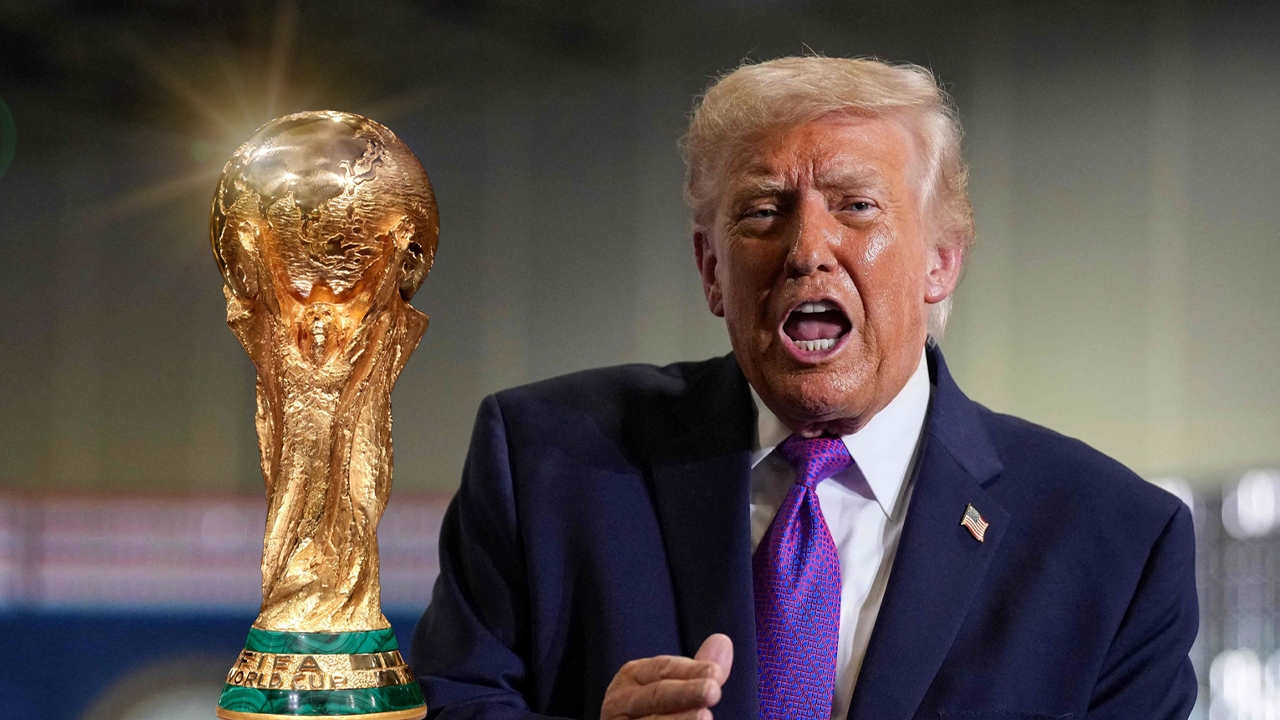
Political tensions and wars have consistently affected the global sports arena, including major stages like FIFA's World Cup, which has experienced withdrawals, boycotts, or non-participation by several countries in the past due to political reasons, war, or inter-state conflicts.
Recent reports indicate that Iran’s national team may consider boycotting or withdrawing from the 2026 World Cup, hosted jointly by the United States, Canada, and Mexico, amid rising Middle East tensions linked to military attacks involving the United States and Israel against Iran.
Although Iran currently leads the Asian qualifying rounds, some reports suggest the government is weighing the option to withdraw. If this occurs, it could become a significant historical instance where politics directly influence the World Cup.
However, there have been several past instances where countries did not participate or withdrew from the World Cup due to war or political reasons, as follows:
1934 World Cup
In the tournament hosted by Italy, the defending champions Uruguay chose not to participate because they were displeased that many European countries refused to travel to the first World Cup held in Uruguay in 1930. This made 1934 the only World Cup in history where the defending champion did not compete to defend the title.
1938 World Cup
Austria was among the favorites for the 1938 tournament, but Nazi forces occupied the country at the time of the competition, preventing their participation. Some Austrian players joined the German team for that World Cup, but Matthias Sindelar, the legendary Austrian forward, refused to represent the Nazi-led country.
1950 World Cup
India automatically qualified for the final round but decided to withdraw due to several issues, including travel expenses, team preparation, and player selection restrictions. Although a popular belief is that FIFA’s ban on barefoot play was the cause, later findings showed this was not the main reason.
1966 World Cup
At the tournament in England, there was a major boycott by African nations protesting FIFA's allocation of only one qualifying spot for Africa, Asia, and Oceania combined, resulting in no African teams participating that year.
1974 World Cup
One of the closest examples of a qualified nation boycotting the World Cup for political reasons occurred during the intercontinental playoff between Chile and the Soviet Union in 1973. In the second leg held in Santiago, the Soviet Union refused to play in protest of Augusto Pinochet’s dictatorship. Pinochet had overthrown the socialist government and turned Chile from a former Soviet ally into an adversary. As a result, the Chilean team took the field alone, with captain Francisco Valdés scoring a goal before the match was abandoned.
2022 World Cup
The tournament hosted by Qatar saw no national team withdrawals, but there were symbolic protests by players and several countries concerning human rights issues and attitudes toward the LGBT community, reflecting how politics and social issues remain intertwined with global sports.
These events demonstrate how political conflicts, wars, and state policy decisions can directly impact global sports competitions—not only football but also other sports like Formula One and MotoGP, which may face challenges related to security instability affecting athletes, teams, and fans.