

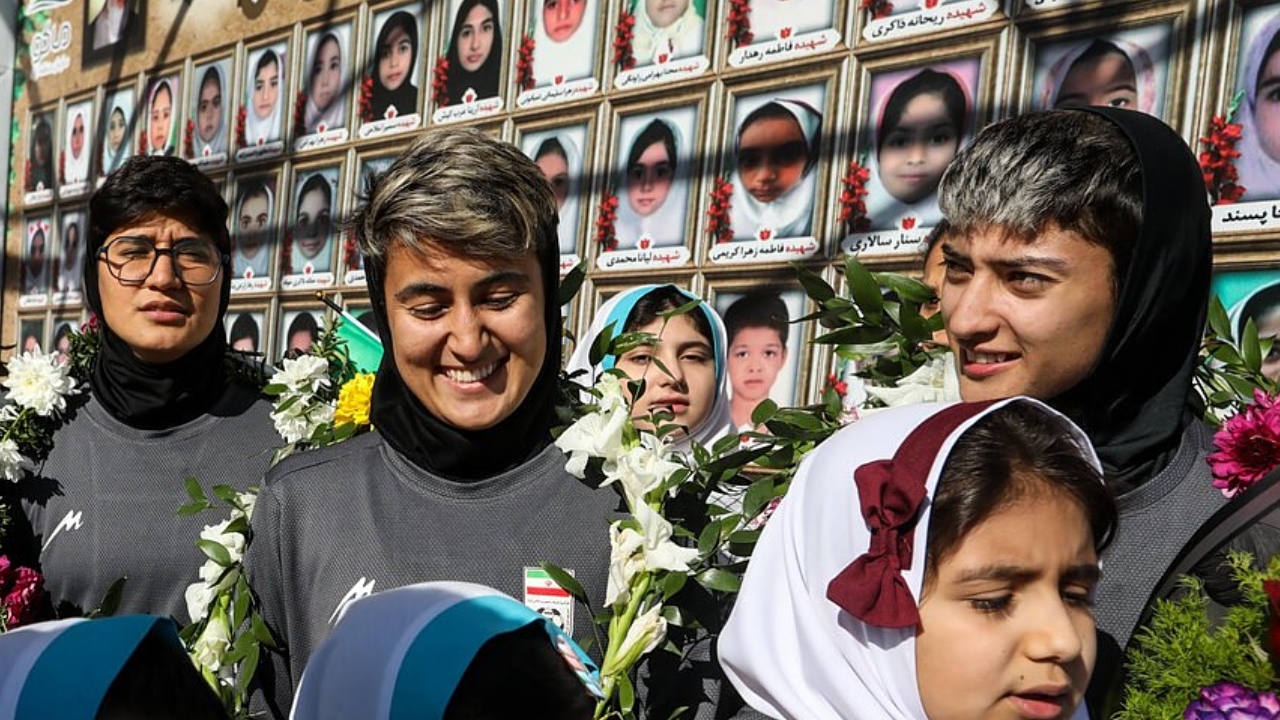
Iranian media released images showing the Iranian government holding a dignified ceremony to welcome the national women's football team home as heroes after the controversy over not singing the national anthem and seeking asylum in Australia.

On 19 March 2026 GMT+7, images surprised the world as official Iranian media showed the warm reception given to the Iranian women's national football team upon their return. State officials and supporters greeted them with flowers, honoring them as "national heroines" despite the controversy surrounding their refusal to sing the national anthem and asylum issues in Australia.
The tension began when the Iranian women's team traveled to compete in the AFC Women's Asian Cup 2026 held in Australia in early March.
At that time, the Middle East was heated by expanding armed conflicts and war. The female athletes chose to symbolically remain silent and not sing the national anthem during the opening match as a protest and stance against the Islamic government amid growing calls for rights and freedoms suppressed harshly in their country.
After the competition, concerns for the athletes' safety surged when conservative Tehran media labeled them "traitors," prompting the U.S. government to intervene by asking Australia to consider granting refugee status to the athletes and staff.
However, only two athletes—Fatemeh Pazandideh and Atefeh Ramezanizadeh—decided to stay in Australia seeking asylum, while the remaining 20-plus team members and coaches chose to return to Iran via the Turkish border.
What many feared would be arrests or severe punishment turned into an opposite scenario. The Iranian government adopted a "welcoming" strategy with a red carpet and flowers, stating these athletes were "awakened" and rejected enemy temptation to reunite with their families.
Though the images appeared joyful, foreign analysts and human rights organizations continue to suggest this may be a "staged propaganda" by the Iranian government to ease international pressure and portray national unity amid wartime conditions.