

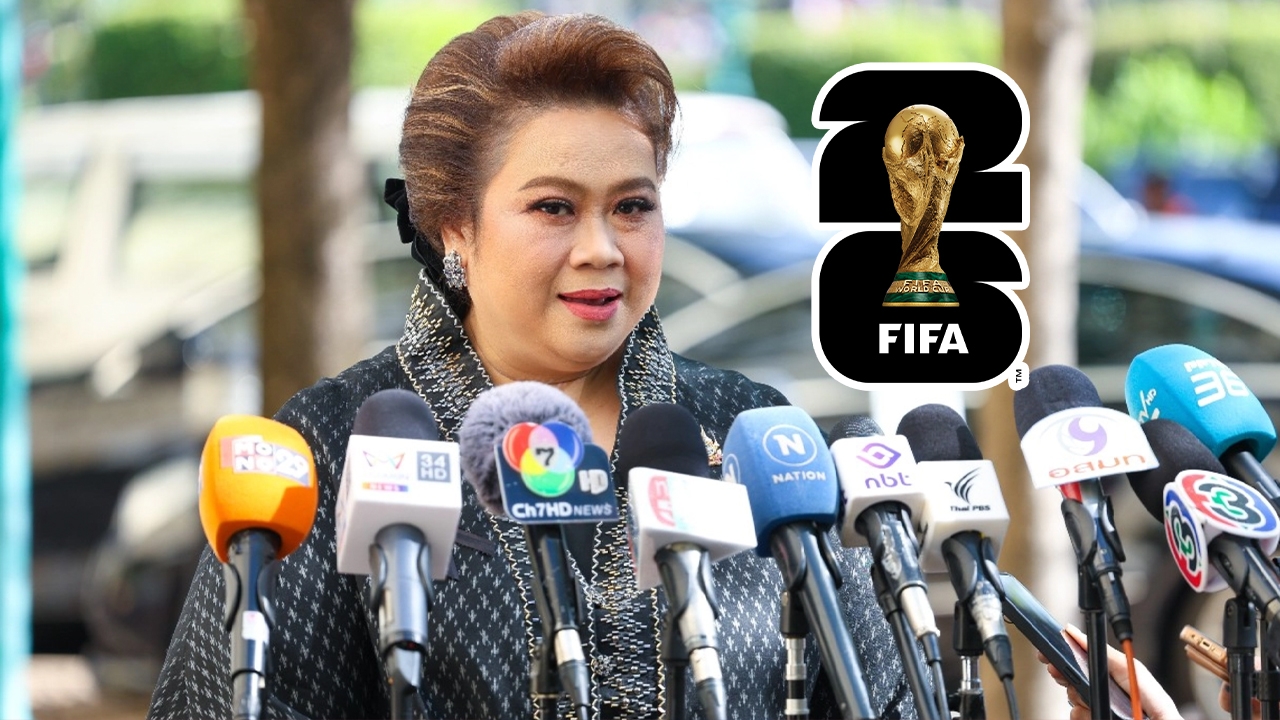
The Minister attached to the Prime Minister's Office has abandoned plans to purchase the 2026 World Cup broadcast rights due to high prices and lack of private sector interest, deciding to save the funds for other uses. Tags: [government decision, World Cup 2026, broadcast rights, sports broadcasting, private sector]
At 9:38 a.m. on 19 May 2026 at the Government House, Ms. Supamas Isarapakdi, Minister attached to the Prime Minister's Office, addressed rumors that the government is retreating from purchasing the 2026 World Cup broadcast rights, scheduled from 11 June to 19 July in the United States, Canada, and Mexico as hosts. She said the Prime Minister wishes for Thai people to enjoy the World Cup next month. Last week, the Cabinet resolved to have the Public Relations Department discuss with government and private sectors, including the National Broadcasting and Telecommunications Commission (NBTC), which supported previous rounds. However, after talks, the situation has changed due to conflicts in the Middle East and altered broadcast times, reducing opportunities for sales in venues like restaurants.
Regarding the price offered for the Thai broadcast rights, Ms. Supamas said she could not disclose it due to FIFA regulations, but the cost is such that it would be difficult to justify to the public. Thailand has nearly 70 million people, whereas other countries have about 1.5 billion—20 times more—but their rights cost slightly less. On a per capita basis, the cost differs by about 10 to 20 times. Therefore, the government recognizes that Thailand faces economic challenges and that citizens' livelihoods are a priority. Meanwhile, the proposed price is quite high, and unlike before, no private sponsors have come forward because the broadcast times are unsuitable and advertising sales are more difficult than in the past.
Ms. Supamas added that four years ago, the NBTC provided funding alongside private sector support. This time, no private sponsors are helping. As the official overseeing the Public Relations Department, she will present this information at the Cabinet meeting to seek opinions on how to proceed. Regarding alternative ways for Thais to watch the World Cup, she said they are checking with FIFA amid reports that FIFA might offer paid viewing options or brief 5- to 10-minute match highlights. However, details are not yet clear. When asked if the public should give up hope on the government pursuing the broadcast rights, she said it depends on whether any private companies see business opportunities, and there is still some time left.
On whether the rights holders might reduce the price, Ms. Supamas said that remains to be seen, but any proposed figure must be justifiable to the public. If the price is not fair, funds should be saved for other purposes. When asked if the offered price matches previous rumors, she said she was not the source and did not know where those reports originated.
Asked if the government has officially dropped the plan, Ms. Supamas said the government still wants to support football because it helps nurture youth, but there are many ways to support Thai football. At this time, the investment may not be worthwhile, so each case must be considered carefully. She emphasized that the outcome of the Cabinet meeting should be awaited, and another press briefing is expected afterward.