

Cheer for the Samba or the Samurai!!
The group stage of the 2026 World Cup is almost complete with every match played.
As of the early morning of Friday, 26 June, 19 nations have secured spots in the knockout round of 32 teams.
Group winners advancing include Mexico, Switzerland, Brazil, the United States, Germany, Argentina, and the Netherlands.
Meanwhile, the group runners-up who advanced are South Africa, Morocco, Canada, Australia, Ivory Coast, and Japan.
The best third-placed teams confirmed to advance are Bosnia, Ecuador, and Sweden.
Teams guaranteed to advance but with group position yet to be decided include France, Norway, and Colombia.
The identities of the remaining 13 teams will be revealed this Saturday and Sunday.
Four round of 32 matchups are confirmed:
South Africa vs. Canada, Netherlands vs. Morocco, USA vs. Bosnia,
and the super big match that Thai fans and football followers worldwide are eagerly awaiting in this World Cup.
The knockout clash between the "Samba Boys," Brazil, and the "Samurai Blues," Japan.
They will face off at midnight Monday (29 June), continuing into Tuesday morning Thailand time in Houston, USA.
This truly is a meeting of two top teams beloved by Thai fans!
Brazil is a five-time world champion and the only nation to have played in every World Cup final tournament since its inception in 1930 through to 2026.
Thai viewers first watched the World Cup live on TV in 1970 in Mexico.
That final saw the "Black Pearl" Pelé lead the Samba team to a 4-1 thrashing of Italy at the Azteca Stadium.
Brazil won their third world title and claimed the Jules Rimet Trophy permanently.
This introduced Thai fans to the dazzling skills of the Seleção, leaving a lasting impression from then on.
It became common to say that if Brazil were eliminated from the World Cup, the tournament was essentially over for Thai fans.
.
The "Samurai Blues," Japan's national team, represents Asia and brings pride to the yellow-skinned people.
They have risen to compete at a world-class level without shame against any nation.
Their vision to build a national team started clearly with their first World Cup appearance in 1998 in France.
They have set a goal to become World Cup champions by 2050.
Japan’s dream has become a symbol inspiring all national teams worldwide.
Teams are encouraged to "dream big" in world football without fear of the prestige of European or Latin American powers.
The belief is that in modern football, any nation can develop to compete if they have enough determination and effort.
This is what the Japanese players have shown us through their matches against every nation in this World Cup.
Therefore, it's no surprise that modern Thai football fans admire the "Nippon way" style.
Many even want it to become a model for the Thai national team.
Another key reason Thai people feel connected and familiar with Brazilian and Japanese football more than others
is that the Thai national team was once coached by both Brazilian and Japanese head coaches.
Moreover, they were beloved coaches of football fans during their respective eras.
Starting with Carlos Roberto de Carvalho, the legendary Brazilian coach,
who led Thailand to its first-ever semifinal appearance at the Asian Games in Beijing in 1990.
Then there’s Mano Polking, a German coach with half Brazilian heritage,
who led Thailand to back-to-back ASEAN Cup championships, delighting Thai fans greatly.
Among Japanese coaches remembered by Thai football fans equally well,
the first is Akira Nishino, former head coach of Japan’s 2018 World Cup team, who surprisingly took over Thailand’s national team.
Though he achieved no major success,
leading Thailand’s U23 team to the Asian Championship quarterfinals was still notable.
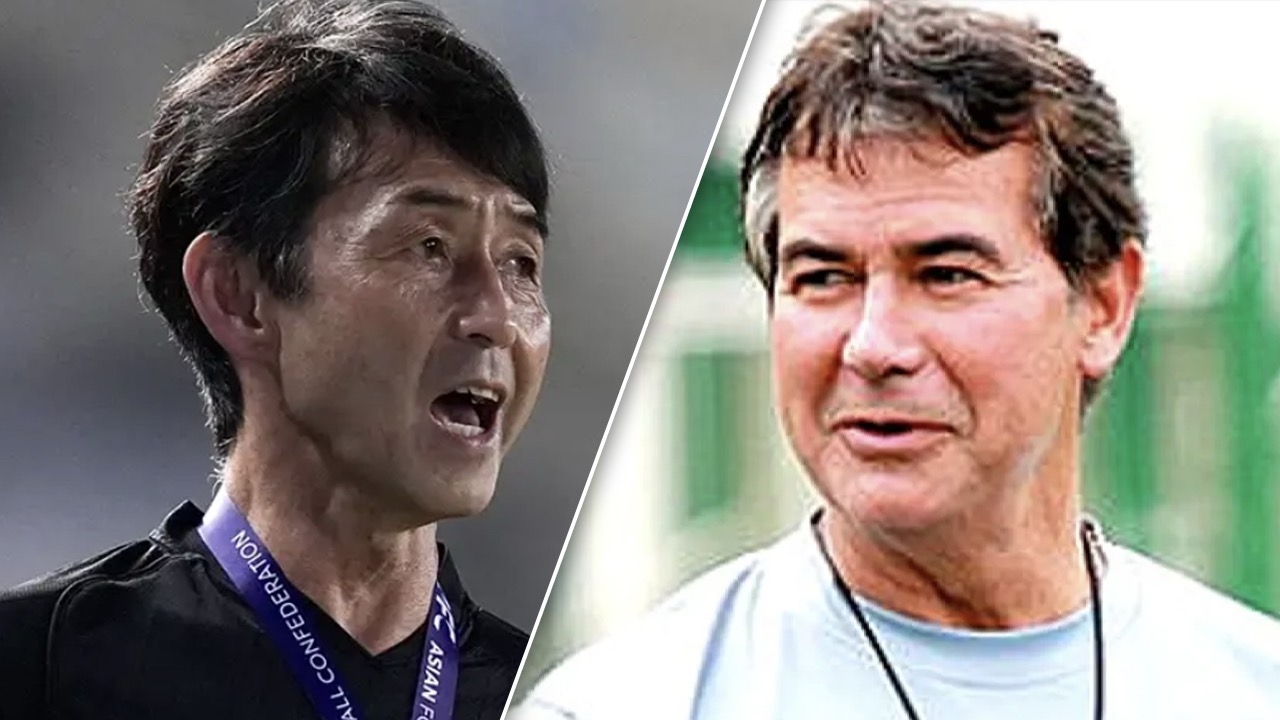
Later, Masatada Ishii became the second Japanese coach to lead Thailand’s national team.
Though his tenure ended less impressively,
Ishii helped us see a future for Thailand’s national team that few other coaches had shown before.
These foreign coaches who led Thailand's national team have fostered strong ties and familiarity
with both Brazil and Japan’s football cultures.
So it’s hard to decide which team to support in Monday night’s World Cup match.
Who will advance further in the 2026 World Cup?
- Bee Bangpakong -