

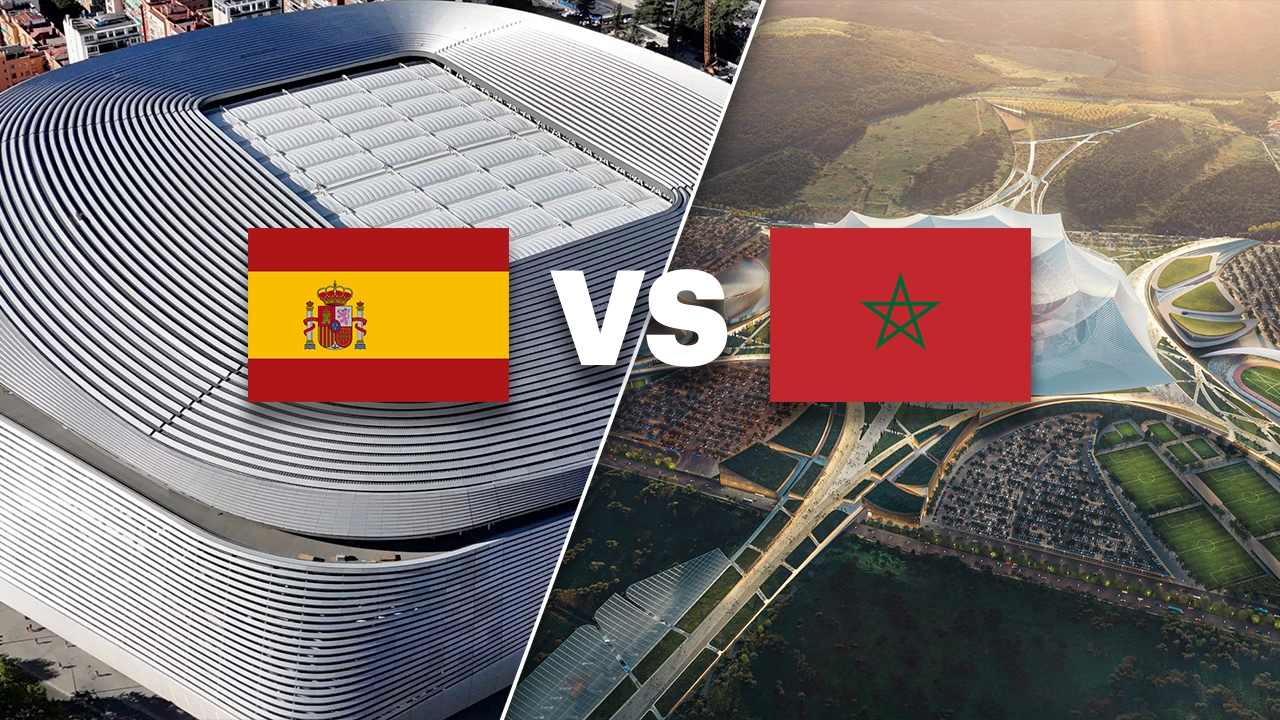
A Spanish prime ministerial candidate has vowed to withdraw from co-hosting the 2030 World Cup if Morocco hosts the final match.
Alberto Núñez Feijóo, leader of the conservative opposition party Partido Popular (PP) and a candidate for Spain's prime minister, declared that if elected, he would push for Spain to withdraw from co-hosting the 2030 FIFA World Cup should Morocco be granted the rights to host the final match.
The 2030 World Cup will be jointly hosted by three countries: Spain, Morocco, and Portugal, while the first three matches will be held in Uruguay, Argentina, and Paraguay to commemorate the 100th anniversary of the first World Cup held in 1930.
For this tournament, the venues are divided with Spain hosting 11 stadiums, Morocco 6, and Portugal 3. However, the location for the final match has not yet been officially decided.
Three stadiums are being closely watched: the new Hassan II Stadium in Casablanca, Morocco, planned to hold up to 115,000 spectators; Real Madrid's Santiago Bernabéu Stadium with a capacity of 83,000; and Barcelona's Camp Nou, which will accommodate 105,000 spectators after renovations.
Feijóo told the program El Chiringuito on La Sexta TV that the final should be held in Spain, stating, "The final should be held in a fair and appropriate location, a place without controversy, which is Spain."
He also pointed out that Spain and Portugal originally proposed to co-host before Morocco was later invited to join, arguing that Spain is more suitable as it currently holds both the men's and women's World Cup titles.
Feijóo clearly reiterated his stance: "If Spain is not the host of the final match, it should not participate in hosting the tournament." When asked if he would support Spain withdrawing from co-hosting if Morocco hosts the final, he replied simply, "Yes."
Tensions rise between Spain and Morocco over migrant crisis.
This issue comes amid tense relations between Spain and Morocco. In late July, about 70,000 migrants entered Ceuta, a Spanish autonomous city on the North African coast, by land and sea from Morocco, overwhelming border officials and creating a humanitarian crisis.
Spanish Prime Minister Pedro Sánchez reported that 141 people died attempting to enter Ceuta on 30–31 July, sparking intense political criticism within Spain.
Opposition politicians from PP and the far-right Vox party blamed the socialist PSOE government's immigration policies as a cause for the large number of border crossings.
Sánchez questioned Moroccan officials' failure to prevent the migrant influx but affirmed that Spain has no evidence that Morocco planned or orchestrated the incident.
Spain is scheduled to hold a general election on 29 Nov 2023 GMT+7 to select a new prime minister, with current PM Pedro Sánchez and opposition leader Alberto Núñez Feijóo as the leading candidates.