

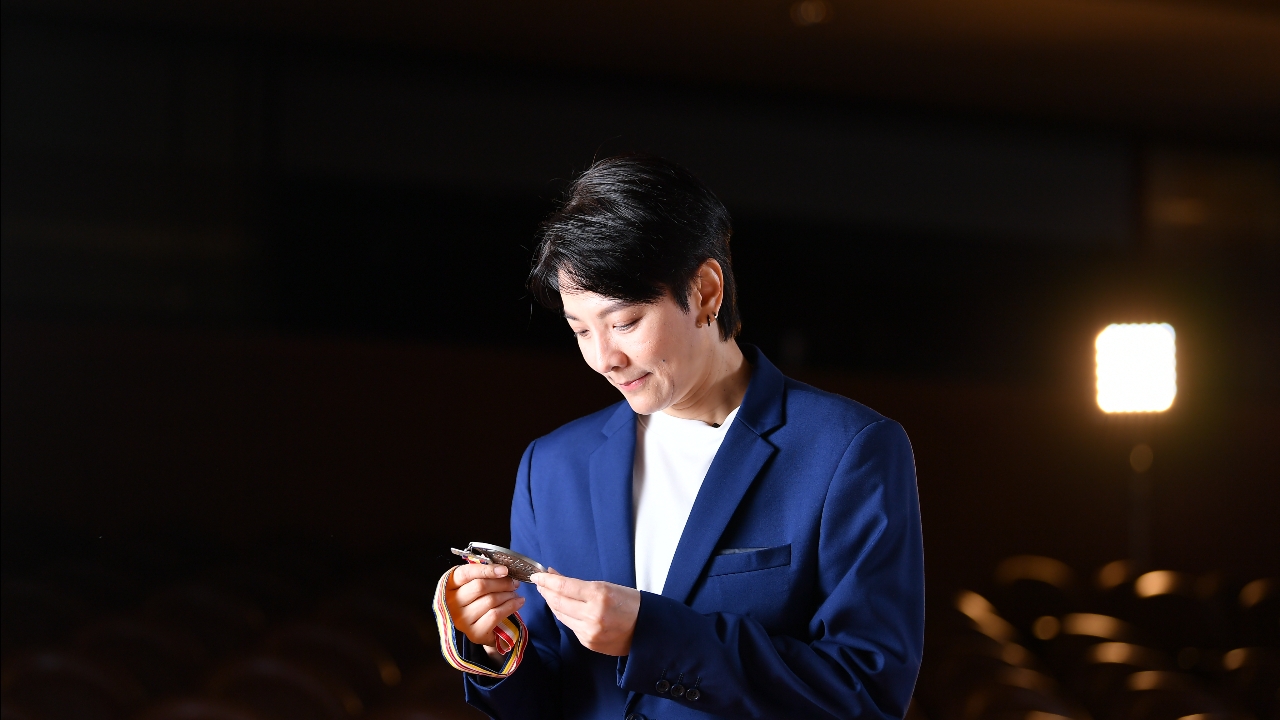
Sujitra Ekmongkolpaisarn, former Thai national badminton player who won two SEA Games gold medals (women's singles in 2001 in Malaysia and women's team event in 2005 in the Philippines), has shared her journey from a small beginning to becoming a legend in Thai badminton.
Q: The origin of her deep connection
The path of this former national athlete did not start at a famous badminton school but from a family bond.
"The beginning of playing badminton came from my father. He played it as exercise and took me and my younger brother along. I was around 10 or 11 years old—that was the very first time my father took me to play."
Soon after, she committed fully to badminton, beginning serious training in her late 11-year-old years, with her father as her first coach. Her passion grew because badminton required not just physical strength but also strategic thinking.
"When I started playing badminton, I realized that I had to think and fight for every shot—deciding where to send my opponent and how to respond when they sent the shuttle back. It was challenging and really fun."
Q: When defeat becomes motivation
Although she started playing later than many peers, Sujitra's determination never waned. Early in competitions, she often faced defeat but saw it as an opportunity to improve.
"On losing days, I didn't feel sad but just thought that I was still new to it. I asked myself for more time to practice more so I could compete better. Even when losing, I still enjoyed it and wanted to come back stronger."
Her inspiration to become a professional athlete arose when her father took her to watch world-class competitions, sparking her dream to join the national team.
"We saw many senior national players and skilled international athletes competing. It made me dream that one day I wanted to be there too, to compete on that stage. That motivated me to strive to reach that level."

Q: Important experiences with the Thai national team
Being selected for the Thai national team at around age 14-15 opened a new world for her. Training with experienced seniors taught her professionalism.
"It was like opening a new door for me. I trained with seniors and saw how they ran, jumped rope, and practiced footwork. I consider this experience very important as a young player absorbs from the seniors’ example even without explicit teaching."
Her first SEA Games achievement in Chiang Mai was winning bronze medals in both the team and mixed doubles events, a stepping stone toward her bigger goal: gold.
Q: Moment of pride
Her efforts culminated in winning the women's singles gold medal at the 2001 SEA Games in Malaysia, a hard-fought victory against strong opponents from Indonesia.
"At that time, I had to say that singing the Thai national anthem in another country is not something just anyone can do easily. When singing it, I felt very moved and extremely happy, especially having taken the SEA Games gold from Indonesia... that moment was incredible."
Q: Managing pressure and family support
A key to handling pressure during competitions was to relax and stay focused on herself.
"I tried to tell myself to relax and focus on each shot I was about to play. I thought about my training sessions to take some pressure off the competition atmosphere, which otherwise would be very nerve-wracking."
Her family was the backbone of her success, especially her parents who supported her off the court without adding pressure.
"My parents and older brother were a great backup. They took care of things like driving me to practice and making sure I rested well. What they said to me was, 'Rest first, then fight again.'"
She also shared advice for parents of today's athletes:
"If I could tell parents, I would say they should support their children because athletes already face a lot of pressure and fatigue on the court. If they see support from behind without stress, they will perform better."

Q: Message to future athletes
Sujitra sees the SEA Games as an important platform for young athletes aiming to advance to higher levels.
"The SEA Games are a gateway and a crucial match—it’s a key step for us to move up to bigger Asian events or even the global stage like the Olympic Games."
As a former athlete turned sports commentator, she also offered encouragement to all Thai national athletes.
"I want to tell them to play for fun and happiness, and not to pressure themselves too much. If we do our best, I believe good things will happen."