

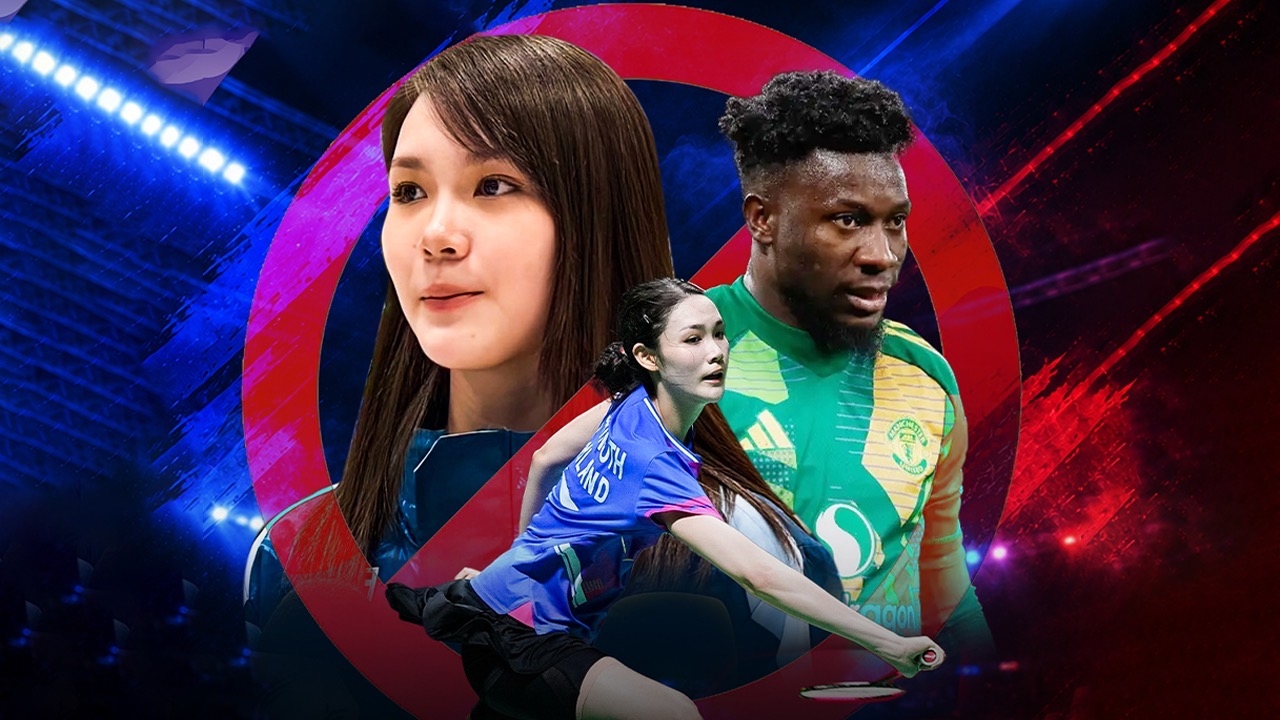
Answering how long athletes have been banned in the past for detecting "furosemide" after the B sample confirmed its presence in "Nong Pink" Pichjamon as before.,
A review of what furosemide is and why it is prohibited.
Furosemide is listed under category S5 (diuretics and masking agents) on the World Anti-Doping Agency (WADA) prohibited list, banned at all times both in and out of competition. It is a specified substance. The International Testing Agency (ITA) notes athletes might use it to rapidly lose water weight. This substance does not directly enhance badminton performance but may cause dehydration.
Timeline of “Nong Pink” Pichjamon.
16 Sep: Arrived in Nagoya, Japan.
17 Sep: ITA collected an out-of-competition sample one day after her arrival.
21 Sep: ITA notified a positive result and imposed a provisional suspension, making "Nong Pink" the first doping case at this Asian Games, even though she was scheduled to compete against China the next day.
24 Sep: Requested analysis of the B sample.
28 Sep: Minister of Tourism and Sports announced that the B sample results matched the A sample, and preparations are underway to file an appeal.
What happens next?
Mr. Surasak Pancharoenworakul, Minister of Tourism and Sports, revealed that the B sample test confirmed the same positive result as sample A, meaning the banned substance was indeed found in "Nong Pink" Pichjamon's system.
The detected substance falls under the category of beauty supplements and is a diuretic, which some might think has little effect on badminton players, especially since there are no weight classes in the sport.
However, WADA’s rules apply to all athletes regardless of sport or gender, without exceptions.
Mr. Surasak added that forthcoming penalties will be announced. The presence of the banned substance might stem from medication or beauty supplements whose labels did not disclose such ingredients, leading to unintentional ingestion. "Nong Pink" will need to file an appeal to clarify the facts.
Looking back at past cases, athletes received varying ban lengths, but some avoided suspension by providing evidence proving innocence or contamination.
André Onana (football) was banned by UEFA for 1 year; the Court of Arbitration for Sport (CAS) partially upheld an appeal, reducing it to 9 months later.
.
Florentina Iusco (long jump) was only warned by the national agency, but WADA appealed and CAS imposed a 2-year ban due to lack of standard precautions.
.
Patricia Álvarez (running) was banned for 2 years despite claiming she took the wrong pill, thinking it was ibuprofen.
César Cielo (swimming) avoided suspension because his defense proved contamination occurred during production of his caffeine supplement. The pharmacy admitted preparing heart medicine containing furosemide the same day as his caffeine capsules.
It is believed no one wants such incidents to happen, and it is hoped that "Nong Pink" will appeal and overcome this situation successfully.