

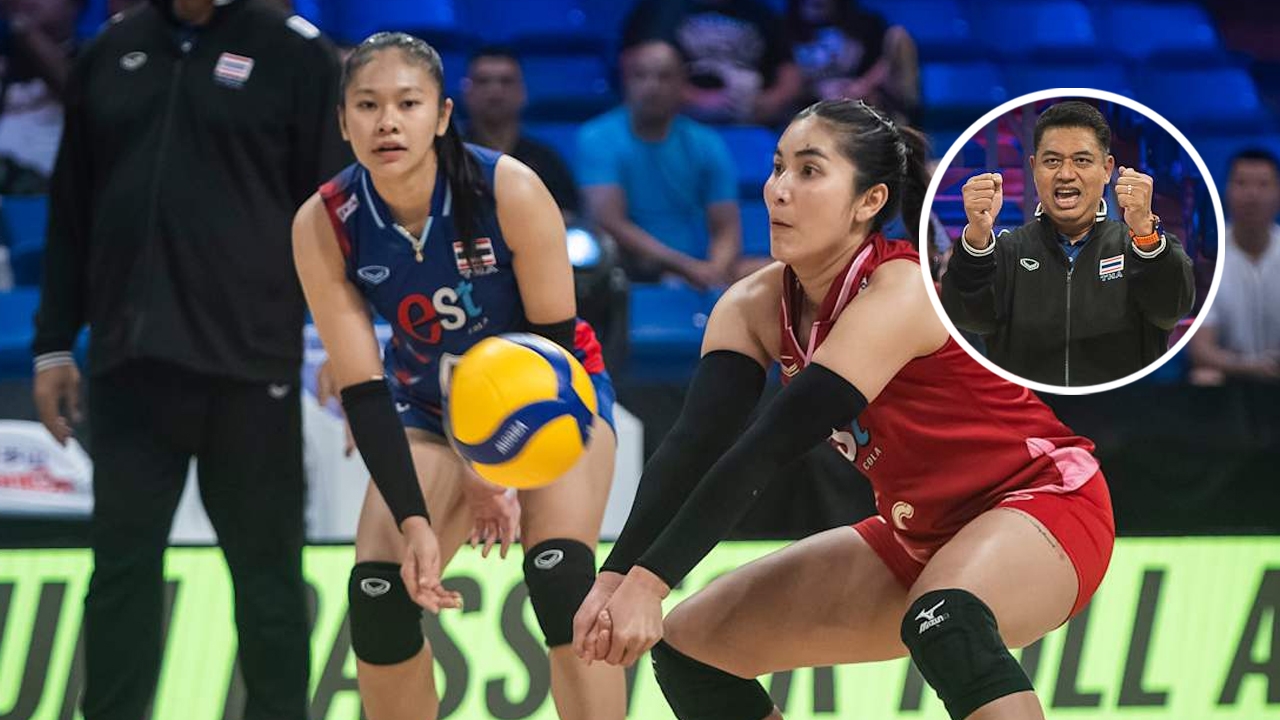
Clear comparison: Old vs new rules in the 2026 Volleyball Nations League may see liberos setting from the backcourt.
On 17 Feb 2026 GMT+7, did you know? The volleyball world might soon see “new rules” introduced in the Volleyball Nations League and U17 World Championship! Polish sports media “Polsat Sport” reported that several rule changes have been proposed and submitted to international referees for review, which could directly affect game formats.
It has been reported that some of these changes are planned to be tested in the 2026 VNL and U17 World Championship.
The question is whether the new rules will speed up the game, intensify it, or change tactics altogether. We will take you through an in-depth, clear comparison between the “old rules” and the “new rules” to highlight their differences.
1. Greater freedom for liberos
Old rule: Libero players had to stand in the correct position until the opponent served.
New rule: Liberos can start moving immediately after the server receives the referee’s signal.
2. Increase substitutions to 8 per set
Old rule: Teams could make 6 substitutions per set.
New rule: Increased to 8 substitutions per set, allowing coaches to manage tactics more precisely.
3. Liberos allowed to serve
Old rule: Liberos were not permitted to serve.
New rule: Liberos can serve in place of other players; if a team has two liberos, only one may serve. This adds tactical variety and helps offset serving weaknesses in some positions.
4. Liberos can perform two-handed sets from any court position
Old rule: Liberos inside the 3-meter line were prohibited from two-handed setting for an attack play (only underhand sets allowed).
New rule: Liberos can set using two hands from any position, including the front zone, expanding their role from defense to assisting offense.
5. Ball touching the ceiling and returning to the same side can continue play
Old rule: Ball touching the ceiling was an immediate point loss.
New rule: If the ball touches the ceiling and returns to the same side, play may continue under certain conditions to prolong rallies and reduce automatic stoppages.
6. Relaxed rules on net touches by the ball
Old rule: Ball touching illegal parts, such as the antenna, resulted in point loss.
New rule: Some leniency may be applied, for example, touching the lower part of the antenna or net edge without significantly affecting the opponent’s play is not considered a fault.
7. Video challenge system
Old rule: Coaches requested challenges immediately after rallies following standard procedures.
New rule: Coaches can mark questionable moments during the game on tablets and choose to review them after the rally ends.
8. Video challenge for double contact cases
Old rule: Immediate decisions were made on double contact calls.
New rule: Video challenges are allowed in disputed double contact situations, especially during heavy spikes or serves, to reduce errors in crucial points.
9. Restriction on using video challenge waiting time as a disguised timeout
Old rule: Coaches often used the video challenge waiting time to hold team meetings.
New rule: Using the video challenge wait time for timeouts or tactical advice should be disallowed to ensure challenges serve their intended purpose.
10. Reduced use of whistle signals to end points in clear situations
Old rule: The referee always blew the whistle to officially end a point.
New rule: In clear in or out calls, the whistle may be omitted to keep the game flowing and speed up point transitions.
11. Net contact after blocking not considered a foul
Old rule: Any ball touching the net was a foul immediately.
New rule: Natural movements after a blocking jump that touch the net but do not affect play are not considered fouls, reducing unnecessary stoppages from minor contacts.
12. Ball setting technique
Old rule: Holding or pushing the ball was a foul, though calls were sometimes unclear.
New rule: Only firm contacts without prolonged ball holding are allowed, reducing ambiguity in judging carrying or pushing with fingers.
We must watch closely to see which of these proposed rule changes submitted to international referees will be approved and implemented in the Volleyball Nations League.