

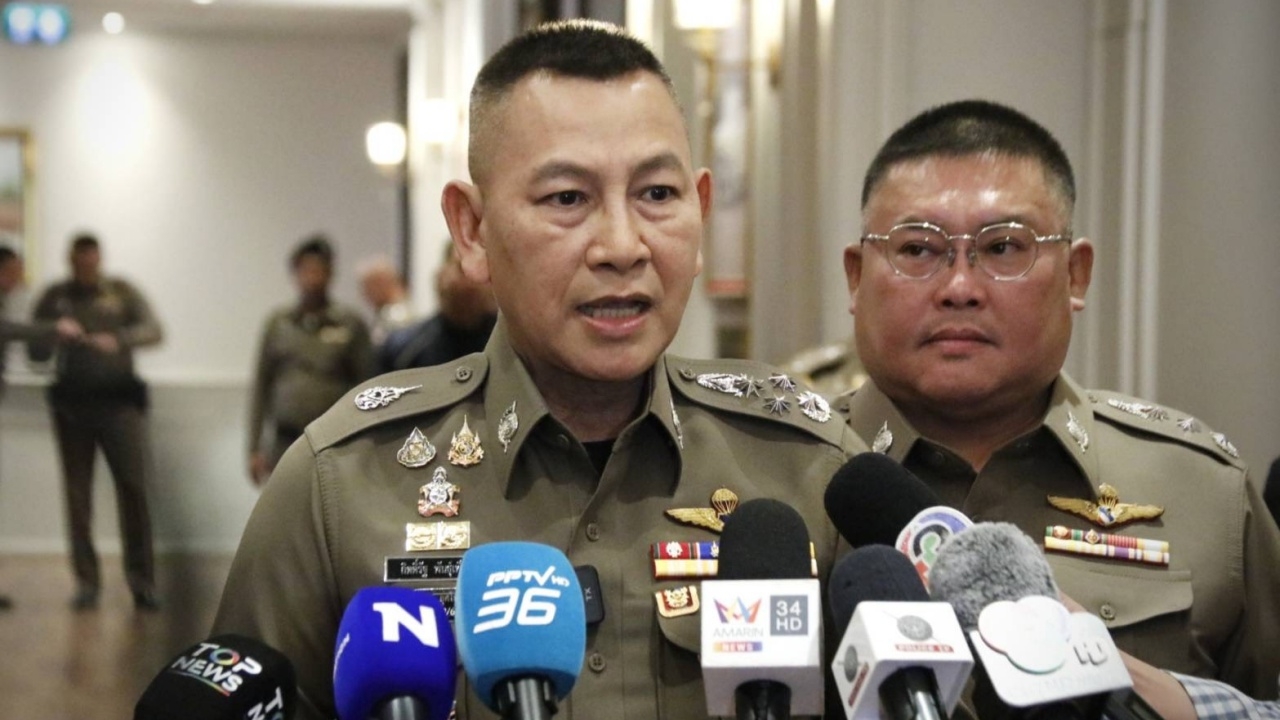
The National Police Chief reiterated that the gold bribery case is being handled according to legal procedures and expressed confidence that it does not violate the constitution. He denied any dispute over case files with the National Anti-Corruption Commission (NACC). He pointed out that anyone who is innocent should enter the justice process and need not flee. He accepted criticism of scandals within the police force but asserted he would not allow problems to be swept under the rug.
At 13:20 on 9 Jan 2026 GMT+7, at the Royal Thai Police Headquarters, Police General Kittirat Phanpetch, the National Police Chief, spoke about progress in the gold bribery case linked to former Deputy National Police Chief Police General Surachate Hakparn and a NACC commissioner. He confirmed that police actions strictly follow legal procedures, starting with establishing an investigative team to collect preliminary evidence to ensure fairness for all parties, followed by filing complaints and proceeding with formal investigations in sequence.
Since this is a significant case, the investigative team needed to be confident in the legal grounds and evidence before filing charges. The investigators carefully collected witness statements, documents, and related evidence before submitting the case file to the National Anti-Corruption Commission (NACC) within the legally mandated 30-day timeframe.
Regarding concerns from the opposing party who disagree with submitting the case to the NACC, arguing it may violate the constitution, the National Police Chief said officials have followed all procedural steps completely. If any party feels unfairly treated, they can exercise their right to file complaints or seek justice through higher legal channels, which the law provides.
Concerning criticism that the police and NACC may have differing views or are competing over the case file, Police General Kittirat stated the police have no intention of reclaiming the file but are simply fulfilling their legal duties. The authority to decide on further actions rests with the NACC. If the NACC deems it appropriate to return the case file, the police are prepared to continue the process immediately.
When asked about concerns that some accused individuals might flee due to the severity of penalties, the National Police Chief said that anyone who is innocent should participate in the justice process and has no reason to flee. However, if someone does flee, the police will proceed according to the law as in other criminal cases, including issuing arrest warrants, tracking the individuals, and coordinating with Interpol if they flee abroad.
Additionally, Police General Kittirat spoke about the connection between the criminal case and the administrative court’s pending ruling on the temporary suspension of the accused from official duties. He said they are currently awaiting the court's decision and emphasized that police officers must accept and comply with all court rulings.
He explained the difference between temporary suspension and dismissal from service: they are separate steps and statuses. Temporary suspension is a provisional measure applied when accused of serious disciplinary offenses and can be appealed or challenged in the administrative court. Dismissal results from a completed disciplinary investigation confirming serious violations.
In closing, the National Police Chief addressed rumors about buying and selling police positions and political lobbying within the force, especially during his tenure as head. He acknowledged these problems have existed for a long time, not just recently, but stressed that as leader he must act transparently. If clear evidence emerges, he will prosecute according to the law, even if it leads to criticism of the police’s image. He insisted this is preferable to hiding problems. He also emphasized that the entire police force should not be generalized as corrupt, as those who commit offenses are a very small fraction compared to the entire national police personnel.