

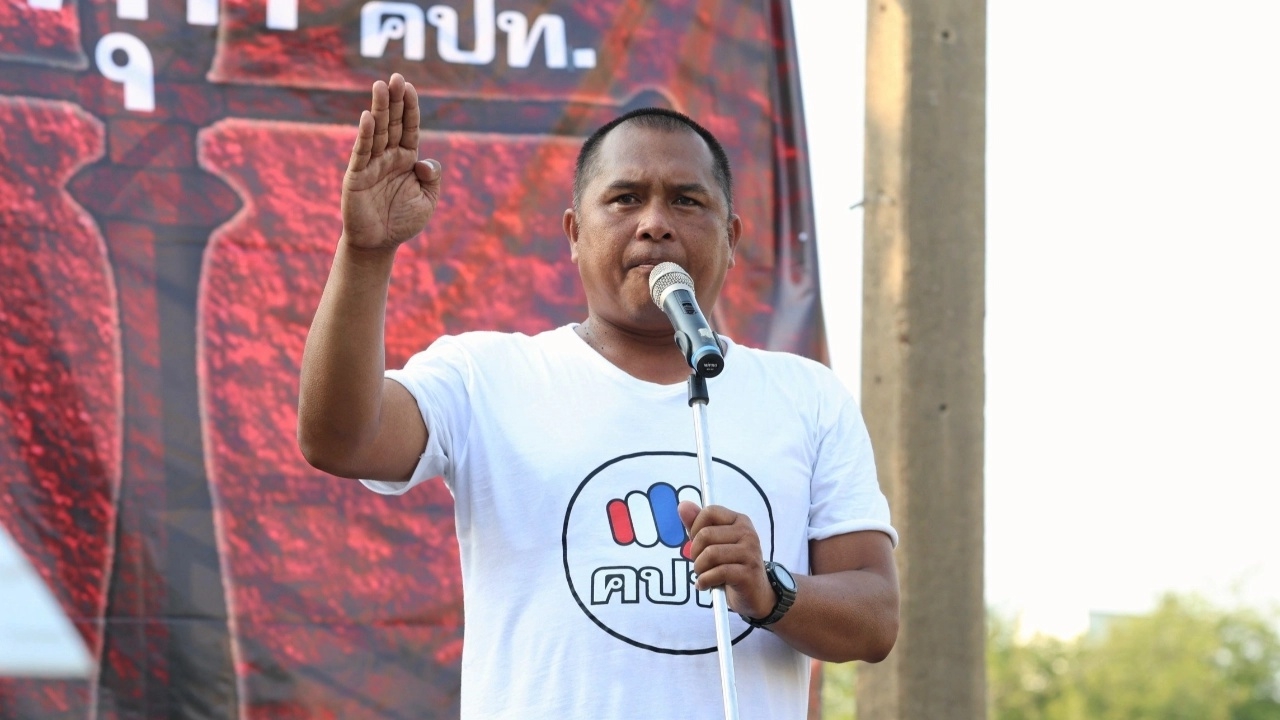
Dusit District Court sentenced Nasser Yeehma and Phichit Chaimongkol, two leaders of the People’s Democratic Reform Committee (PDRC), to one month imprisonment without suspension for violating the Public Assembly Act, citing that they committed similar offenses multiple times after considering their records and the nature of the offense.
On 4 Feb 2026 GMT+7, Dusit District Court held a hearing for case number A387/2568. The special public prosecutor of District Court Division 3 charged Nasser Yeehma, head of security for the People’s Democratic Reform Committee (PDRC), defendant 1, and Phichit Chaimongkol, a PDRC leader, defendant 2, with offenses under the Public Assembly Act.
The prosecutor accused both defendants, who were organizers of a public assembly, with defendant 1 having notified authorities of the assembly, and both defendants inviting or arranging for others to join. They were responsible for maintaining order but neglected their duties by allowing protesters to set up tents on two traffic lanes on Phitsanulok Road, park large buses blocking two remaining lanes, and place traffic cones obstructing public roads. This caused motorists to collide with the buses. Officials overseeing the assembly issued four written orders demanding corrections, but the defendants and their group ignored them. They were charged under Sections 15(4) and 31 of the Public Assembly Act B.E. 2558 (2015).
Both defendants denied the charges.
After reviewing evidence from both sides, the court accepted as fact that on the date, time, and location in question, defendant 1 had notified the Nang Loeng Metropolitan Police Station superintendent of the public assembly. During the assembly, protesters set up tents on two traffic lanes of Phitsanulok Road. At night, they parked large buses blocking the other two lanes and placed cones to obstruct public roads, resulting in a vehicle collision with the parked buses.
Authorities responsible for managing the assembly issued a total of four written notices ordering corrections, but the defendants failed to comply. Subsequently, a civil court ordered the protesters to end the assembly within seven days, after which they moved out. The case centered on whether the defendants’ actions constituted the charged offenses. Witnesses from both prosecution and defense testified that protesters set up tents, planted trees, cooked food, installed solar panels, built a temporary bus stop, parked vehicles in traffic lanes three and four, played music, parked food delivery vehicles at university gates, and set up a rally stage.
The prosecution presented local residents who testified about the assembly’s adverse effects. The defendants argued that the chosen assembly location was reasonable and that relocating was not feasible. The court found that the defendants were aware of the official orders to modify the assembly but did not comply. Although some road traffic was possible during day and night, prosecution witnesses consistently testified that the assembly caused persistent traffic congestion, inconveniencing the public, students, and university staff, especially during peak hours. Protesters themselves admitted a vehicle collision occurred with a bus they had parked to block the road. A university professor testified about the disruption caused by road closures forcing over 700 affected students to walk, leading to lateness or absence from classes; these students signed a petition documenting their grievances. The temporary bus stop was moved to a dangerous curve, increasing accident risks. Protesters also blocked university gates with vehicles unloading goods, preventing vehicle access.
Considering the rationale and necessity behind the Public Assembly Act B.E. 2558 (2015), which aims to ensure assemblies occur peacefully without threatening national security, public safety, or infringing on the rights, freedoms, and dignity of others—thus protecting the public interest—the defendants organized the assembly yet neglected their duties, allowing protesters to erect camping tents on traffic lanes in a central city area surrounded by important sites such as the Government House, university, and schools with many people present. Both sides’ evidence indicated a vehicle collision occurred involving a vehicle parked by the Dhammakaya group protesters blocking the road. This caused greater-than-normal disruption to the public’s daily life and prioritized the protesters’ basic rights over the common good. Before the assembly, traffic lanes were clear, and vehicles could travel normally without obstruction.
Therefore, as assembly organizers responsible for overseeing and managing the event, the defendants’ neglect to comply with official orders to manage and correct the assembly constitutes a violation of legal duties to maintain order and prevent undue obstruction to the public. Their defense that relocation was impossible and that multiple civil court orders to end the assembly were previously dismissed does not justify noncompliance with official instructions to conduct the assembly peacefully and without unreasonable obstruction as required by Section 15(4) of the Public Assembly Act B.E. 2558 (2015). The defendants’ arguments are rejected.
The facts establish that both defendants committed the offenses as charged.
The court ruled that both defendants were guilty under Section 15(4) in conjunction with Section 31, paragraph one, of the Public Assembly Act B.E. 2558 (2015), sentencing each to one month in prison. Considering their records and that they had repeatedly committed similar offenses as reported by the Criminal Records Registration Division, the court decided not to suspend their prison sentences.