

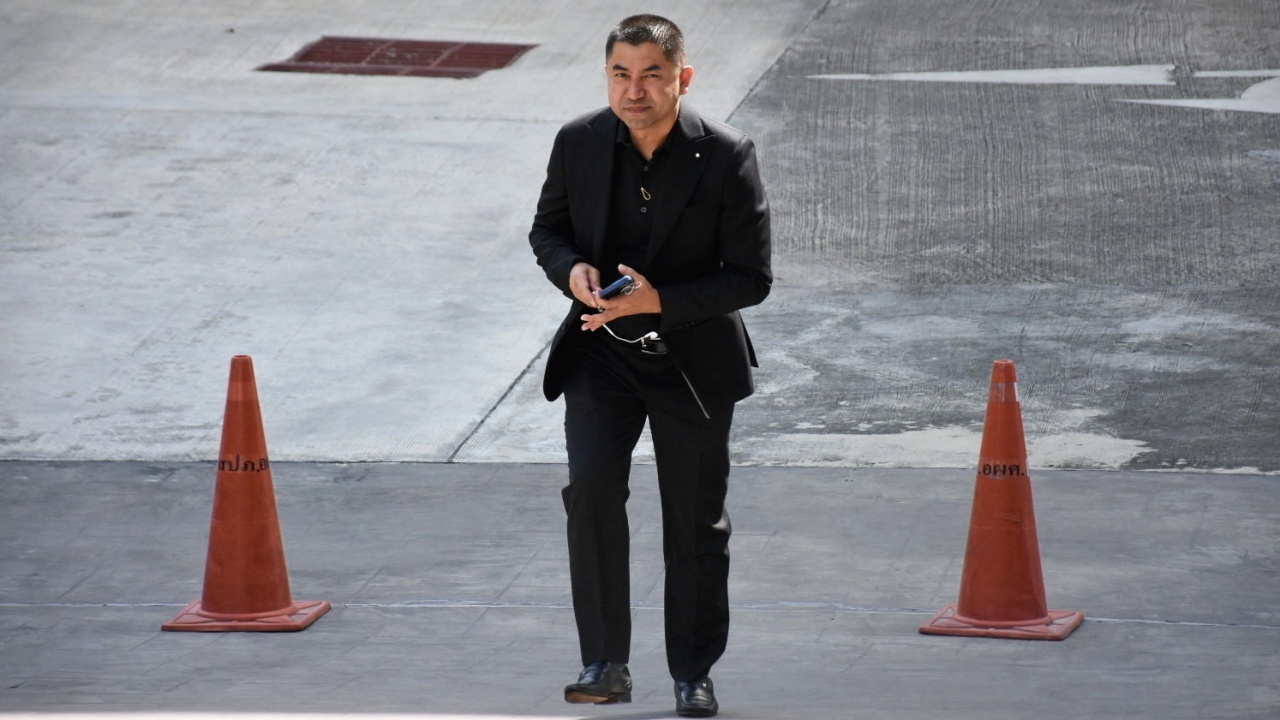
The civil court's ruling ordered the seizure of assets belonging to “Surachate-Sirinadda” from three bank accounts totaling over 480,000 baht plus interest, to be transferred to the state. This followed the Anti-Money Laundering Office's resolution to freeze assets in the online gambling case. It pointed out that “Kris,” a former close subordinate, conducted transactions outside normal practice, and the defendants failed to demonstrate which funds were legitimate and which were mixed with accounts used to commit crimes.
On 25 February 2026, reporters reported that on 29 January 2026, the civil court delivered a judgment in a case where the Special Case Prosecutor's Office 2 filed a petition. The petitioners were Mrs. Sirinadda Hakpal and Police General Surachate Hakpal, former Deputy Commissioner-General of the Royal Thai Police, who were defendants 1 and 2. The petition requested the seizure of assets amounting to 481,351.72 baht plus interest belonging to defendants 1 and 2, to be transferred to the state under the Anti-Money Laundering Act B.E. 2542 (1999), Sections 49 paragraph one and 51. This was due to the assets being linked to offenses related to online gambling and money laundering, which are predicate offenses under Sections 3(9) and 5 of the Anti-Money Laundering Act.
The case raised the issue of whether the petitioner had the authority to file this petition. It was determined that the consideration and judgment in petitions for asset forfeiture to the state must follow the Civil Procedure Code by analogy only. Cases requesting asset forfeiture under the Anti-Money Laundering Act are not civil cases related to criminal cases under Criminal Procedure Code Section 46. Therefore, defendants 1 and 2 argued that the police investigation at Thungmahamek Police Station in criminal case 468/2566 was unlawful under relevant laws and regulations. They are entitled to exercise legal rights under the Criminal Procedure Code or other relevant laws in separate criminal cases. Since the transaction committee followed proper procedures and resolved to submit the matter to the prosecutor to file the asset forfeiture petition correctly, the prosecutor has the authority to file this petition.
The case also required determining whether predicate offenses existed and whether defendants 1 and 2 committed or were involved in predicate offenses under Section 3(9) and money laundering offenses under Section 5 of the Anti-Money Laundering Act B.E. 2542. The petitioner presented testimony from Mr. Somphian Yantharak, a specialist investigator from the Anti-Money Laundering Office. He testified that financial investigations revealed that Police Lieutenant Colonel Kris Piriya Khet used other people's bank accounts to transfer money to other accounts to pay life insurance premiums for defendants 1 and 2. The accounts used by Kris belonged to co-defendants in criminal case 391/2566 at Tao Poon Police Station, accused of jointly organizing or facilitating unauthorized electronic gambling, conspiracy by two or more persons to commit money laundering, and actual money laundering acts. Additionally, Kris faced charges with other defendants in criminal case 468/2566 at Thungmahamek Police Station for similar offenses, including allowing others to use their bank accounts knowingly for crimes related to technology.
During the period of the criminal behavior, many money transfers connected to other criminal suspects were found. Kris, as a government officer, using others' accounts for personal benefit, indicates dishonest intent and concealing assets obtained dishonestly. Evidence supports that the insurance premiums were assets linked to criminal acts. When defendants 1 and 2 redeemed the life insurance policies paid for by Kris through the three individuals' bank accounts, AIA Company transferred the redemption money into those bank accounts. Thus, it is credible that the 481,351.72 baht in those accounts are assets related to criminal acts. The facts support the occurrence of predicate offenses under Section 3(9) of the Anti-Money Laundering Act B.E. 2542.
Another issue was whether defendants 1 and 2 were connected to predicate offenders. It was found that Kris and his associates remain suspects in jointly organizing electronic gambling. The investigation showed Kris used other people's bank accounts as proxies with transactions amounting to millions of baht continuously. This clearly indicates the behavior is abnormal for typical honest financial transactions. As a police officer, Kris knew or should have known that using other people's accounts in this way could relate to crimes involving technology or other offenses and violated laws on preventing and suppressing cybercrime. The facts indicate Kris was or had been involved or associated with predicate offenders under Section 3(9) or money laundering offenses under Section 5 of the Anti-Money Laundering Act B.E. 2542.
The investigation further found that Kris was a subordinate of defendant 2 and served as his aide or personal assistant, a trusted person. This is evident as defendant 2 entrusted Kris with large sums of cash to pay for personal expenses of defendants 1 and 2, including life insurance premiums—benefits to defendants 1 and 2 personally. This behavior suggests Kris had a closer relationship with defendants 1 and 2 than just an ordinary subordinate.
The facts thus support that defendants 1 and 2 were or had been associated or involved with predicate offenders under Section 3(9) or money laundering offenses under Section 5 of the Anti-Money Laundering Act B.E. 2542.
The next issue was whether the three asset items listed are linked to predicate offenses under Section 3(9) or money laundering offenses under Section 5 of the Anti-Money Laundering Act B.E. 2542. Having accepted the above facts that defendants 1 and 2 were or had been involved with predicate offenders, and learned that the bank accounts receiving money from electronic gambling offenses contain funds related to predicate offenses, even if some money given to Kris was legitimate, defendants 1 and 2 failed to prove to the court which amounts from the redemption funds from AIA Company into their accounts were from others' accounts linked to electronic gambling offenses and which were legitimate funds and in what amounts. Since defendants 1 and 2 were involved or associated with predicate offenders and their evidence could not rebut legal presumptions, it was accepted that asset items 1-3 listed in document L.10 are assets related to predicate offenses under Section 3(9) and money laundering under Section 5 of the Anti-Money Laundering Act B.E. 2542. Therefore, an order was issued to seize asset items 1-3 along with accrued interest to be forfeited to the state, according to Sections 49 and 51 of the Anti-Money Laundering Act B.E. 2542.