

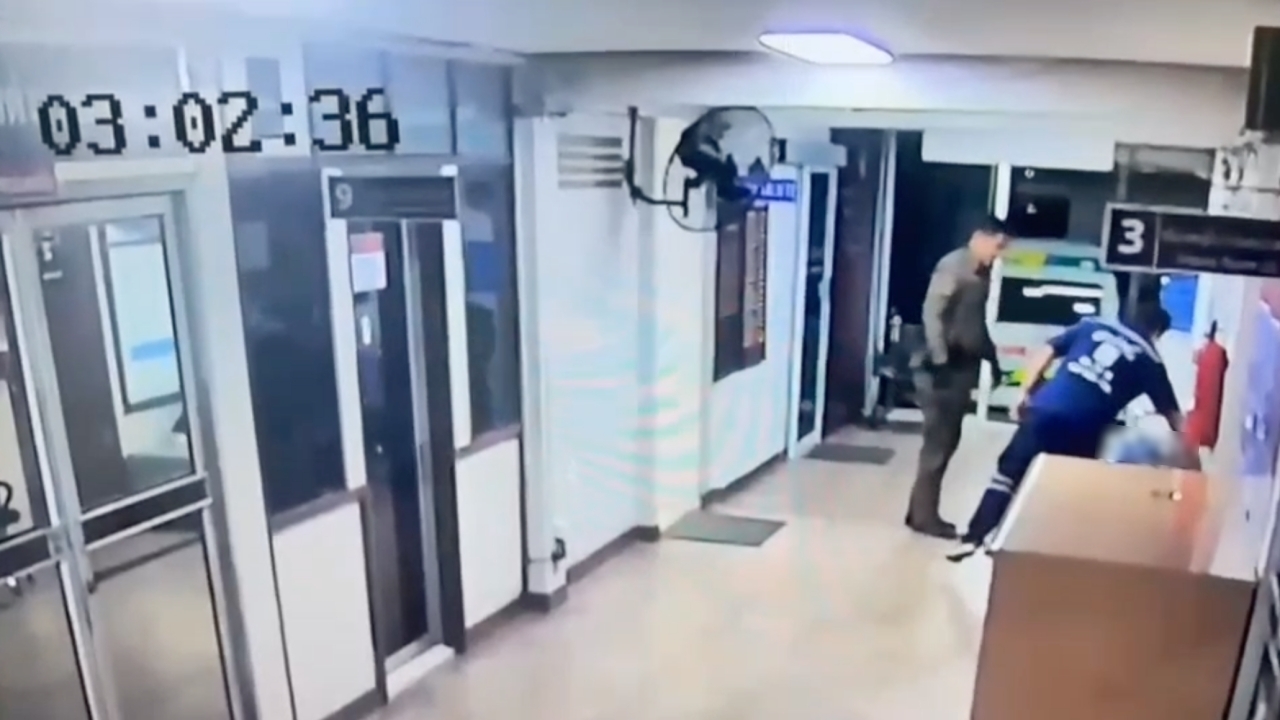
A mother and her family appealed to the Saimai Must Survive page after their daughter crashed her motorcycle on Lat Phrao Road, but the rescue team refused to take her to the hospital. They claimed they smelled alcohol and took her to the police station instead, providing no assistance. She ultimately died. The family remains troubled by police and rescue work as the case has seen no progress after one year. Ekaphop from Saimai Must Survive urged the police to promptly revise the assistance criteria, as this is a recurring issue like the Bang Pa Han case.
At 10:30 a.m. on 8 Mar 2026 at the Saimai Must Survive page on Wat Ko Road, Saimai District, Mrs. Samaporn Pongkamla, 52, a food stall owner near Saphan Khwai, and Mr. Natthaphat Kliangkao, 23, a Grab driver and boyfriend, came to seek help from Ekaphop Ruangprasert, founder of Saimai Must Survive. They said Miss Warisara Pongkamla, or Baitoey, 21, suffered a motorcycle crash causing internal injuries. However, rescue workers at the scene saw no visible wounds and, smelling alcohol, assumed she was drunk, taking her to the Phahonyothin Police Station instead of a hospital. She later died there; autopsy showed torn lungs and liver with internal bleeding.
Mrs. Samaporn Pongkamla said her daughter had a motorcycle accident on 20 Feb 2025 at about 2 a.m. near the entrance of Soi 43/2. She was riding home from her workplace, a restaurant on Sukhumvit, and was close to home.
At the accident site, heavy rain made the road slippery, causing her to lose control and fall in the middle of the road. Rescue personnel from a prominent foundation responded but, instead of taking her to a hospital, brought her to Phahonyothin Police Station, claiming she had no serious wounds except facial abrasions and that they smelled alcohol, believing she was intoxicated.
At Phahonyothin Police Station around 3 a.m., she received no care or assistance from the police. By about 5 a.m., officers found her having convulsions and foaming at the mouth. They called rescue workers to perform CPR, but it was too late. She died around 6 a.m. CCTV footage confirmed she lay unattended on the police station floor from 3 a.m. until dawn.
Mr. Natthaphat Kliangkao, 23, the deceased's boyfriend, said on the night of the accident, they rode motorcycles separately from her workplace, a restaurant in Sukhumvit, back to their rental room in Lat Phrao as usual. That night he rode ahead. Upon arriving at the dormitory, he did not see her and could not contact her by phone. Friends helped search, and the next morning, her mother informed him she had died.
Upon learning the rescue team did not take his girlfriend to the hospital but to the police station instead, he felt shocked and very upset. He found the claim she was drunk unreasonable. While she may have had some drinks as a restaurant worker, during their last conversation he did not notice a strong smell of alcohol, and she was coherent enough to ride normally. Importantly, she knew her limits and would not drink to intoxication.
The rescue team's justification that she was drunk because of alcohol smell and thus sent to the police station was unacceptable. He later learned rescue workers mocked her in the incident report chat, calling it "just a drunk driving case" and laughing. He saw this as highly disrespectful to the injured. When he spoke to the rescue workers via his girlfriend's rescue worker friend, they did not apologize and claimed they had decades of experience, denying responsibility and saying it was the police's role to take her. This was unacceptable; rescue workers should transport accident victims to hospitals regardless of their condition.
Mrs. Samaporn Pongkamla, 51, added she deeply questioned why police and rescue workers did not take her daughter to the hospital. CCTV at Phahonyothin Police Station showed her daughter was unconscious and suffering severe pain, carried into the station by the rescue team with no attention or care from police. When she had convulsions, police only then called rescue workers for CPR, which lasted over an hour but failed, resulting in her death.
The forensic autopsy at the Police Hospital found her lungs and liver torn with internal bleeding in the abdomen and chest. This indicated a severe lack of judgment by rescue and police personnel in assessing her condition. They focused only on the absence of external wounds and assumed intoxication, taking her to the police station instead of hospital. This meant she suffered pain unnecessarily. Had she been taken promptly to hospital, she might have survived. Even her facial abrasions received no first aid or dressing from rescue workers.
Crucially, doctors found eight broken ribs, likely caused during CPR, which worsened bleeding in the lungs. The increasing internal bleeding led to her death.
Mrs. Samaporn said when she spoke to police and rescue workers, they avoided responsibility or apologies, only stating they "could not contact the deceased's relatives," claimed "no ID documents with the deceased," and that "the deceased refused hospital treatment." She rejected all these excuses. For example, the deceased's phone was with her and could have been used to contact relatives immediately, but police and rescue claimed the phone battery was dead and needed charging. The phone was returned to the family two days later, with contradictory explanations about when it was found.
Another excuse was "no identification documents," which was false because the deceased carried her ID card. Police later claimed the ID photo in government records did not match her face because she looked slimmer and smaller, and thus they could not confirm her identity.
Finally, they claimed the deceased refused hospital care, which was even more untrue as she was unconscious and had to be carried into the police station. This deeply unsettled Mrs. Samaporn and raised serious concerns about police and rescue conduct, amounting to neglect causing death.
Therefore, she filed a complaint with the Saimai Must Survive page. She had reported the case to the investigator and rescue personnel involved since August 2025, but there had been no progress after one year. Despite facing threats of counter-lawsuits from investigators, she vowed to pursue justice fully.
Mrs. Samaporn tearfully said her daughter's death was like dying alive. This was an accident, so why did rescue workers not take her to hospital immediately? It would have been simple. Regardless of intoxication, accident victims should be taken to hospital. Why take them to the police? Police are not medical decision-makers.
She also questioned why police neglected their duty and failed to consider hospital transfer. She lodged the complaint as a warning to others, hoping no one else dies at a police station like her daughter. She is afraid to tell relatives the true cause of her daughter's death. She wants responsible officials held accountable. At her daughter's funeral, a medium claimed the daughter told them "not to worry," but she insists on seeking full justice.

Ekaphop Ruangprasert, founder of Saimai Must Survive, said, "This is not the first time police neglect and mistakes have caused death. Recently, a case in Bang Pa Han, Phra Nakhon Si Ayutthaya Province involved police errors leading to a patient's coma. I call on the Royal Thai Police to establish new protocols: anyone in an accident who is unconscious or incoherent, drunk or not, must be taken to hospital by rescue workers first, even without visible wounds. Medical professionals should diagnose, as internal injuries like this case are life-threatening. Alcohol intoxication can be tested later by blood tests and prosecuted accordingly."
He also appealed to rescue personnel: "In any case, the injured must be taken to hospital first. Don't shift responsibility to police or assume there are no injuries just because no external wounds are seen. Otherwise, those who should help may become culprits. Wrong decisions can cause someone's death."
Going forward, they will coordinate case progress with the Phahonyothin Police Station chief and the Department of Rights and Liberties Protection, Ministry of Justice, to provide assistance and compensation for the criminal case victim. They will also urge Bangkok authorities to address safety issues at the accident site, which has iron drainage covers and potholes, posing risks of repeated accidents.