

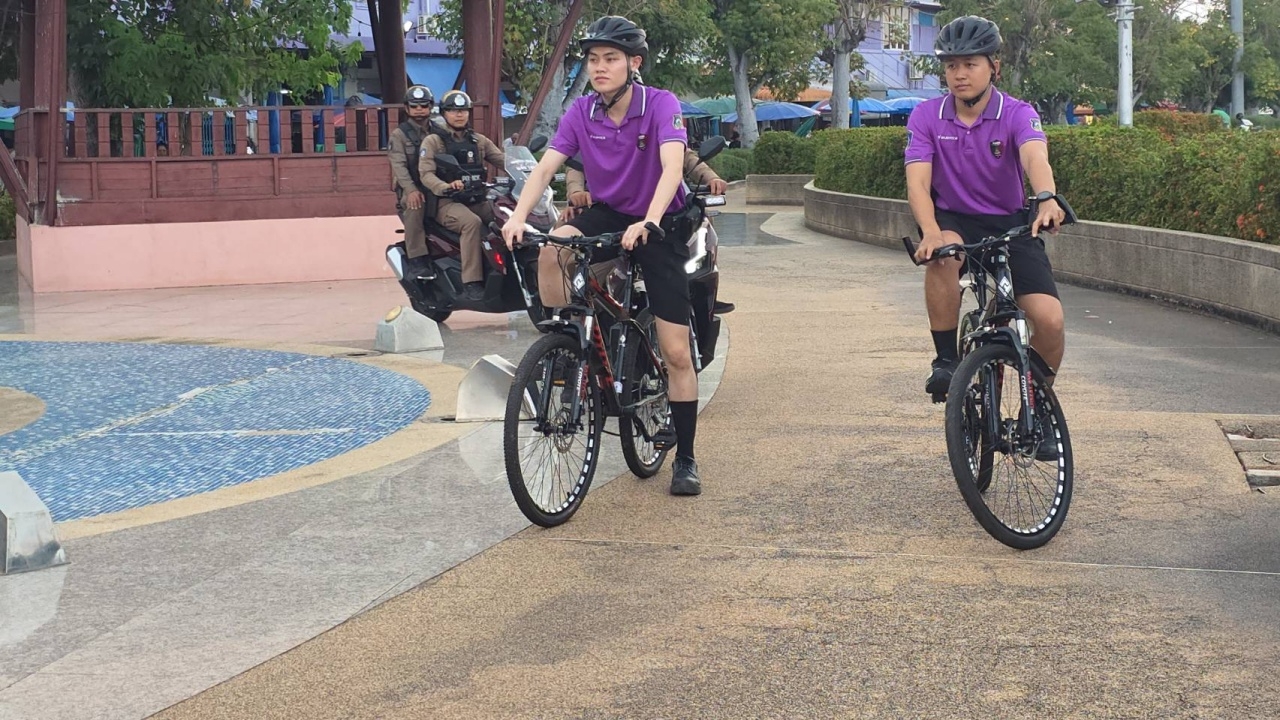
Uthai Thani City Police have adapted to the high fuel price crisis by deploying bicycle and foot patrols to strengthen security in markets and community areas, implementing the Stop–Walk–Talk patrol cycle to improve effectiveness in reaching the public.
On 23 Mar 2026 GMT+7, amid the ongoing energy crisis and current fuel shortages, Uthai Thani City Police continue to enforce strict security measures, confirming they have sufficient fuel reserves for official duties, particularly for patrols by car and motorcycle units, which remain active.

However, to adapt to the era of high fuel prices and conserve energy, Uthai Thani City Police have proactively reinstated bicycle patrol units, which have been operating for over a year. Besides saving fuel costs effectively, foot patrols have also been added to enhance community coverage.

Deputy Superintendent Samart Sukong of Uthai Thani City Police explained that the station has adopted the "Stop–Walk–Talk" patrol cycle, as directed by the Royal Thai Police, to improve outreach to the public. The approach involves three main steps as follows.
Stop: Patrol officers stop their vehicles at appropriate or high-risk locations such as communities, markets, or isolated alleys to maintain close vigilance rather than just passing through.

Walk: Officers conduct on-foot patrols to access blind spots or narrow alleys inaccessible to vehicles, enabling more detailed and thorough observation of irregularities.
Talk: Officers engage in conversations with residents to build relationships, listen to information and tips, and foster cooperation in crime prevention within the area.

Deputy Superintendent Samart added that bicycle and foot patrols offer multiple benefits, including energy savings during the crisis and improved physical fitness for officers through exercise. Most importantly, this approach enables officers to access various locations closely—such as markets, schools, parks, and tourist sites—making residents feel reassured and sustainably safe.