

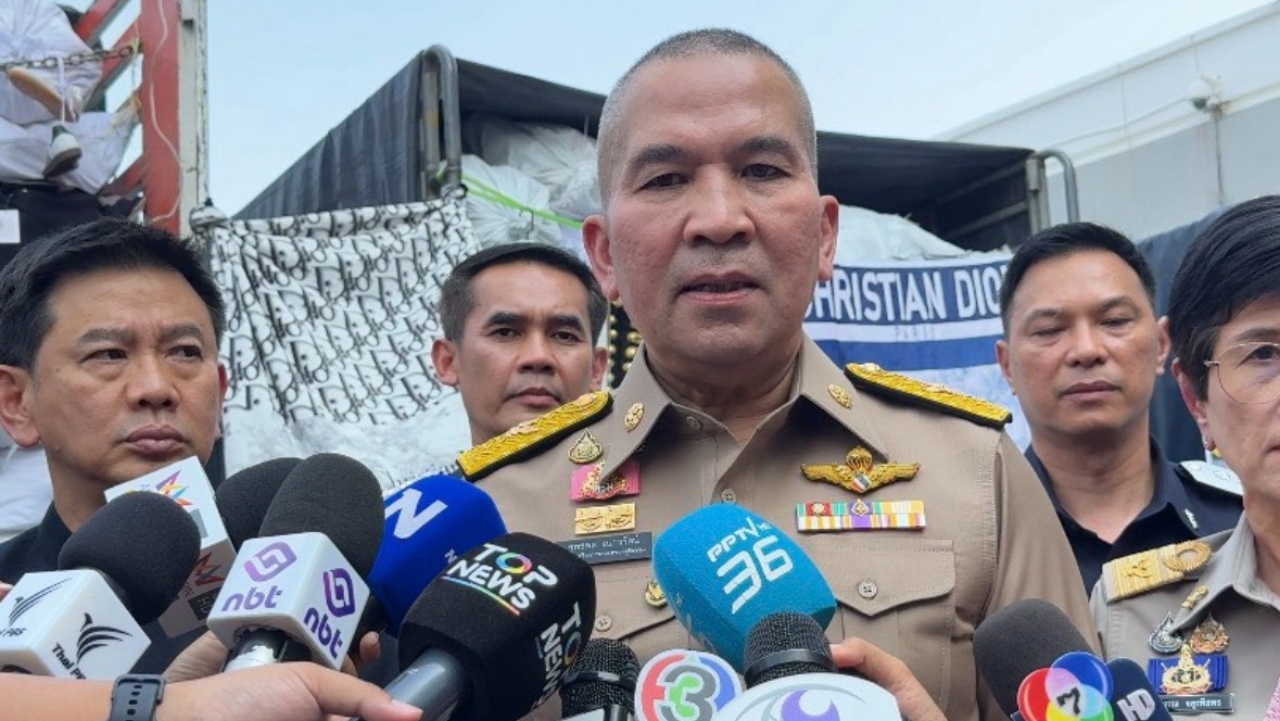
The Department of Special Investigation (DSI), together with the Department of Energy Business, conducted strict inspections at eight oil depots across four provinces. They found no evidence of price manipulation or irregularities involving jobbers and have put in place measures to prevent illegal oil smuggling to neighboring countries.
At the Department of Special Investigation at 3:00 p.m. on 24 Mar 2026 GMT+7, Pol. Lt. Gen. Rutthaphol Naowarat, Minister of Justice, revealed that the DSI, in collaboration with the Department of Energy Business, conducted on-site inspections of oil depots as per Prime Minister’s Order No. 3/2569 (2026 CE), addressing and preventing fuel shortages at eight points in four provinces. From 21-22 Mar, officials inspected all locations thoroughly and found no abnormalities in numbers or oil volumes in the tanks. They climbed to the top of the tanks to verify remaining oil, which was only residue at the bottom and unusable for sale. Additionally, no irregularities involving jobbers or price manipulation were detected.
On 23 Mar, I convened a meeting with the DSI director-general and relevant officials, assigning a list of 55 traders under Section 7 for widespread inspections nationwide. For traders under Section 10, totaling 245, coordination with the Royal Thai Police was completed, and inspections have been carried out accordingly.
When asked whether the government’s strict measures could address ongoing issues of illegal oil smuggling to neighboring countries and if such actions constitute offenses, Pol. Lt. Gen. Rutthaphol said that regarding oil smuggling to countries like Malaysia, where prices are higher than in Thailand, such smuggling is unlikely. Instead, it may involve vehicles operating cross-border, refueling in Thailand but running in both countries. For Myanmar or other neighboring countries, where purchase agreements exist, transactions proceed but in limited quantities without increases.
As for preventive measures, officials have taken actions such as on 22 Mar when I traveled with the Marine Police to enforce strict protocols on vessels smuggling oil for sale abroad. The Marine Police have continuous patrol plans, with patrol boat 708 regularly conducting rounds. During inspections, they check both oil quantity and quality, as well as verifying that depot or refinery operations comply with the Prime Minister’s directives. On 23 Mar, the DSI reported no violations. A summary of operations will be reviewed again this evening.

Mr. Wuttikrai Leewirapant, Permanent Secretary of the Ministry of Commerce, commented on price control measures, stating that first, relevant agencies were assigned to survey prices and monitor them using various measures. For example, price increases require permission. Cooperation with major manufacturers producing "house brand" products—company-branded goods with lower costs than name brands—was sought. A list of 30 essential daily-use items, such as soap, shampoo, toothpaste, and detergent, was created to produce special-priced products. Businesses cooperate with department stores nationwide to offer these goods at affordable prices.
Regarding support measures for products with transportation cost impacts, alternatives will be offered to the public. However, some items must follow market mechanisms; if prices rise, fairness must be maintained. Distorting market mechanisms by forbidding price increases would cause goods to disappear from the market. Therefore, alternative quality products at lower prices are provided to reduce household expenses. For example, some sellers price dishes like basil chicken with fried egg at 80 baht, while others sell the same for only 30 baht, offering consumers choices. If prices are set too high, buyers will not purchase, even if justified by higher oil costs, but alternatives are created for consumers.
Mr. Wuttikrai added that during product inspections, some items have seen price increases, prompting warnings. Understanding the public's way of life is important, but alternatives exist. The Ministry of Commerce will not attempt to distort market mechanisms and has requested cooperation from large retail and wholesale stores to maintain prices. Many stores confirmed that current prices reflect old costs and can be sustained until about April. Proactive measures are in place, not waiting for problems to arise, and announcements about quality brand products at affordable prices for the public will be made.
When asked if the measures would be effective if the situation prolongs, Mr. Wuttikrai confirmed strong cooperation from Thai producers under the “Thai Help Thai” policy, acknowledging the management of an abnormal situation. Regarding possible price impacts from plastic food packaging, he said the true price structure must be reviewed, including how much plastic resin prices have increased. The Ministry has completed price structure analyses, so plastic resin producers must be regulated and must explain any price increases by percentage.
Asked how the ministry would satisfy the public given ongoing complaints about high prices despite good measures, Mr. Wuttikrai said efforts would focus on distributing products widely. Key measures will be announced within one to two days. Producers, department stores, and retail-wholesale outlets will cooperate in broad distribution. Currently, the Ministry controls prices on 59 listed items and plans to add about 20 more, totaling around 80 items. Regarding whether prices will fall after rising, he affirmed that prices go up and must come down, just as the sun rises and sets.