

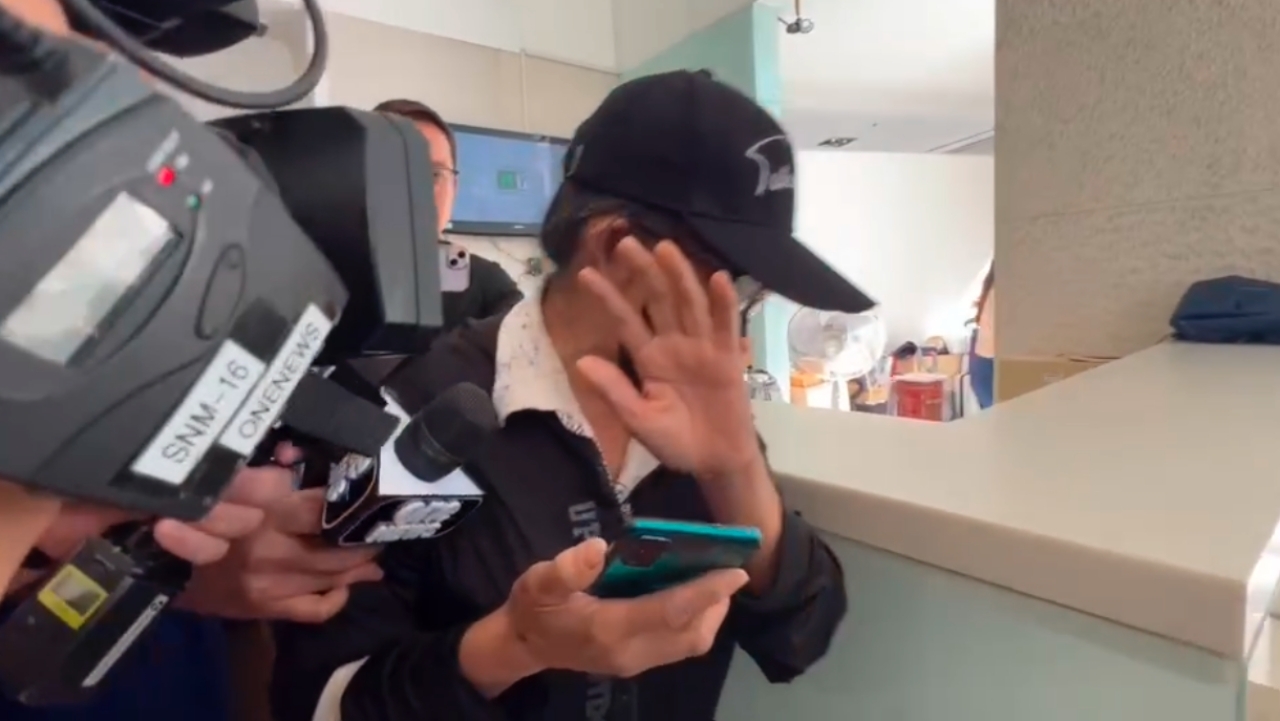
File photo images.
The Deputy Spokesperson of the Office of the Attorney General (OAG) explained the reason for the delay in filing charges in the case of a housekeeper mixing disinfectant into a 2-year-old child's milk bottle, which resulted in the suspect being released. The delay was due to ordering further investigation into the amount of toxin that could affect life. He affirmed that charges can still be filed later.
In this case, a Facebook user shared a warning after hiring a housekeeper from a Facebook group to clean their home, only to find that the housekeeper had mixed a multipurpose disinfectant product into their child's milk. The victim believes this was an attempt to make the child unconscious in order to commit theft.
Meanwhile, the housekeeper appeared on a popular TV program, insisting she had no intention to harm the child. She said it was a misunderstanding, as she thought the contents in the Fokky bottle were milk, having believed that disinfectants only came in brown color. She admitted that when pouring the disinfectant to clean the floor, she did not smell the Dettol scent, as previously reported.
The latest development on 3 April 2026: Mr. Chairat Pawaknan, Deputy Spokesperson of the Office of the Attorney General, gave an interview regarding the Phra Nakhon Tai District Court's order to release Ms. Usanee, or Aunt Anne (surname withheld), 57, the housekeeper accused of mixing disinfectant into a 2-year-old child's milk. The release was because prosecutors failed to file charges within the detention period. The investigation file was sent to the district court prosecutor on 23 Jan 2026 with two charges: 1. Intentional bodily harm causing physical or mental injury; 2. Adulteration of food or medicine causing health impact. Both charges carry penalties of up to 3 years imprisonment.
Chairat said that on 23 Jan, police submitted the case file and a final request to extend detention until 29 Jan. Upon receiving the file, prosecutors reviewed it and summoned the victim’s family for further questioning. Prosecutors found suspicious issues regarding the amount of toxin in the milk bottle and sent the file back to police for additional investigation into the toxin levels and how much a 2-year-old child would need to ingest to suffer life-threatening effects, consulting the Poison Center at Ramathibodi Hospital. They also ordered investigation into five more toxin-related points, with a return deadline of 27 Jan. On 28 Jan, police reported they had sent the request to the Poison Center, but by 29 Jan, the last day of detention extension, prosecutors had not yet received the report. According to court procedure, the suspect had to be released as the lawful detention period expired without charges being filed.
Chairat said he asked the case prosecutor if, without the toxin report, the evidence would suffice to prove guilt. Although CCTV showed the suspect putting poison into the milk bottle, the key question was whether the poison could cause life-threatening harm to the child. If the toxin report, once received, suggests an attempted premeditated murder, the charges would be more severe. Prosecutors want to establish how dangerous the substance in the milk bottle was to the child. They felt that filing charges prematurely without the toxin report might risk dismissal in court. On 29 Jan, police requested more time for the investigation, and prosecutors waited. On 4 Feb, prosecutors sent a follow-up to police. On 19 Feb, police informed prosecutors that the Poison Center had not yet sent the toxin report due to delays. Prosecutors have been waiting since then.
The Deputy Spokesperson of the Office of the Attorney General stated that the case can still be prosecuted, but they need to verify whether to proceed with the original charges or new ones with heavier penalties, as charges can only be filed once. Prosecutors want the case to be thorough. Regarding victims’ concerns that the released suspect, who lacks a fixed address, might evade punishment, prosecutors will follow legal procedures to locate and prosecute the offender. The statute of limitations is 10 years for the original charges, but 20 years for the new charges if filed. It is expected that within about one month, the Poison Center will submit the report to police, who will then forward it to prosecutors for consideration and filing charges in court.