

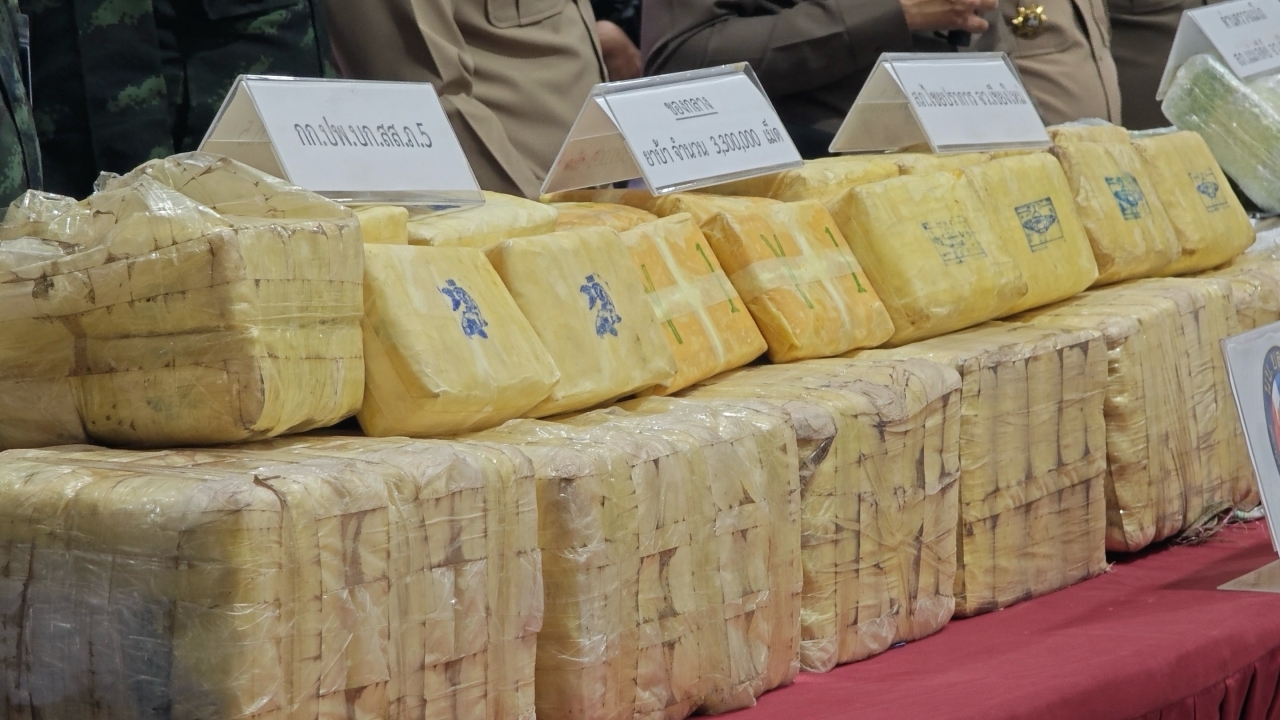
Region 5 police announced a crackdown on drugs, seizing 15 million methamphetamine pills and 254 kilograms of ice. Meanwhile, the ONCB addressed rumors about "recycling seized drugs," revealing strict procedures with counting at every stage before destruction.
On 2 June 2026, Police Lieutenant General Kritthaphon Yisakorn, Commander of Region 5 Police, along with Mr. Chatchawan Panya, Deputy Governor of Chiang Mai, and representatives from various agencies including local administration, military, Border Patrol Police Unit 35, and the ONCB Region 5, jointly announced the results of a major drug network crackdown. They arrested seven suspects (one died in a traffic accident while fleeing) and seized seven vehicles along with a large haul of 15.64 million methamphetamine pills and 254 kilograms of ice across upper northern Thailand.
Among these cases, an operation involved setting up a checkpoint on the route between Kalayaniwattana and Samoeng districts in Chiang Mai after an informant tipped about drug transport. Authorities spotted a gray Isuzu pickup truck with Chiang Mai plates and a steel frame fleeing the checkpoint. They pursued the vehicle, noticing a blue-and-white tent cloth covering cargo in the back. At the Mae Daet Noi intersection, the truck lost control, crashed into a tree stump and an embankment, then overturned, killing the driver at the scene. The driver was identified as Mr. Chaiwat from Chiang Mai. Inspection of the vehicle found 25 backpacks containing about 5 million methamphetamine pills. All seized items were handed to investigators at Kalayaniwattana Police Station. The incident occurred around midnight on 1 June.

In another case involving a chase in downtown Chiang Mai, Region 5 police investigators received reports of drug smuggling from Mae Taeng and San Sai districts. They deployed forces to check Chiang Mai–Phrao Road in San Sai. At 1:00 a.m. on 1 June, they observed a man riding a motorcycle leading a gray-black Toyota car with Chiang Mai plates carrying heavy cargo and mismatched plates. The police followed the vehicles to Nimmanhemin Road, Soi 3. When officers attempted to inspect the car, it accelerated to flee. The police chased and caught the driver who had fled on foot, identified as Mr. Noppol. A search of the car revealed 16 green backpacks containing about 1,544,000 methamphetamine pills.
Upon questioning, Mr. Noppol admitted to driving the vehicle. Police searched the car thoroughly and found 16 green backpacks with approximately 1,544,000 methamphetamine pills. The suspect and all evidence were taken to Phuping Police Station for legal action.
Other cases included the seizure of 254 kilograms of ice and one vehicle in Wiang Pa Pao district, Chiang Rai, with three suspects arrested; seizure of 5.8 million methamphetamine pills and three vehicles in Wiang Pa Pao district, Chiang Rai, with two suspects arrested; and seizure of 3.3 million methamphetamine pills and one vehicle in Chai Prakan district, Chiang Mai.

Police Lieutenant General Kritthaphon revealed that Chiang Mai remains a transit point for drug trafficking from production sources in neighboring countries to inner regions of Thailand, due to ongoing demand in those areas.
The arrest in Nimmanhemin, a famous tourist area in downtown Chiang Mai, does not indicate drug abuse in the city itself but involves suspects fleeing capture who entered the urban area and were apprehended there. The pickup truck crash in Kalayaniwattana district is believed to involve use of a detour route to avoid police checkpoints.
Mr. Danucha Chaiwong, Director of Law Enforcement at the ONCB Region 5, addressed media regarding rumors circulating on social media alleging that large seizures of narcotics were being recycled back into circulation or re-arrested. He firmly denied these claims. “These allegations are absolutely untrue,” he stated. He added that such views likely stem from misunderstandings or misinterpretations by certain groups.

Mr. Danucha explained that the handling of seized drugs is conducted with strict transparency. When officers seize drugs, the quantity and weight are meticulously recorded in official reports signed by the suspects. Upon transfer to investigators at police stations, the seized items are recounted by both the arresting team and the investigating officer. If numbers do not match, no acceptance is signed.
In major cases involving over 2 million methamphetamine pills, seized drugs are sent to the ONCB office for forensic examination. During receipt, officials count and "mark" the drugs in front of witnesses to ensure transparency. Currently, the ONCB can inspect up to 2 million pills daily. After testing, the drugs are transferred to the Food and Drug Administration’s (FDA) drug storage facility. The handover to the FDA requires detailed counting and weighing by a committee. If discrepancies arise, the FDA refuses to accept the drugs. The seized items are stored in a secure room monitored by CCTV 24/7.
Previously, drug destruction was conducted once a year. Due to increased seizures from stricter enforcement, destruction now occurs 3–4 times annually. Each time, a committee opens the secure room and verifies the drugs before destruction. Authorities urge the public to trust that there is no loophole allowing seized drugs to re-enter the market, contrary to circulating rumors.