

Kanchanaburi — The investigative team is expediting efforts to solve the case of "Nong Ongun," a 7-year-old girl found dead in a bamboo thicket within a rubber plantation. Police have questioned 30 to 40 witnesses. The Commander of Police Region 7 revealed that officers have not yet determined the cause of death or excluded any possibilities. They must await forensic results and noted the death appeared unnatural, and possibly suspicious in nature.
The case involves the body of "Nong Ongun," a 7-year-old girl found dead beneath a bamboo clump in the middle of a rubber plantation in Village 4, Prang Phlo Subdistrict, Sangkhla Buri District, Kanchanaburi Province, on 1 June 2026. She had been missing from home for three days prior.
On 4 June 2026, Pol. Col. Thanawat Hinyokhin, Superintendent of Division 5, Crime Suppression Division, disclosed that after the incident, Police Chief Pol. Gen. Kittirat Punpetch ordered the Crime Suppression Division and the Technology Crime Suppression Division to jointly investigate the case. Currently, the Crime Suppression Division is tracing any missing persons from the village and plans to re-interview all witnesses, collaborating closely with Police Region 7 to consolidate information.
Since the scene is in a forested area, CCTV footage is not available and investigators must gather additional evidence. When the body was found, the clothing was still fully worn. Detailed results will depend on forensic laboratory examinations.

The location is about 100 meters inside the forest from the road, situated behind Nong Ongun’s home. Though only 7 years old, the girl was considered aware enough that it would be unlikely for her to go with strangers. All village residents remain present, so authorities plan to re-interview all witnesses. However, communication is challenging because most villagers speak Hmong.
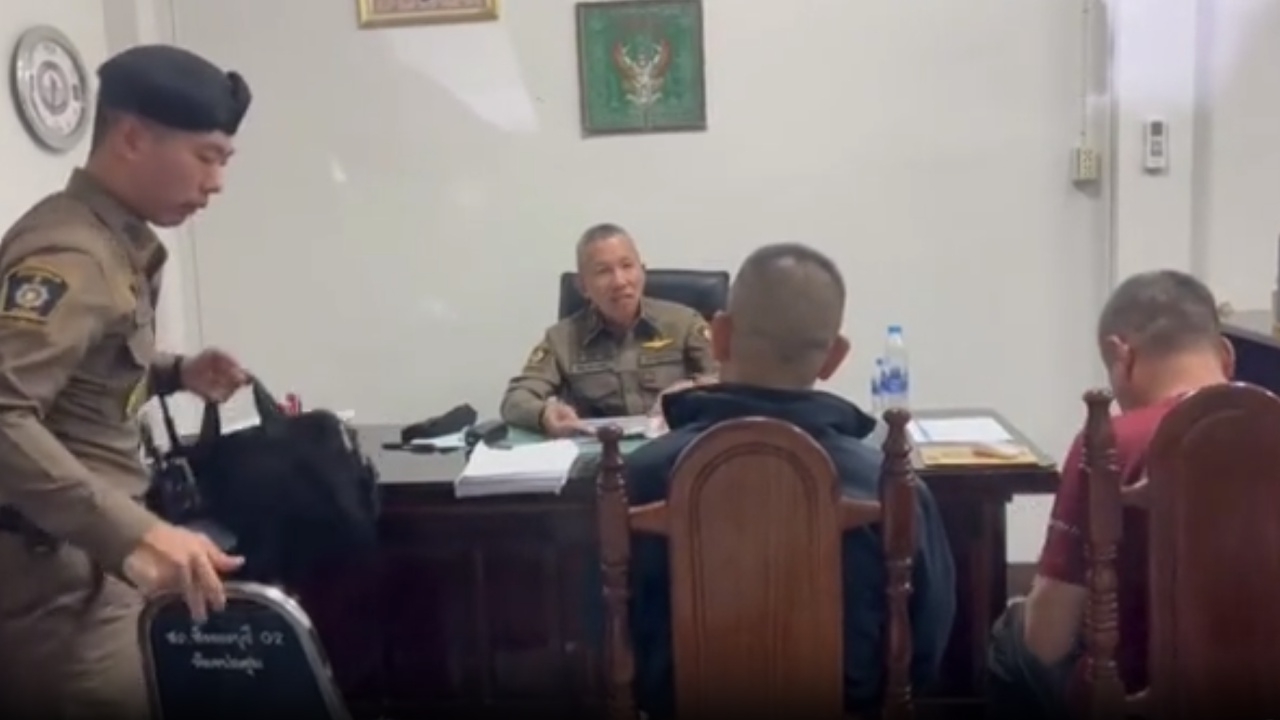
At 20:00 at Sangkhla Buri Police Station, Pol. Lt. Gen. Phisit Thanprasert, Commander of Police Region 7, convened the entire investigative team to summarize progress and strategize on apprehending the perpetrator. He revealed that following instructions from the national police chief, statements from seven groups of related persons have been gathered extensively. The medical examiner’s report is pending. It is expected that once the forensic institute concludes its analysis with medical experts, they will provide an official update.
Preliminary examination of the body showed postmortem animal bites. The blood and lungs were decomposed and unsuitable for testing. The person who cremated the body preserved the liver for toxicology analysis to check for poisons or foreign substances.
"Whether the child was murdered or sexually assaulted has not been confirmed by medical experts yet. Further expert consultation is required because the body was in an advanced state of decomposition, and nearly two days elapsed before discovery. Specialized tissue sampling is necessary, which takes time. Some evidence collected has been sent to the forensic institute, and partial results, including DNA, may be available within one to two days," he explained.
Pol. Lt. Gen. Phisit Thanprasert added that no scenarios have been ruled out. They await forensic confirmation to clarify all possibilities. The villagers, mostly Mon people, sometimes have communication issues regarding timelines. Police are using intermediaries from their community to facilitate clearer communication. They are cross-checking statements from the seven groups to identify inconsistencies and verify details. Those closest to the scene have provided clear timelines with no doubts, but some time gaps remain under investigation.
Regarding clothing found today, police brought the family for questioning. The household has many members, and communication misunderstandings exist. Efforts are underway to ensure mutual understanding among all involved.
A three-wheeled cart (saleng) was seized for forensic evidence collection to test for DNA. Fingernail samples from persons of interest are also being tested. If matches are found, it will help clarify links.
Bloodstains in the village have been examined and evidence collected. Investigators noted the family is clearly concerned and unlikely to have committed such acts. No outsiders are suspected; only community members are involved. Authorities are gathering information from all suspect groups to see if connections can be made to the crime scene or other evidence.
No one from the community has left the area or gone missing. So far, 30 to 40 witnesses have been interviewed.
Forensic analysis requires time. The first batch of evidence may take one to two days to process. Currently, a total of three batches of evidence have been sent.
It remains unclear whether the precise crime scene is exactly where the body was found.
Individuals with scratches have been examined by hospital doctors. According to medical staff, the wounds are two to three days old and DNA cannot be retrieved because the wounds have dried. Investigators are collecting all possible evidence from suspects. CCTV footage from local shops has been obtained to check if anyone was near the area at the relevant times.
It was confirmed that there was no rope binding the hands behind the back. The body’s hands were positioned behind, but no rope was found. There is no confirmation that the hands were tied.

Whether this case mirrors previous high-profile ones is unknown. The investigative team is gathering all evidence. The unnatural death requires establishing who caused it and why. Forensic evidence will be crucial. Medical experts expect the first forensic results within one to two days.
Items found near the scene, including a bag, shoes, and the child’s phone, have been collected. Evidence from suspects is being compared to these items for matches.
Nong Ongun’s phone usage was restricted; it needed to connect to her mother’s Wi-Fi. Records show the phone was used for gaming until about noon on 30 May, after which no further activity was detected.