

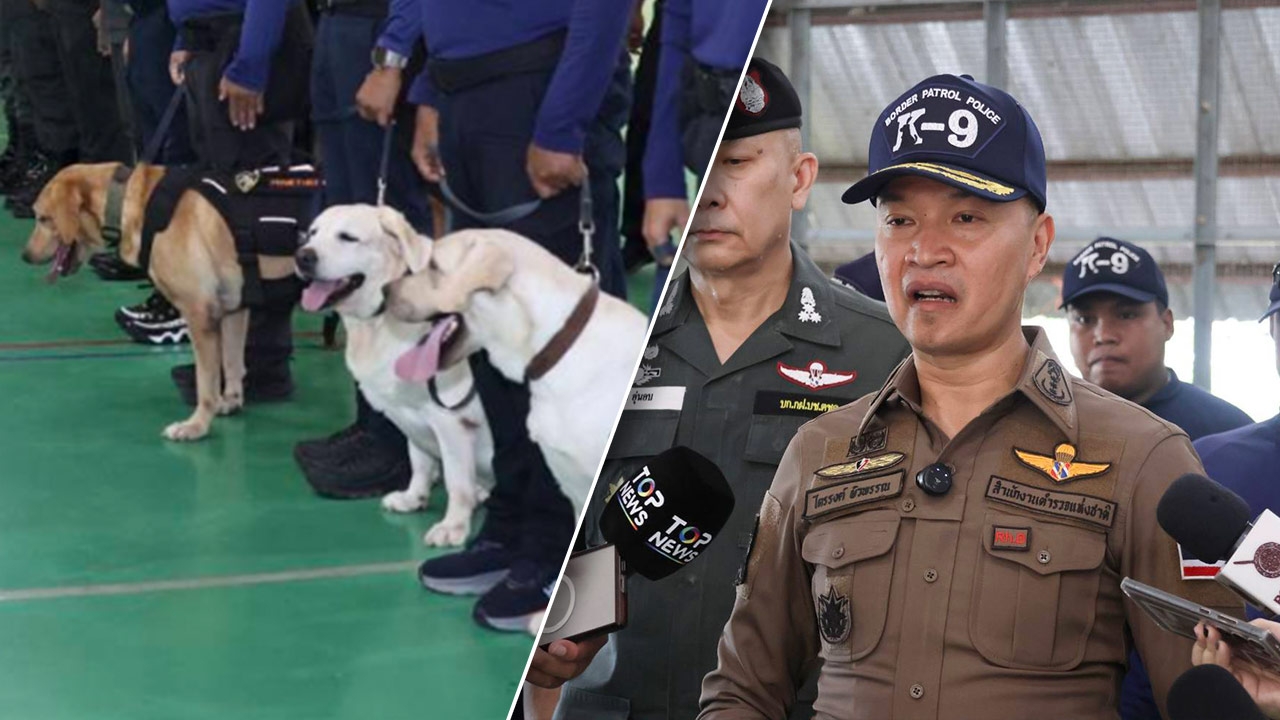
Pol. Lt. Gen. Trairong inspected the K9 Police Dog Training Center of the Border Patrol Police, demonstrating the readiness of scent detection dogs for bomb and drug detection and tracking to support the crackdown on cross-border drug smuggling. He advised the public to refrain from teasing or playing with police dogs when they are on duty in public areas.
At 10:15 a.m. on 8 July 2026, Pol. Lt. Gen. Trairong Piwpan, Deputy Inspector General of the Royal Thai Police and spokesperson for the Royal Thai Police, inspected the Police K-9 Training Center under the Special Training Division of the Border Patrol Police Headquarters in Cha-am District, Phetchaburi Province. This center is a key support unit of the Royal Thai Police, training K9 police dogs to develop expertise in detecting drugs, explosives, tracking, assisting in investigations, arrests, and preventing harm while ensuring public safety.

Pol. Lt. Gen. Trairong explained that beyond their vital role in security missions, the K9 units of the Border Patrol Police Headquarters have two main tasks: first, tactical operations involving tracking and bomb detection, especially in the southern border provinces; and second, drug searches. Recently, trainers and K9 dogs have been deployed to conduct drug searches at airports and transport stations following the policy of Police Chief Pol. Gen. Kittirat Phanphet to prevent drug trafficking out of the country.
Currently, 168 K9 police dogs serve in various divisions of the Border Patrol Police Headquarters and the Metropolitan Police Headquarters, supporting missions to build public confidence in safety, maintain security, and suppress crime.
Additionally, the Police K-9 Training Center has entered police dogs in competitions, earning top awards in obedience and explosive detection categories, gaining recognition from various units.

Pol. Lt. Gen. Trairong expressed gratitude to commanders, personnel, trainers, and all police dogs for their excellent service, which has brought honor to the agency and safety to the public. He urged continuous development of knowledge for both trainers and police dogs in tactics, techniques, and new technologies to enhance investigations against emerging crimes, such as smuggling electronic devices used in online crimes, thereby assuring the public of the Royal Thai Police's readiness, dedication, and commitment to maintaining social peace.
He also instructed close attention to the welfare and health of both trainers and police dogs. He affirmed that current police dog training adheres to international standards, considering dogs’ behavior and temperament. Work shifts are set appropriately to maximize effectiveness, and trainer and dog standards at deployed units are reviewed every three months to maintain readiness.
Moreover, dogs detecting suspicious objects are trained not to dig or disturb items to prevent danger if the object is an explosive. This is a paramount safety rule.

The Royal Thai Police spokesperson advised the public that when encountering police dogs working in public areas, they should avoid teasing or playing with them, as the dogs require high concentration to detect scents and perform their duties. However, when the trainer allows the dogs to rest or removes their leashes, the public may politely approach the trainer to greet, pet, or take photos with the police dogs safely.