

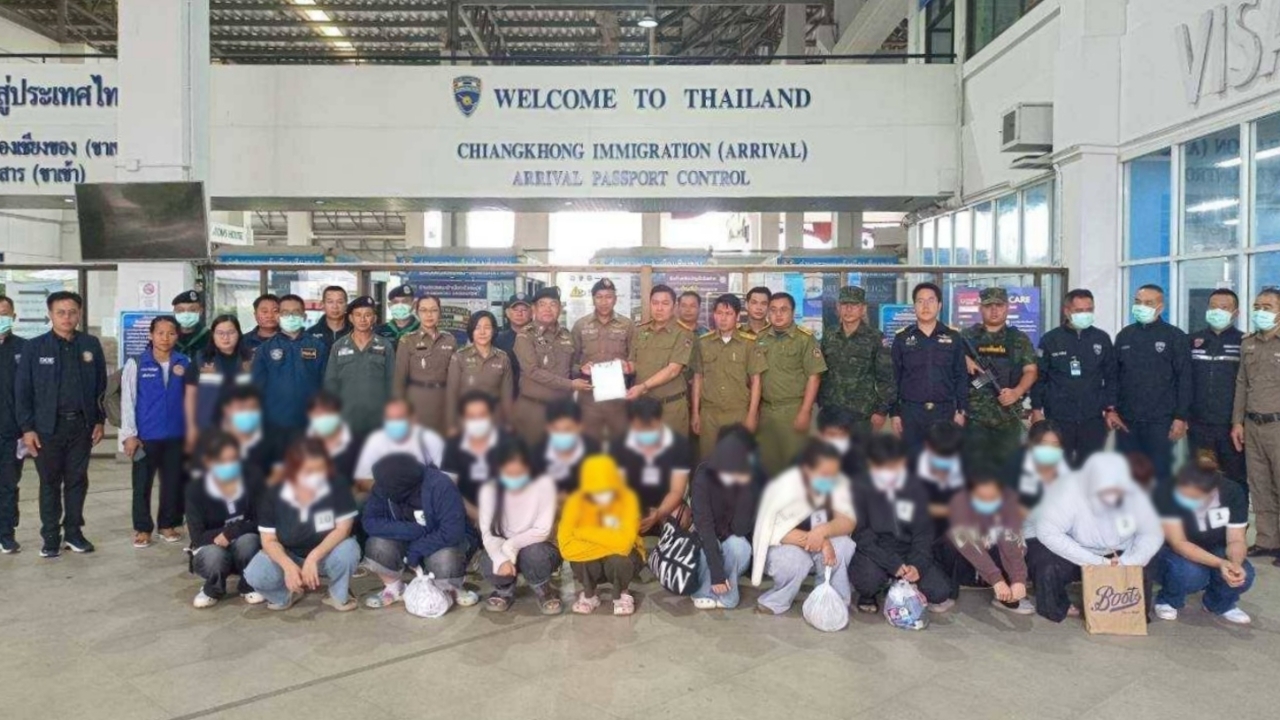
Chiang Saen Immigration Checkpoint received custody of 22 Thai suspects from a call center gang returning from Laos, entering the national referral process.
On 15 Jul 2026, Chiang Saen Immigration Checkpoint coordinated with the Royal Thai Embassy in Vientiane, Laos, reporting that the Luang Namtha Provincial Security Command would send 22 Thai nationals—9 men and 13 women—arrested for telephone fraud charges back to Thailand.
At 10:00 AM on 17 Jul 2026, under the direction of Pol. Lt. Gen. Jiraphop Puridet, Deputy Commissioner of the Royal Thai Police, Pol. Lt. Gen. Phanumas Boonlak, Commander of the Immigration Bureau, Pol. Maj. Gen. Sarawut Khonyai, Commander of Immigration Division 5, Pol. Col. Ekakorn Busababodin, Deputy Commander of Immigration Division 5, Pol. Col. Phattharaphong Inwana, Chief of Chiang Saen Immigration Checkpoint, along with 40 personnel from the checkpoint and related agencies, jointly received 22 Thai nationals returned from Laos.
They entered the National Referral Mechanism (NRM) process at the Thai-Lao Friendship Bridge 4 Immigration Checkpoint in Chiang Khong District, Chiang Rai Province.

Pol. Lt. Gen. Jiraphop set operational policies for Chiang Saen Immigration officers, emphasizing strict adherence to laws and regulations. Screening by relevant agencies found that all 22 Thai nationals—9 men and 13 women—were arrested for telephone fraud under Lao law in the Boten Special Economic Zone, Luang Namtha Province, and had been detained by Lao authorities before being repatriated to Thailand via the Friendship Bridge 4 Immigration Checkpoint.

Preliminary screening by relevant agencies found no signs they were victims of human trafficking. Most claimed they traveled to seek employment after seeing social media job advertisements offering multiple positions with salaries of 18,000 to 25,000 baht per month, free accommodation, and free meals, which they trusted and sought for good welfare. They were arrested before starting work. Additionally, two individuals without Thai nationality were found traveling without legal exit permission and were prosecuted accordingly.

Previously, Chiang Saen Immigration Checkpoint screened travelers to neighboring countries for possible deception into illegal work and potential prosecution by interviewing and providing warnings about unexpected dangers. However, some still believed the job ads promising good income, benefits, comfortable work, good workplaces, accommodations, and meals, leading them to be deceived. In reality, conditions were not as advertised; some faced prosecution, detention, abuse, and nonpayment.
Relevant agencies will continue investigations to identify further offenses among this group. If found involved in online gambling offenses or scamming activities, legal action will proceed until the case is resolved.