

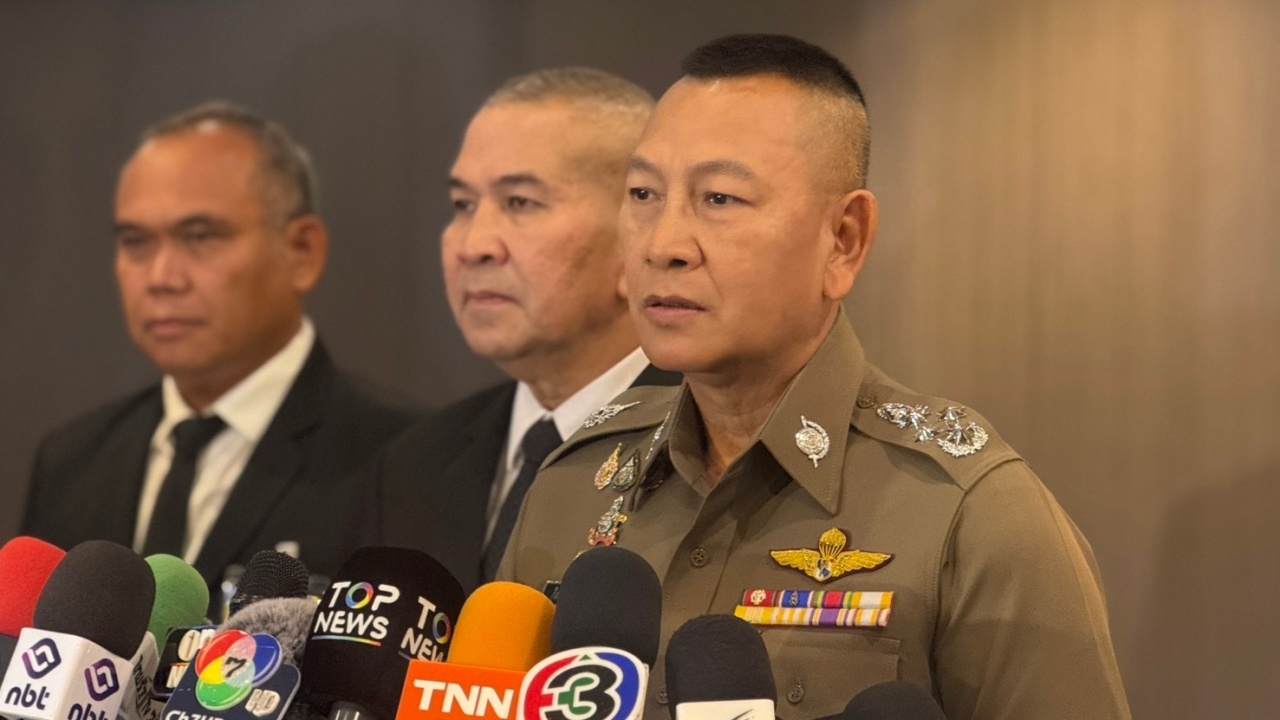
The National Police Chief ordered an investigation after witnesses revealed that 'Ai Pong' was a police informant. He admitted that if true, criminal charges can be filed even after retirement. He pointed out that using informants is standard police practice but does not refer to this case. He emphasized that criminal records cannot be deleted arbitrarily and must go through a committee review following official criteria.
On 4 August 2026, at Government House’s Command Building 1, Police General Kittirat Phanphet, National Police Chief, spoke about the involvement of Huay Yai Police Station officers with Ai Pong, the suspect in the five-murder case. He affirmed that the police are working diligently and asked for understanding of the initial questioning and investigation steps, which expanded to tracking the deceased foreigner and earlier related incidents. The police deeply regret such events occurring. He frankly stated that individuals with cruel behavior like this, even after release, ideally should not be in Thailand, but legal limitations require the police to perform their duties accordingly.
Regarding additional information, he said he inquires daily. Currently, the suspect is under court custody and has not clarified further details on the case. The question remains if there are others involved or any missing persons before. He ordered the Deputy National Police Chief, the Regional Police Chief of Region 2, and the Chonburi Provincial Police Commander to accept and investigate any useful information to expand the inquiry. So far, the discovery of the five bodies aligns with current findings, with investigations continuing carefully and thoroughly. He reiterated that the suspect remains in custody.
When asked about how helpful the four suspects’ testimonies have been, Police General Kittirat said the initial confessions led to finding three more bodies. Details of methods and motives are in the investigation files. Their statements have been somewhat helpful in allowing the police to expand their investigation.
When asked about recent witness claims that Ai Pong had been a police informant, Police General Kittirat said he watched a program revealing this on 3 August and immediately instructed the Thonglor Police Station chief to facilitate complaints from those who provided information or were victimized. The exact location of incidents will determine case allocation, but current actions focus on speed.
Regarding police information, witnesses identified a specific person, so verification is underway. Preliminary talks with Chonburi Provincial Police confirm investigations at Huay Yai Police Station. The timeline goes back about ten years, from 2013 to 2016. They are examining who the individual is. Witnesses say a police officer was involved as an informant. The chief affirmed that if anyone is identified as hiring these groups, they will take decisive action.
The National Police Chief added that if tracing back to the police officer, speculation suggests the individual is likely retired. They are currently having Chonburi Provincial Police investigate which officer is involved.
Regarding next steps if the person is identified, he said verification is necessary as he is the commander. Police have procedures to ensure success. He confirmed he is impartial, willing to listen and verify information. Once verified clearly, action will follow evidence. According to the 2022 Police Act, disciplinary proceedings have time limits, but criminal charges have no statute of limitations, so this will be reviewed further.
Asked about measures if police, active or retired, are involved, Police General Kittirat said frankly that this is sensitive work they prefer not to discuss. Success in crime and security cases—he clarified not this case but general police practice—often involves using informants. He emphasized he was not referring to Ai Pong’s case but general procedures to gather information and plan operations effectively.
He continued that consideration of informant use involves evaluating individuals’ suitability to ensure success in reducing crime, enforcement, and prevention. Senior management at the National Police Office has discussed potential measures to strengthen this area. He confirmed such measures are necessary but did not imply Ai Pong must be used as an informant since they do not know who he worked for. They welcome all information and acknowledge everything reported.
The National Police Chief said, speaking as a police officer, they welcome listening but urge careful analysis of information. They are willing to improve where needed. Senior National Police Office leaders are ready to use information to maintain order. He believes they are committed to working towards success. He stressed that his statements do not mean protecting police who may have used Ai Pong; he does not know the truth but speaks about general work practices.
Asked about the possibility that Ai Pong was a police informant, he said it is possible or not—everything depends on the investigation results, which he has ordered and approved. The outcome will determine criminal and disciplinary consequences. Considering the time frame, the person mentioned by witnesses may be retired, so further review is needed.
Regarding possible deletion of criminal record information, the chief said this is impossible because records are kept by the Criminal Records Registration Division, which uses a centralized technology system managed by the National Police Office for all regions. Prior to these incidents, he had instructed the Forensic Science Office to update criminal record data.
Therefore, deletion would require a committee decision. He believes unauthorized deletion is nearly impossible. It is not easy to delete records arbitrarily. He confirmed that wrongdoers, whether officials or civilians, must be punished. No matter how good intentions might be, deletion is not a condition for erasing data. Only a committee can consider deletion, such as when ordered by a court, following rules and regulations.