

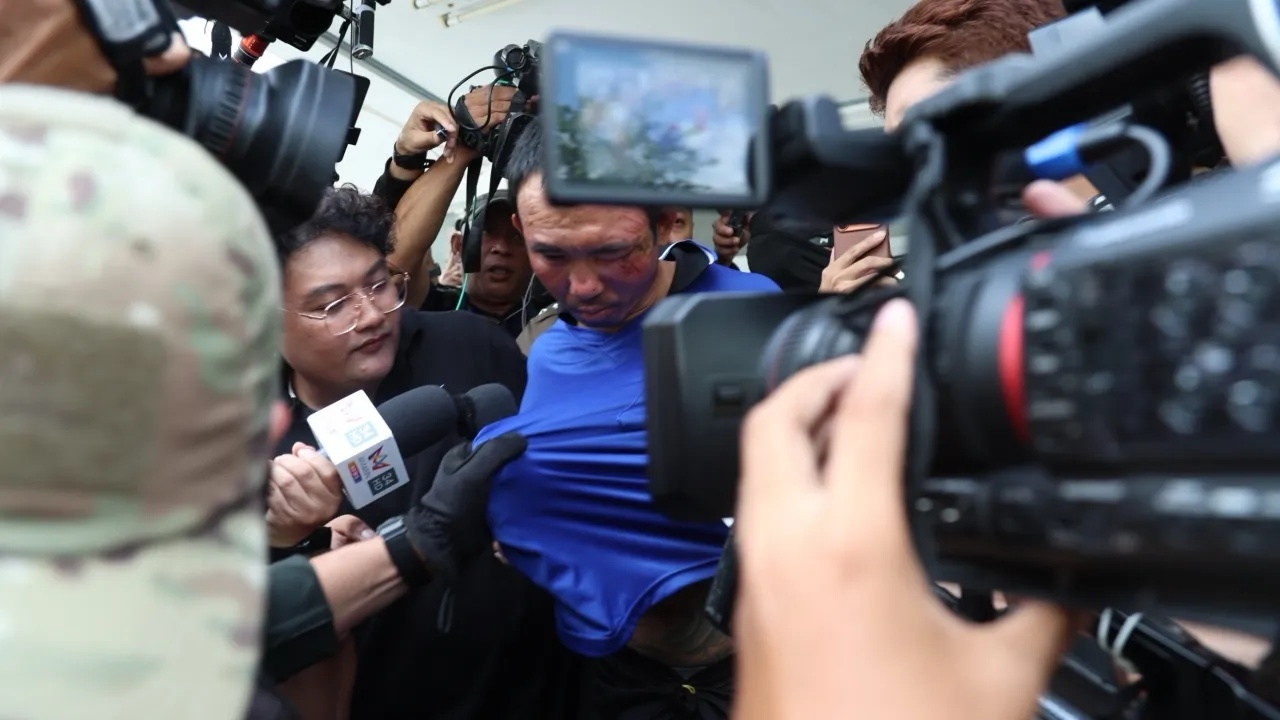
It was revealed that Pong is still adjusting but managing to stay in Pattaya Special Prison. Whether he will be transferred to the supermax prison depends on his behavior. If he exhibits rebelliousness, stubbornness, causes trouble, acts as an influential figure, or poses a security threat, he will not avoid transfer.
On 5 August 2026, reporters from the Ministry of Justice reported on the monitoring measures after the release of Mr. Thana Kerdthong, 43, known as 'Pong.' Thana is a former inmate convicted of attempted murder, firearm offenses, and drug-related crimes, sentenced to 7 years, 7 months, and 25 days. He served the full sentence without any reduction or royal pardon.
Thana was released from Pattaya Special Prison on 5 June 2026. Before his release, under the criteria and procedures for inmates covered by Section 3 of the Act on Measures to Prevent Recidivism in Sexual or Violent Offenses B.E. 2565 (JSOC law), which covers crimes such as murder, sexual offenses, kidnapping, and related offenses under specific sections of the Penal Code.
Before inmates convicted of serious crimes are released, the prison conducts surveys, screening, and risk assessments when the inmate's remaining sentence is between 6 months and 1 year, preparing for release. The prison-level committee then submits monitoring measures to the Department of Corrections and the Section 16 Committee for review, which is: "The Committee for Determining Measures to Prevent Recidivism" This committee consists of the Deputy Permanent Secretary of the Ministry of Justice, appointed by the Permanent Secretary as chair, representatives from the Ministry of Interior, Ministry of Public Health, Department of Probation, Department of Corrections, and the Royal Thai Police. The Director-General appoints officials from the Department of Probation as secretary and up to two assistant secretaries.
The role of the Committee for Determining Measures to Prevent Recidivism (Section 16 Committee) is to review the monitoring measures proposed by the prison-level committee to assess their appropriateness before forwarding them to the public prosecutor. The prosecutor then petitions the court to hold a hearing on the monitoring measures before the inmate's release. In Thana’s case, post-release monitoring requires him to report to the probation office in Chonburi Province for two years. The court did not order electronic monitoring. Thana reported to probation officers only once before committing the serious offense.
Before Thana’s sentence expired, the Department of Corrections assessed his risk following legal procedures. The prison-level committee, including the prison commander, representatives from the probation office, local police, administrative officers, and health officials, jointly reviewed and proposed post-release monitoring measures (JSOC) under Section 22 of the Act. The Section 16 Committee then advised the public prosecutor to petition the court for monitoring orders under Section 24. The Rayong Provincial Court held a hearing on 13 January 2026 and ordered monitoring for two years, prohibiting risky activities, requiring reporting to probation officers every three months, and undergoing rehabilitation as directed by probation officers.
The latest report on Thana’s condition inside Pattaya Special Prison indicates he continues to adjust and manage well, having experienced repeated incarcerations and served over seven years. His security and welfare are managed according to standard procedures, as the Department of Corrections is responsible for all inmates' safety, including those convicted of serious crimes.
As for the possibility of transferring Thana to a high-security or supermax prison, this depends on his behavior while incarcerated. If he displays poor conduct, violates prison discipline, causes concern among other inmates or guards, acts rebelliously, causes trouble, exerts undue influence, attempts escape, or poses a security threat within the prison, only then will he be transferred to a high-security facility.