

Call center gang Tricked a first-year student into a 48-hour video call, claiming involvement in a money laundering case, forcing the victim to deceive their parents for money, resulting in a loss of 2 million baht.
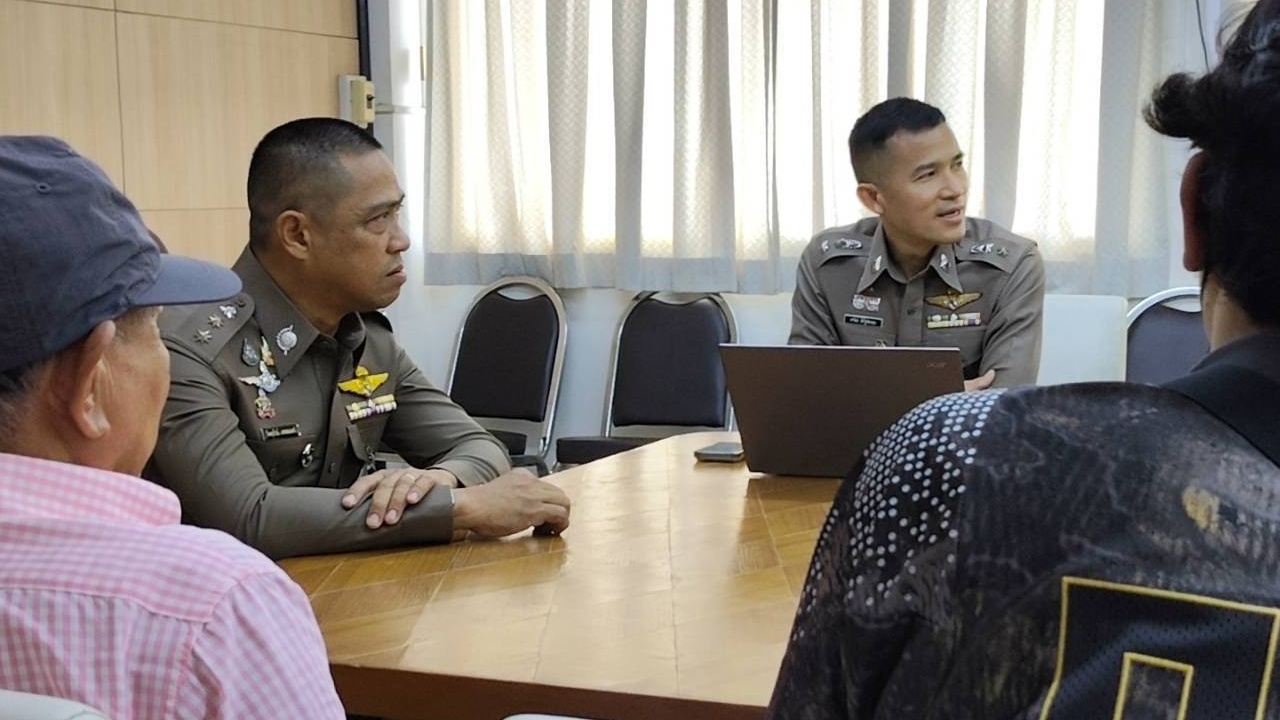
On 26 Aug 2026 GMT+7, reporters at Khlong Luang Police Station in Pathum Thani province reported that Pol. Col. Wisnurak Prommet, Deputy Commander of Pathum Thani Provincial Police (acting superintendent of Khlong Luang Police Station), Pol. Lt. Col. Suchai Saengsong, Deputy Superintendent (Investigation), Pol. Lt. Col. Yosawat Nittiratphatthanakhun, Deputy Superintendent (Investigation), and Pol. Lt. Col. Chalad Homngoen, Deputy Superintendent of Investigation, jointly received and investigated the case of Mr. Trilek, 65, from Phetchaburi province, who with relatives brought Mr. A (alias), 18, a first-year university student, who was forced by a call center gang to maintain a 48-hour video call. The gang tricked the victim’s parents into transferring money twice, totaling 2 million baht in cash, into the victim’s account. The criminals then forced the victim to withdraw cash at a bank in a shopping mall in Rangsit and deliver 1 million baht each time to the gang outside a condominium in Khlong Luang. Before handing over the cash, the gang even sent a secret code to the victim.
Mr. A (alias), the victim and a first-year student, recounted that on Monday, 17 Aug, he had just woken up when he received a phone call. A male voice claimed to be an AIS employee, stating someone had used his ID card number to open a phone line and promote an online gambling website. He was told he could file a report at Nang Rong Police Station in Buriram province to prove his innocence or do it online. He replied that he was a student and not available, so the caller said he would transfer the call for an online report.
He said he was shocked and confused but agreed. After the transfer, he briefly saw a police officer’s face. The man claiming to be a police officer asked what he wanted to report. He explained he wanted to report that someone had used his ID card number to open a phone line for an online gambling website. Then the caller pretended to check his record, playing police radio sounds, and said his ID was connected to a money laundering case involving an online gambling website.
Then the caller spoke threateningly, pressuring him: “Are you sure you didn’t really open the phone line?” He said he would forward the case to his subordinate, then added him on Line and called via FaceTime, turning on the camera. On camera, he saw a police officer in uniform holding a white sheet of paper, threatening him about what he had done. He explained that someone had used his ID card to open a phone line for gambling, which had been reported. The officer asked him to write a timeline detailing what he had done, what he had registered for, and his transactions, then send it to them. He complied.
They then said they needed to verify his financial transactions because the person caught was connected to senior police, bank officials, and that there was a confidential warrant not to be shared with parents or others, or he would face punishment. The warrant included his name and a photo of a suspect they said they had caught.
Mr. A continued that they showed him a bank passbook stacked up, blaming various people. They asked if anyone could help him if he was innocent, saying the money in the account came from strange sources, with someone promising to share it with him. They seemed to fear the family wouldn’t have money and might help him. Frightened, he was told to call his father to transfer money, claiming he had won a scholarship to study in Australia. He said they spoke with a woman who claimed to be a secretary posing as a teacher and sent documents with university seals for him to show his parents, saying 5 million baht was needed as a deposit for the university to see. After his parents transferred 1 million baht on 17 Aug, he was told to withdraw the money and hand it over at the condominium.
His parents believed him. After delivering the money, a tall, dark-skinned man about 30 years old collected it, taking a photo of Mr. A without showing his face outside a condominium near a 7-Eleven. After the first payment, he was told to wait for a second 1 million baht installment. They spoke normally about what he was doing. After the second transfer on 18 Aug, he withdrew the cash and handed it to the same man, totaling 2 million baht.
After that, he asked what to do next, but the gang hung up and disappeared. Then he realized he had been scammed and felt very upset. He called his father, who did not blame him but said it was an experience and the money was lost. He had seen news about scams targeting students recently, but the threats frightened him as a new student living alone without parents, so he panicked and believed them. When withdrawing large sums, bank staff did not question him. When delivering the money, the gang gave a secret code and told him to say “Pando” three times, to which the gang simply replied “Yes.”
Mr. Trilek, the victim’s uncle assigned by the father, said the incident should not have happened because his nephew was only 18 and new to Bangkok, so caution is necessary. Fathers should talk to their children about why they spend large amounts and ask before giving large sums. He warned guardians to thoroughly inquire when large withdrawals occur.
He added that the father thought his son had really received a scholarship, so he transferred the money. The father himself was once an exchange student and did not suspect anything, thinking only of his son's future. This serves as a cautionary tale.
Pol. Col. Wisnurak Prommet, Deputy Commander of Pathum Thani Provincial Police and acting superintendent of Khlong Luang Police Station, said the behavior remains similar: scaring victims by impersonating government officials, claiming the victim was involved in money laundering, drug trafficking, or illegal shipments, creating the impression of criminal involvement.
Then, impostors posing as officials trick victims and use tactics to have them contact their guardians, claiming scholarships and asking fathers to transfer fees. The method has shifted to having someone collect cash directly instead of via bank counters. He warned guardians to verify scholarships or fees directly with educational institutions before rushing to pay, and to be cautious since these sums are significant.
He also noted that bank staff should be alert when customers withdraw large sums while on continuous video calls. The criminals keep the victim on the line constantly to prevent them from consulting others such as police, guardians, or friends, as these calls expose the scam. The gang maintains video calls for over 48 hours to control the victim.
Therefore, when officials see a customer on a video call withdrawing large sums, they should be suspicious and ask questions. Staff should suggest the customer pause the call and consider contacting police or parents to discuss the matter, as this is a common scam pattern.
Pol. Col. Wisnurak added that the police receive frequent reports because Pathum Thani has many universities, and parents hope for scholarships. However, the scholarship process is never conducted this way. Guardians should always verify with institutions, not through the student. The police have specialists familiar with these cases and speak at university orientations to inform students.
He encouraged students to learn about these scam tactics as a form of self-protection, noting that younger generations often do not watch TV news and may miss such warnings. Instead, information is shared through web pages, TikTok, and short video clips, which the police also produce. They aim to improve outreach to reach youth who get news via apps rather than traditional media.