

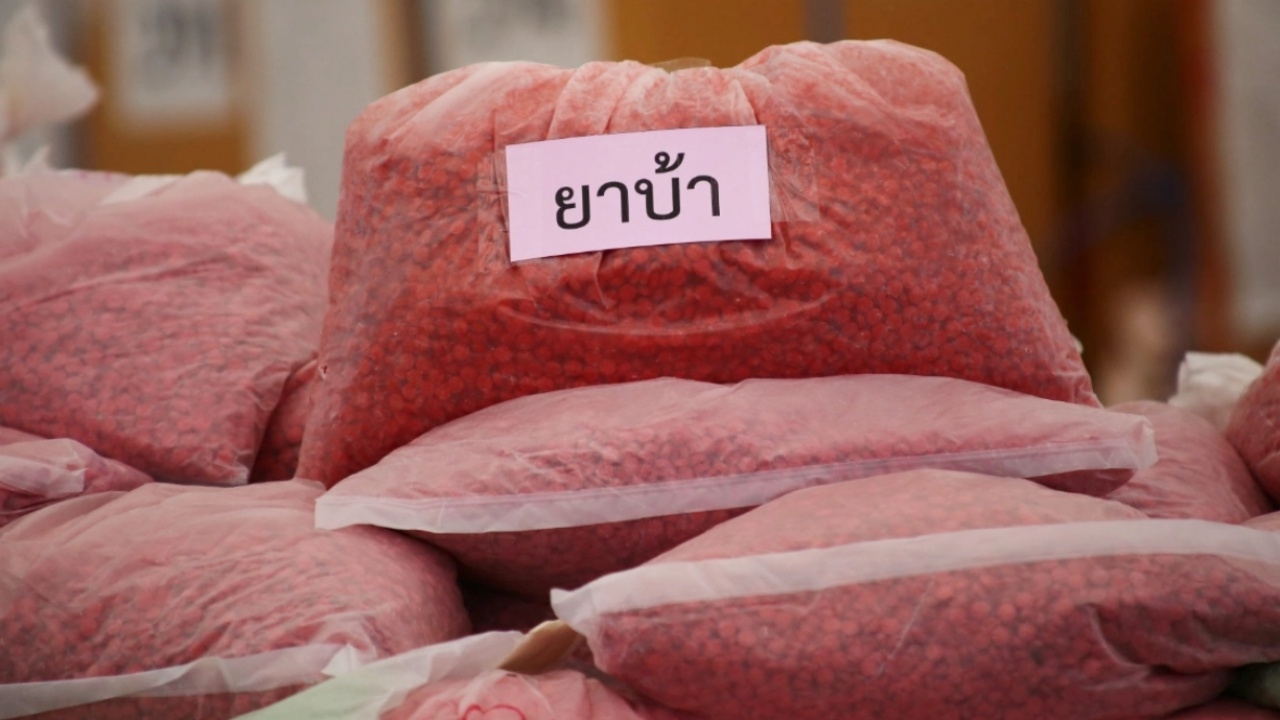
***News Illustration***
The Supreme Court sentenced five drug traffickers to death for their involvement in a 2014 drug case, in which they laundered money through car sales in a neighboring country. The court ruled their actions posed a severe threat to national security.
At 09:30 on 7 Sep 2026 GMT+7, in courtroom 609 of the Criminal Court, the Supreme Court announced its verdict in a case where the Special Prosecutor for Narcotics Cases 10 prosecuted defendants Ms. Piyachat Watcharadilok (Defendant 1), Mr. Kritipong Utensut (Defendant 2), Mr. Amphon Himman (Defendant 3), Mr. Sombun Nitiamornrat (Defendant 4), and Mr. Korakot Kanthachai (Defendant 5) for conspiracy to commit narcotics offenses, supporting narcotics offenders, conspiracy by agreement of two or more persons to commit money laundering, and jointly laundering money.
In 2019, the Narcotics Suppression Bureau arrested a financial group linked to drug trafficking along the Thai-Myanmar-Laos border, seizing multiple assets including four houses with land valued at approximately 76 million baht, two condominiums worth about 3.3 million baht, three cars such as a Toyota Alphard, Porsche Panamera, and Mercedes-Benz 220D, and four motorcycles including Harley-Davidson and Honda NSX models valued at about 2.2 million baht, plus other assets worth around 5 million baht, totaling about 100 million baht. The arrests occurred at a luxury village on Ratchada-Ramindra Road in Bangkok. The five defendants planned and divided tasks: Defendant 1 was responsible for receiving and storing narcotics and distributing them to buyers, with Defendants 2 and 3 following Defendant 1’s orders and handling financial transactions. Defendants 4 and 5 supported by laundering proceeds from drug sales through a car trading business in Myanmar to conceal and obscure the origin, effectively altering the assets linked to the crime.
All five defendants denied the charges. The trial court found Defendants 1-5 guilty as charged and sentenced them to death. The appellate narcotics court upheld the sentences for Defendants 2-5. The defendants appealed to the Supreme Court with permission.
The Supreme Court Narcotics Division reviewed the case and accepted the facts as established: In February 2014, the fugitives involved in the drug trafficking case possessed 5.2 million methamphetamine pills for distribution. As there was no opposing party in Defendant 1's case, the court sentenced Defendant 1 to death as per the appellate court's judgment.
The issue was whether Defendants 2-5 were guilty as the appellate court ruled. The court found that witnesses' testimony sufficiently proved Defendants 2 and 3 conspired with Defendant 1 in narcotics offenses; Defendant 4 was guilty of money laundering; Defendant 5 opened bank accounts to receive drug sale proceeds from Defendant 1. This was a major drug trafficking operation attempting to conceal financial trails and protect criminal proceeds. The Supreme Court agreed with the appellate court's ruling. The defendants conspired with fugitives to possess 5.2 million methamphetamine pills for distribution. If spread into communities, this would cause crime, economic, social, and public health harm, constituting a serious threat to national security.
The court ruled that the five defendants committed the same offense violating multiple laws. They were convicted of jointly distributing methamphetamine, impacting national security, which carries the harshest penalty. The court sentenced them to death as per the appellate court's judgment.