

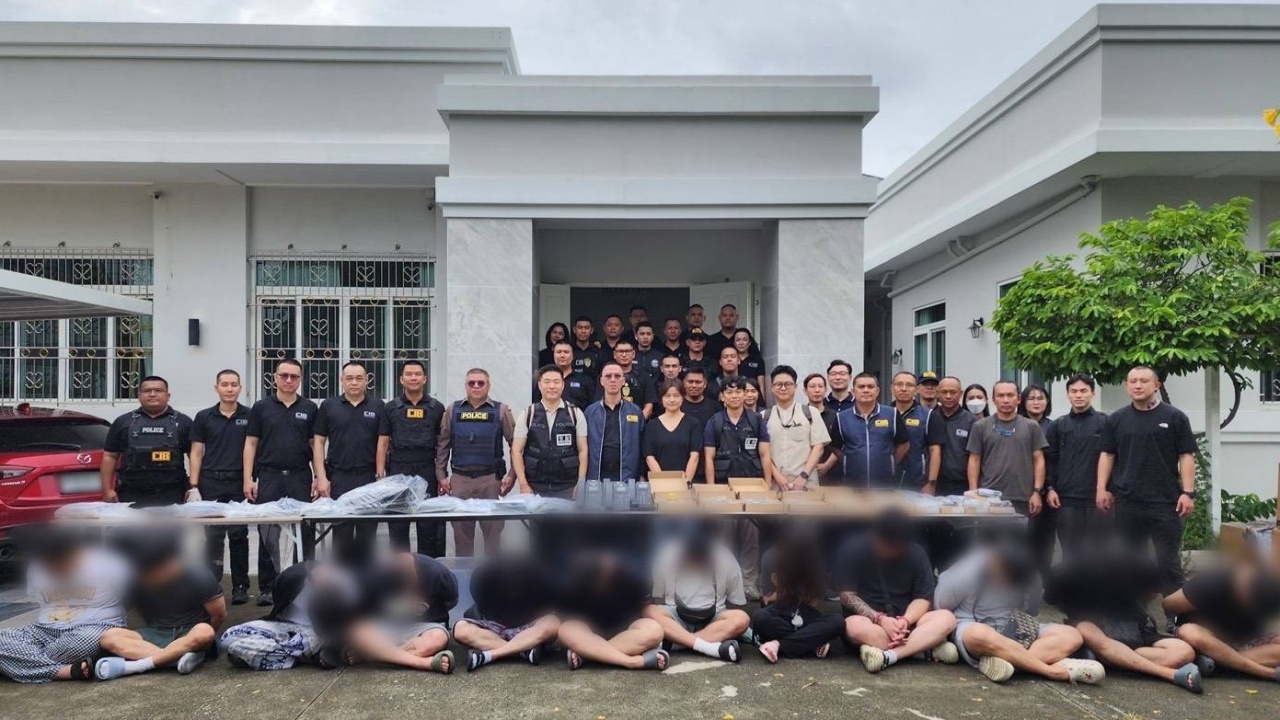
The Cybercrime Division, together with the Consular Section of the South Korean Embassy, launched the "Breaking Chain 2025" operation to dismantle a call center gang in the Bang Phli area. They arrested 12 South Koreans and 1 Chinese national, seizing 51 VoIP devices, 20 mobile phones, victim lists of more than 1,000 South Koreans, and forged documents claiming to be official letters from South Korean prosecutors.
At 10:40 a.m. on 8 Sep 2026 GMT+7, at the press conference room on the 2nd floor of Pracha Arak Building, the Cybercrime Suppression Division (CSD) held a joint press briefing with the Consular Section of the Embassy of the Republic of Korea in Thailand. They announced the results of the "Breaking Chain 2025" operation, targeting South Korean and Chinese online criminals who had illegally entered and were hiding in Thailand. Present were Police Lieutenant General Nattasak Chaowanase, Commander of the CSD; Police Colonel Watcharapant Siripak, Deputy Commander; officers from CSD Unit 1 led by Police Lieutenant Colonel Ekaphon Saengarun; and Mr. Dohan Kim, a South Korean representative.
The operation resulted in the search and arrest of 13 online criminals—12 South Koreans and 1 Chinese—hiding in Thailand. Officials seized evidence from a residence in Bang Phli, Samut Prakan Province, which had been converted into an office and served as the gang’s call center base. Inside were desks crowded with 51 VoIP telephone devices, 20 mobile phones, internet routers, and computers. Screens displayed scripts used to deceive victims.

Additionally, printed scripts were found scattered on computer desks, alongside lists containing over 1,000 South Korean victims’ names and phone numbers, as well as forged documents claiming to be official letters from South Korean prosecutors.
Upon questioning, the suspects confessed that all detected scripts were templates used for communicating and deceiving victims online. The group made internet-based calls to victims in South Korea, impersonating prosecutors or government officials, threatening them with legal cases and coercing money transfers.
This gang operated from 7:00 a.m. to 2:00 p.m. Thai time and took weekends off to coincide with South Korea’s official working hours, making their impersonations more credible. They had been in Thailand for about six months and changed their base every two months to avoid arrest.

Furthermore, verification of identity documents and work permits revealed all suspects had entered Thailand illegally and were working without authorization.
Police confirmed that all victims of this gang were South Korean nationals, with no links found to victims within Thailand. Authorities plan to extend investigations by analyzing computers, mobile phones, and seized equipment, then sharing information with South Korean authorities to pursue related networks in South Korea.
Police believe the gang has victimized many people, as this marks the third crackdown on South Korean call center gangs in Thailand. So far, 41 suspects have been arrested, with damages amounting to tens of billions of won.