

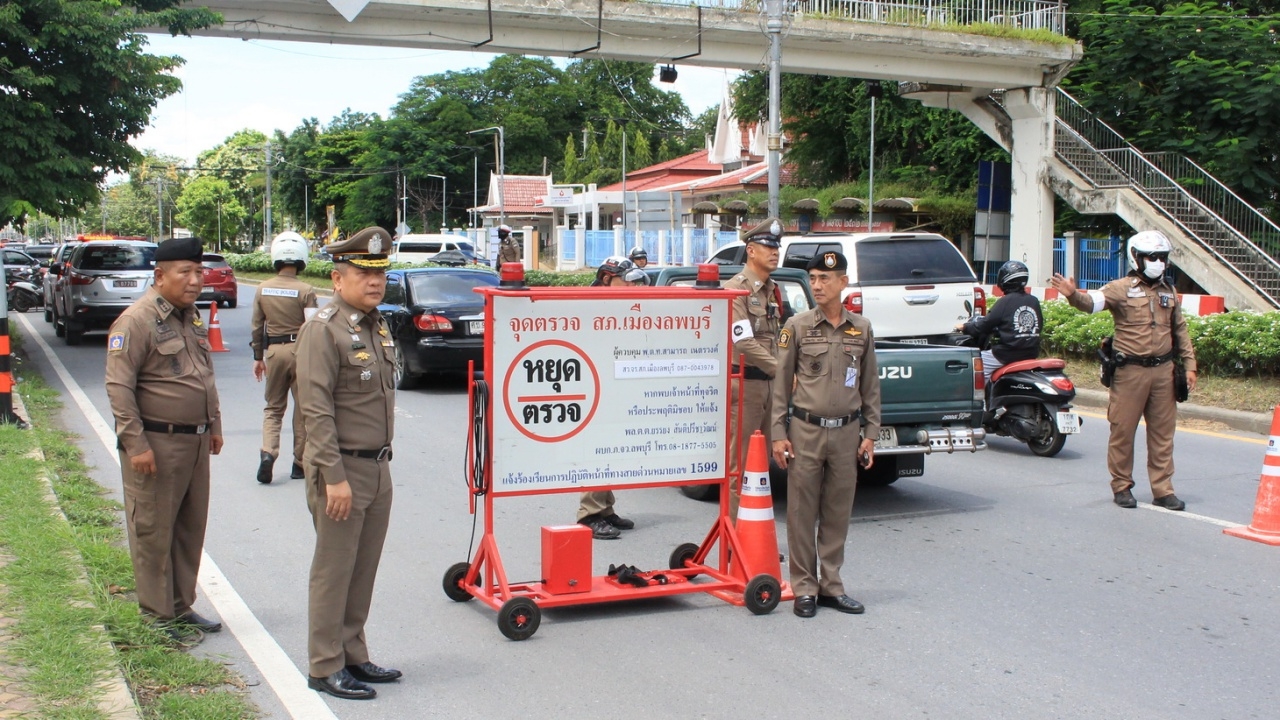
The Lopburi Police Chief called an urgent meeting with traffic police after social media nicknamed the area "Two Thousand Baht City." He instructed officers to use discretion when issuing warnings, prioritizing traffic facilitation before applying progressive law enforcement as per the policy of incoming Police Chief Somrarn Nualma. He confirmed no subordinates were found involved in corruption, intimidation, or extortion, and emphasized continued strict crackdowns on modified vehicles with loud exhausts to maintain public order.
At 10:30 a.m. on 21 September 2026, Pol. Maj. Gen. Yanyong Santipreechawat, Lopburi Provincial Police Chief, urgently convened a meeting of station commanders, deputy traffic chiefs, traffic inspectors, and related traffic officials at the Lopburi Provincial Police Headquarters conference room in Mueang Lopburi District. The meeting aimed to provide guidance on traffic operations following social media posts by certain pages that labeled Lopburi traffic police as "Two Thousand Baht City." Comments varied, with some agreeing and others criticizing the fines as excessive and noting Lopburi as the only province without lenient warnings.

The Lopburi Police Chief directed traffic officers to adhere to principles of facilitating traffic flow, especially during rush hours, while enforcing criminal and traffic laws—including the Land Traffic Act and Motor Vehicle Act—to ensure public safety. He noted a reduction in illegal street racing and loud modified exhausts disturbing residents. Preliminary investigations found police actions were within legal boundaries, with no evidence of corruption, extortion, or intimidation. He advised officers to apply discretion appropriately when imposing fines.
Those involved in traffic duties were reminded to understand clearly that offenders committing acts causing public nuisance, risk, or crime—such as vehicle modifications, loud exhausts, lowered racing cars, reckless driving, street racing, or lacking license plates—must still face strict arrest and legal action to maintain social order.

For minor offenses like not carrying vehicle registration copies, lacking a driver’s license, or not wearing a helmet, officers should use discretion to issue warnings or light fines depending on the case. This approach follows guidance from incoming Police Chief Somrarn Nualma, who advocates starting with warnings and escalating enforcement as needed. After the meeting, officials inspected traffic operations to align enforcement with economic conditions and public hardship. Traffic police were instructed to use discretion in fines and supervisors were urged to strictly oversee enforcement. It was noted that many citizens understand police duties, while some lawbreakers may express dissatisfaction.

Citizens using any type of vehicle who witness corruption, extortion, or bribery by officers are encouraged to report directly to supervisors. Nevertheless, traffic checkpoints have contributed to reducing crime, drug problems, and illegal goods, enhancing public safety and decreasing road accident losses compared to previous periods.