

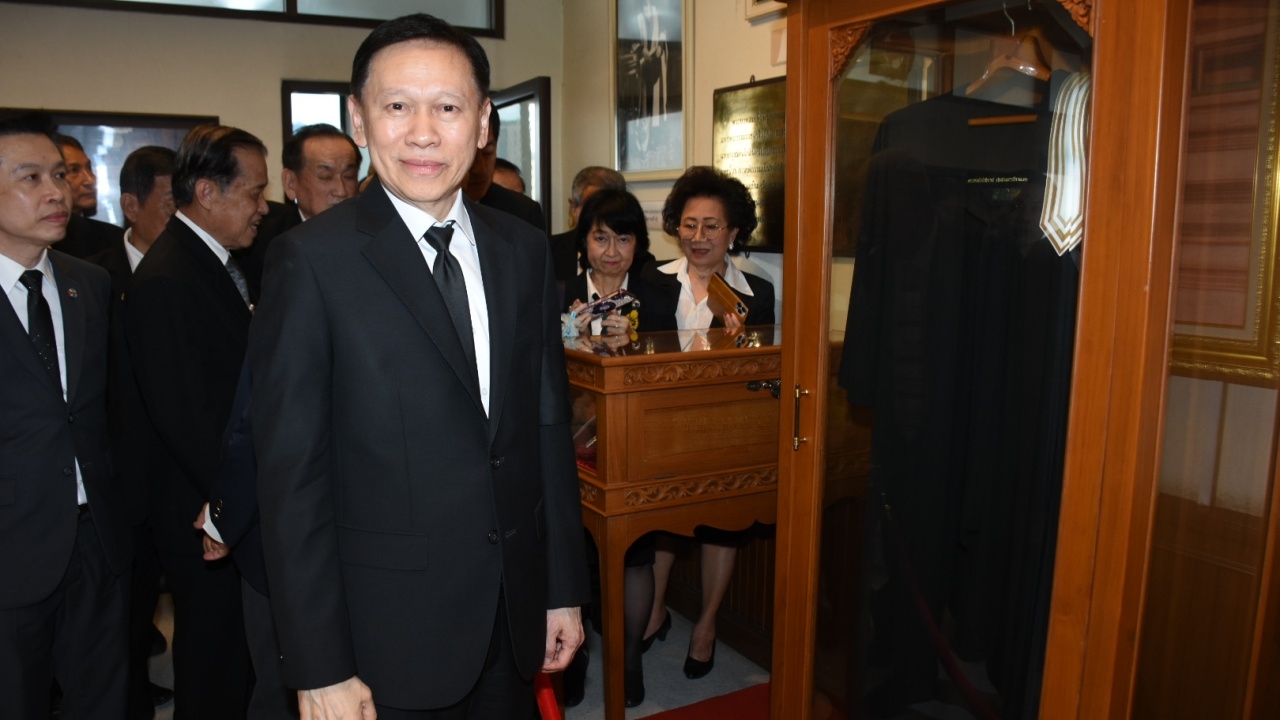
The Civil Court has opened the "Civil Court Museum," featuring an exhibition of the royal duties of His Majesty the King when he was Crown Prince Vajiralongkorn, who made a royal visit to open the Civil Court building, marking a significant event in the court's history.
At the Civil Court on Ratchadapisek Road at 10:30 a.m. on 23 September, Mr. Thani Singnath, Chief Justice of the Civil Court, presided over the opening of the Civil Court Museum on the 6th floor of the Civil Court building. Mr. Thanathat Thaengthong, Deputy Chief Justice, Mr. Tiwakorn Panawansombat, Deputy Chief Justice, Mr. Anek Wetchasart, Deputy Chief Justice, along with other court executives, attended the ceremony.

Mr. Thani Singnath, Chief Justice of the Civil Court, said the museum collects the history of the Civil Court, starting from when King Chulalongkorn (King Rama V) toured Europe and received marble lion statues, which were then given to Prince Ratchaburidirekrit, who later donated the pair to the Civil Court. These marble lions are now displayed in the hall on the 2nd floor of the Civil Court and have been symbolic companions of the court from its early days to the present.

The Chief Justice stated that His Majesty King Vajiralongkorn (Rama X), when he was Crown Prince Vajiralongkorn, officiated the opening of the Civil Court building on 7 September 1992. Upon assuming office as Chief Justice, he saw the royal chair where His Majesty sat and the judicial robe worn during the opening ceremony. He wished to establish a museum to honor this legacy, collecting important historical documents and landmark cases from past to present, allowing students and the public to study the Civil Court's history.

The Civil Court Museum is organized into four main sections: the royal duties of His Majesty the King during his tenure as Crown Prince when opening the Civil Court building, a pivotal event in the court's history; the history and development of the Civil Court from past to present, reflecting its roles, missions, and changes over time; innovations and service models introduced to improve public access and justice efficiency, demonstrating the adoption of new technologies and concepts; and finally, displays of old documents, materials, and equipment, which serve as historical evidence of the court's past operations, valuable for study and preservation. Visitors will learn about the court's development, understand the judiciary's role, and see the commitment to advancing justice for the public.