

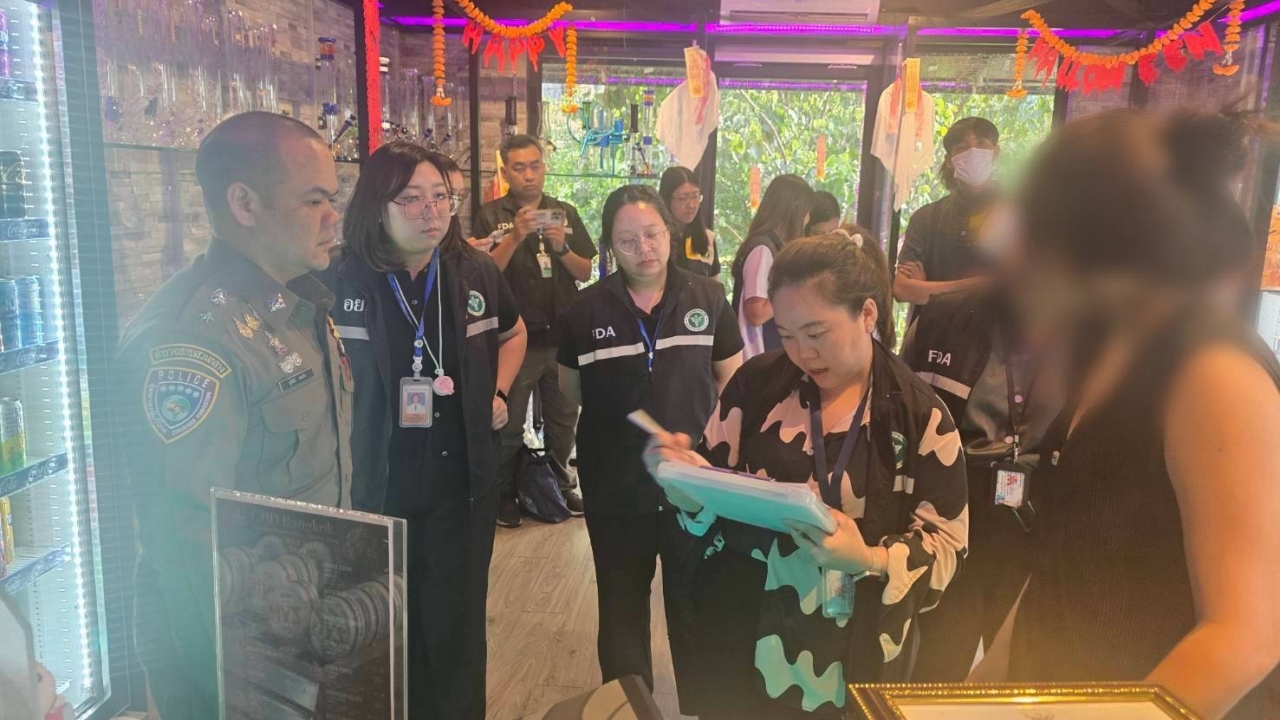
The Police Consumer Protection Division (PCPD), together with relevant agencies, raided a location selling cannabis-infused jelly, confiscating 90 pieces without FDA approval, valued at 50,000 baht, after a family consumed the product and suffered severe convulsions and seizures.
On 1 Nov 2026 GMT+7, Pol. Lt. Gen. Natsak Chawanachai, Commander of the Crime Suppression Division, ordered Pol. Maj. Gen. Kritsaporn Panprong, Commander of the Consumer Protection Division, Pol. Col. Patthanapong Sripinpraw, Deputy Commander of the Consumer Protection Division, Pol. Col. Weerapong Klai Thong, Head of Division 4, Consumer Protection Division, and Pol. Lt. Surasee Kongthap, Officer of Division 4, to lead a joint operation with pharmacist Suphattra Boonserm, Secretary of the Food and Drug Administration (FDA), Dr. Pichet Phuedkhundot, Deputy Secretary of the FDA, pharmacist Morakot Jarunwatthana, expert on product safety and efficacy, and the Department of Thai Traditional and Alternative Medicine, led by Dr. Nopphongsathorn Pokpermdee, Director-General, to raid a commercial building at 188/25 Rongmuang 5 Alley, Wang Mai Subdistrict, Pathumwan District, Bangkok, after identifying it as a cannabis-infused jelly distribution point.
This raid was prompted by social media reports of a family of three in Khlung District, Chanthaburi Province, who consumed cannabis-infused snacks and experienced severe symptoms including convulsions, seizures, and loss of consciousness, requiring ventilator support. Their 2-year-old son appeared lethargic, likely having ingested a smaller amount. All were urgently hospitalized for treatment.
Since the jelly found at the incident site contained cannabis, the Division 4 PCPD police and the FDA investigated and traced a cannabis jelly food supplier in the Banthat Thong area. The packaging resembled common children's jelly snacks to attract consumers, and sales were advertised via various social media platforms.

Subsequently, police from Division 4 PCPD, together with the FDA and the Department of Thai Traditional and Alternative Medicine, obtained a Pathumwan District Court search warrant and inspected the building. They found Ms. Saowalak Namwongsa, 26, who led the search. On the second floor, there was a shop selling cannabis and cannabis flower clusters, along with cannabis-infused jelly products lacking Thai labels and food registration numbers (FDA approval), totaling 90 pieces worth 50,000 baht. These items were seized as evidence.
When questioned, Ms. Saowalak admitted she was an employee responsible for selling cannabis-infused jelly at 80 baht per piece. The product was sold to the general public and interested foreign tourists and had been on sale for about one year.
Initially, these actions are violations under the Thai Traditional Medical Wisdom Protection and Promotion Act B.E. 2542 (1999), specifically selling controlled herbal products without authorization and producing and selling food products with incorrect labeling. The case was forwarded to investigators of Division 4 PCPD for prosecution, and further efforts are underway to identify the shop owner and other involved parties. Samples of the seized products were sent to the Department of Medical Sciences, Ministry of Public Health, for laboratory analysis. If THC and CBD levels exceed regulated limits, additional charges will be filed.
Pharmacist Suphattra stated that the FDA is concerned for consumers, especially children, who should be prohibited from consuming cannabis-infused food products. Adults wishing to consume such products should only purchase items approved by the FDA. Approved products must contain tetrahydrocannabinol (THC) within safe limits—not exceeding 1.6 milligrams per bottle/box/package. The FDA strictly reviews product formulas and requires labeling to include consumption recommendations for safety, such as “Do not consume more than two units (bottles/boxes/packages) per day,” along with clear warnings on the label: “Children, pregnant women, and breastfeeding women should not consume,” “Stop consumption immediately if abnormal symptoms occur,” and “Individuals allergic or sensitive to THC or CBD should exercise caution.”

She warned parents to supervise their children and prevent them from consuming illegally produced and imported cannabis-infused jelly without food registration numbers, as it poses health risks. Consumers should check for the absence of Thai labels and the presence of cannabis-related images or words, such as cannabis leaf images or terms like “Cannabis,” “CA,” or “THC” on packaging. Such products should not be consumed.
Dr. Nopphongsathorn said the Ministry of Public Health has assigned the Department of Thai Traditional and Alternative Medicine to monitor and enforce cannabis herbal product laws at cannabis-selling shops, especially in major tourist areas with large numbers of visitors. The focus is on preventing health problems, misuse of cannabis, restricting access by children and youth, and controlling product quality and service standards as required by law. The Ministry prioritizes the health of residents and tourists and urges all operators to strictly comply with relevant laws to ensure safety and confidence for everyone visiting Thailand's popular destinations. Operations are not only law enforcement but also a clear message of the Ministry's concern to prevent legal violations that could harm public health and welfare.
Meanwhile, Pol. Lt. Gen. Natsak said that recently, some individuals have misused cannabis by mixing it into jellies, cookies, and various foods to induce intoxication and euphoria. Incorporating cannabis into colorful, appealing snacks may make them easily accessible to children, youth, and the public, leading to unintentional consumption and resulting harm as reported. He urged parents and the public to be vigilant about cannabis-infused snacks potentially spreading in communities or near schools, which could lead to unknowing consumption by children and youth. Police will continue to crack down and prosecute offenders fully. The public is encouraged to report violations via the PCPD hotline 1135 or the PCPD Consumer Warning Facebook page.