

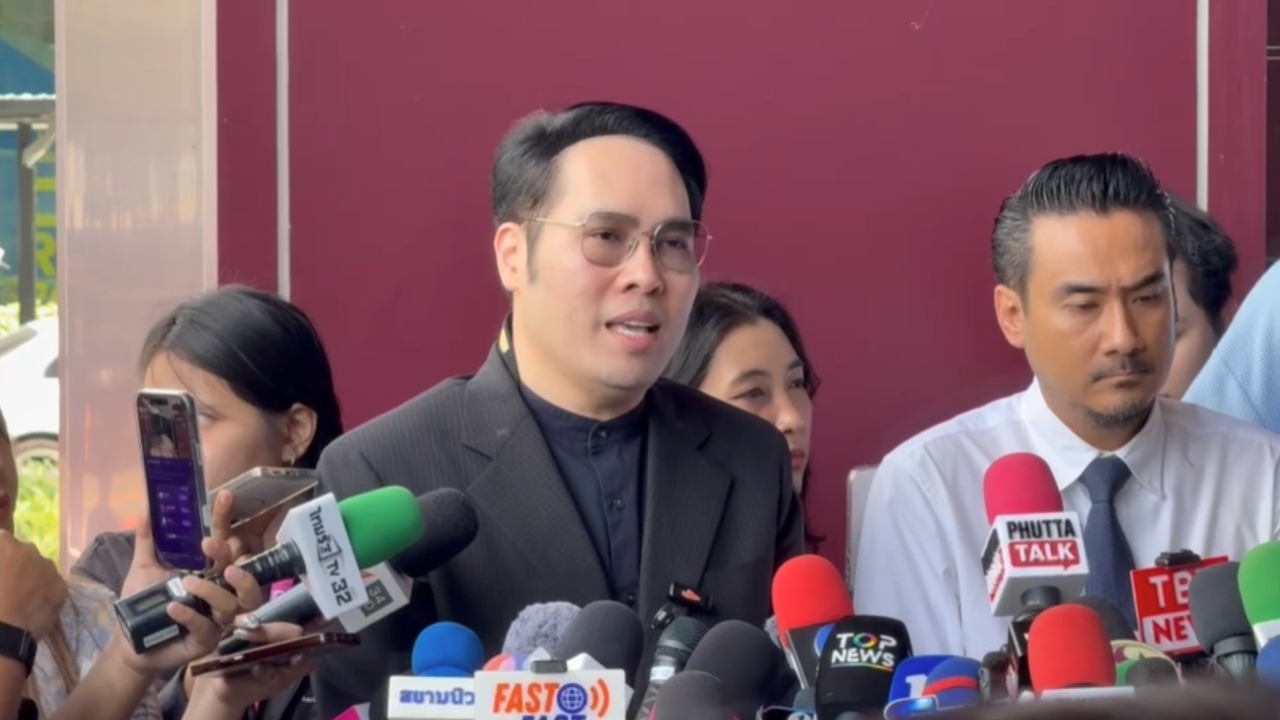
Buddh Apiwan provided information to the Economic Crime Suppression Division as a witness, admitting he transferred over 800,000 baht in donations to Boom Panadda's foundation. Lawyer James revealed that even if only one person confesses, anyone identified through the financial trail must face prosecution.
At 12:40 p.m. on 3 November 2026, Mr. Buddh Apiwan, a well-known news host, along with Mr. Nitithorn Kaewto, or Lawyer James, spoke to reporters after testifying as a witness regarding donations amounting to 800,000 baht to the Good Deeds Foundation. The testimony lasted over two hours. Buddh said he came as a witness concerning his roughly five donations in 2025, which supported flood relief and southern border aid. He said he informed officials he was only there to testify, not to file charges. He confirmed his donations were made to assist causes publicly announced by Boom Panadda Wongpudi.
Regarding whether his donations met the intended purpose, Buddh admitted as a donor that he found the financial trail strange and irregular. Seeing news reports raised many suspicions, but he could not say exactly how the funds were used. Previously, he did not verify the foundation's use of funds, as he believed most donors wouldn't expect such issues or that Boom Panadda would come to this point.
As for the money used to build a shrine, Buddh believes the police will compare the donation amounts during the transition between 2025 and 2026 with the foundation's financial records to determine any connections.
When asked if he would accept that some donations were used as announced but some went to building the shrine or other purposes, Buddh said, "No one would be okay with that. I think no celebrities planning to donate would accept their intended aid for the public turning into private villas, land purchases, or buying gold or luxury brands."
He wants a thorough investigation for clarity—not just for himself but for everyone—because the word 'foundation' implies transparency and accountability. He hopes this case will prompt other foundations to disclose how their funds are used and whether they meet their stated objectives. He believes this is not only Boom Panadda's case but likely others as well. Personally, having donated, he has no grievance; if wrongdoing occurred, those responsible must face consequences.

Buddh affirmed his donations were personal gifts intended to help, not for tax deductions. Besides Boom Panadda's foundation, he has also donated to another man's foundation, about which he has already provided information to the DSI. However, the amount given to Boom Panadda's foundation was greater. He admitted that going forward, he will think more carefully before donating again.
Recalling why he started donating, Buddh said he saw posts in the media and, having previously met Boom Panadda, trusted her good intentions and decided to transfer funds. He never discussed donation amounts personally in advance and only spoke with her after the controversy arose. He also recalled that Boom Panadda once called to share personal difficulties before the issue became public.
Lawyer Nitithorn, or James, added that this case hinges solely on the financial trail. Claims of lack of intent are irrelevant because even if a criminal case is dismissed, civil liability still applies. The key is determining whether a criminal offense occurred, which will clarify the overall case.
Regarding Boom Panadda's husband, Got Atip, confessing on her behalf, the lawyer said he could not comment on whether there was collusion, as he does not know the facts. Even if one person confesses, anyone linked by the financial trail must face criminal responsibility.