

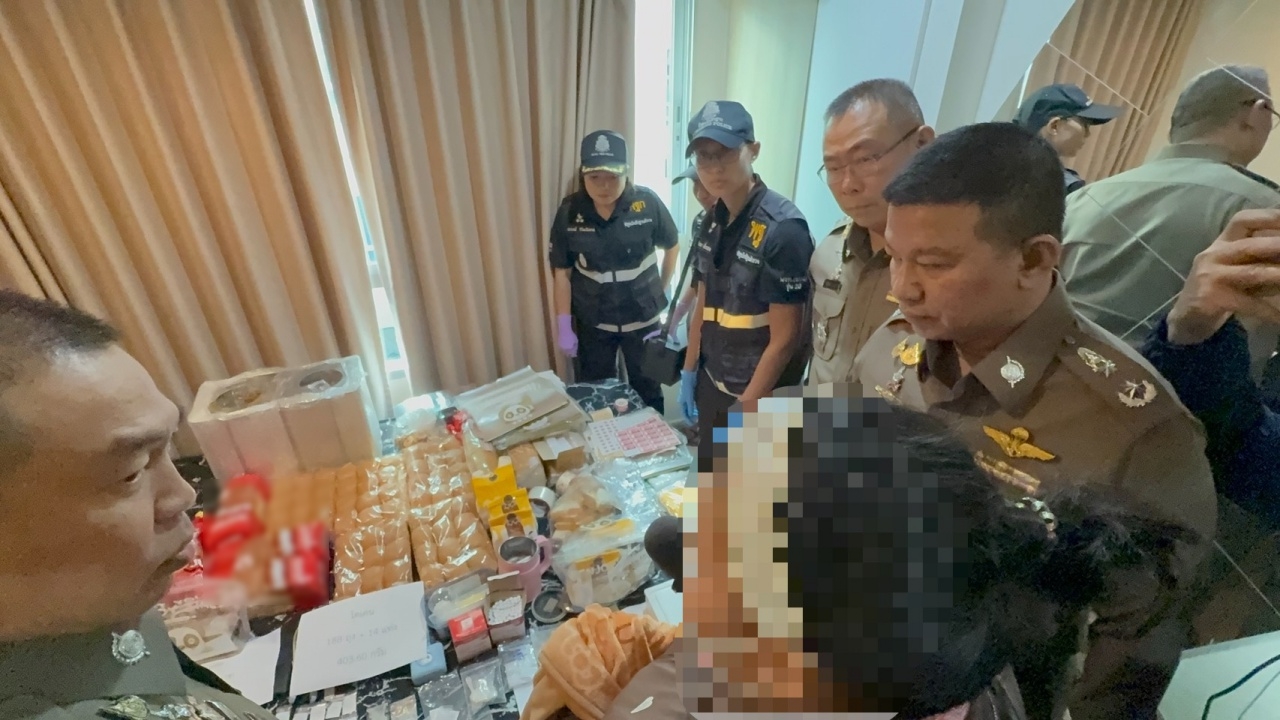
Unveiling a criminal drug trafficking network using bread as a cover, Deputy Chief "Jor" analyzed linked behaviors and ordered an investigation tracing the delivery routes until discovering bread with holes concealing drugs, disguised for delivery to customers.
Uncovering a drug trafficking network using bread as a cover, large quantities were ordered to a condominium area, then left to rot with ants swarming. Meanwhile, suspicious activity was noted with people rotating in and out of the room and bread being delivered via riders about 20 times daily. Deputy Chief "Jor" analyzed the pattern and ordered an investigative team to trace the deliveries, eventually finding bread with holes concealing drugs, disguised for customer delivery. This led to the "Tracing Spoiled Bread" operation, resulting in the arrest of two key suspects and seizure of over 2 million baht worth of cocaine, causing one suspect to tremble and faint, nearly needing hospital care.
On 9 Nov 2026, under the direction of Police General Samran Nualma, Commissioner of Police, Police General Itthipol Achariyapradit, Deputy Commissioner, Police Lieutenant General Krisada Kanchanalongkorn, Assistant Commissioner, and Police Lieutenant General Siam Boonsom, Metropolitan Police Chief, Police Major General Teeradej Thammasuthi, Deputy Chief of Metropolitan Police responsible for narcotics, along with Police Major General Nitiwat Saensing, Commander of Division 5, Police Colonel Worapot Krajang, Deputy Commander of Metropolitan Police Narcotics Division, and Police Colonel Chaiwat Pradapthai, Superintendent of Phra Khanong Police Station, led officers from the Narcotics Suppression Center, Phra Khanong Investigation Unit, to crack down on a drug trafficking network using bread to disguise shipments via riders, arresting three suspects as follows.

1. Ms. Chanyanut (surname withheld) or Ming, 29 years old, originally from Kud Ruea Kham Subdistrict, Wanorn Niwat District, Sakon Nakhon Province.
She is charged with "selling Category 1 narcotics (ice or methamphetamine) with possession for sale without permission, causing public spread; selling Category 2 narcotics (cocaine) with possession for sale without permission, causing public spread; and selling Category 2 psychotropic substances (ketamine) with possession for sale without permission, causing public spread."
She was arrested at a well-known condominium in the On Nut area, Suan Luang Subdistrict, Suan Luang District, Bangkok.
2. Ms. Jariyawadee (surname withheld) or Tangmong, 25 years old, Thai nationality, originally from Srisuk Subdistrict, Srinarong District, Surin Province.
She is charged with "selling Category 2 narcotics (cocaine) with possession for sale without permission, causing public spread."
She was arrested at a well-known condominium in the Ramkhamhaeng area, Suan Luang Subdistrict, Suan Luang District, Bangkok.
3. Ms. Naritsara (surname withheld), 43 years old, originally from Bang Mod Subdistrict, Thung Khru District, Bangkok. She is charged with "possession of Category 2 narcotics (cocaine) without permission."
She was arrested inside a soi on Sukhumvit Road, Khlong Tan Nuea Subdistrict, Watthana District, Bangkok.
Seized evidence
1. Cocaine, 400 packets, totaling approximately 650 grams (valued around 2 million baht).
2. Various types of bread in large quantities.
3. Packaging materials such as paper, bags, and stickers for bread in large quantities.
4. Scales and numerous drug sale equipment.
5. Large amounts of white chalk sticks (used to mix with cocaine to reduce grade and price).
6. One drug mixing grinder.
7. Four mobile phones (found to have average daily contact for sales of about 20 transactions).
The Metropolitan Narcotics Suppression Center received a tip from an informant that at a condominium in Huamark area, a group exhibited suspicious behavior by ordering large amounts of bread but leaving it unused, allowing it to rot and attract ants, with this pattern repeating multiple times.
After receiving the tip, Police Major General Teeradej Thammasuthi analyzed the unusual criminal plan and suspected that these individuals were not intending to sell bread but possibly using it as a tool to conceal illegal activities. He ordered officers from the Metropolitan Narcotics Suppression Center to investigate the tip.
Investigation revealed that those linked to the mysterious bread boxes lived in the condominium rooms, with suspicious behavior including people rotating shifts entering and exiting the rooms. While people were inside, bread was continuously handed over to hired delivery riders, averaging about 20 deliveries daily.
Subsequently, Police Lieutenant General Siam Boonsom ordered Police Major General Teeradej Thammasuthi and 20 officers from the Metropolitan Narcotics Suppression Center to launch the "Tracing Spoiled Bread" operation, tracking suspicious bread sent via rider services all the way to the final recipients.
When officers inspected and unwrapped the bread, they found it spoiled and emitting a foul odor. Upon closer examination, the bread had holes in the center with drugs hidden inside.
This discovery revealed that the bread being ordered and delivered continuously was used as a tool to disguise drug trafficking by the condominium community's drug network.
Officers from the Metropolitan Narcotics Suppression Center kept surveillance and traced the suspicious bread deliveries continuously, investigating movements and linking behaviors of those involved until they identified the trafficking pattern, leading to the "Spoiled Bread Network" bust and arresting three suspects.
The first suspect was arrested while a rider delivered cocaine-hidden bread on Sukhumvit Road. Further investigation identified Ms. Chanyanut, 29, as the top distributor in this operation, running a delivery office at a condominium in On Nut area. Officers followed and found her distributing drug-laced bread to multiple riders. Police immediately raided and arrested her; upon entering her room, she trembled and collapsed, appearing mentally disturbed, requiring officers to comfort her for some time.
A search of Ms. Chanyanut's room uncovered large amounts of cocaine divided into packets totaling about 550 grams, valued at roughly 1.6 million baht, along with bread and equipment for concealing and packaging drugs in large quantities. Notably, cocaine was graded into three types: 1. "Sao" meaning compressed cocaine pills; 2. "Cocaine 95" meaning pure cocaine without additives; and 3. "Cocaine 85" meaning cocaine mixed with 15% white chalk powder. Around 100,000 baht in cash was also found.
During the search and investigation at Ms. Chanyanut's condominium, Ms. Jariyawadee, 25, tried to spy on the officers. When suspected, she fled, but officers tracked her down. A search of her condominium room in Ramkhamhaeng uncovered a similar bread drug distribution base, with about 110 grams of cocaine and bread prepared for client delivery. She was arrested immediately.

Further investigation revealed the suspects operated as an organized group with divided roles and shifts, trained in the same method of hiding drugs inside bread, then disguised for delivery via riders to end customers. This caused innocent riders to unknowingly become drug transporters. The network exploited delivery services as a drug trafficking route, putting honest riders at risk of unintentional involvement. Erroneous deliveries to uninvolved citizens could cause harm or unwarranted drug investigations.
At arrest, Ms. Chanyanut confessed to all charges, stating, "I have worked in cocaine trafficking hidden in bread like this for two years and have never been caught before. The ringleader is a Nigerian living abroad who commands all operations. My role is to receive the drugs, pack and hide them in bread before delivery to customers. We rotate shifts every 15 days. I am willing to fully cooperate with authorities and apologize to the riders endangered by my actions."
Authorities are proceeding with legal steps and continuing to investigate those connected to the network.
Police Major General Teeradej Thammasuthi, Deputy Metropolitan Police Spokesperson, warned riders and the public to be cautious of drug trafficking scams using delivery services to hide crimes, which may cause honest workers to become unwitting tools. Anyone noticing suspicious items or behavior should report to the Metropolitan Narcotics Suppression Center or call the emergency hotline 191, available 24/7.
"Do not let honest livelihoods become a channel for drug trafficking operations."