

The Yamfao Paendin Foundation is preparing to file a counter-complaint against lawyer Tum for false reporting and defamation of the military. It emphasized that if he wants to be a good person, he should investigate foundations established by government agencies instead.
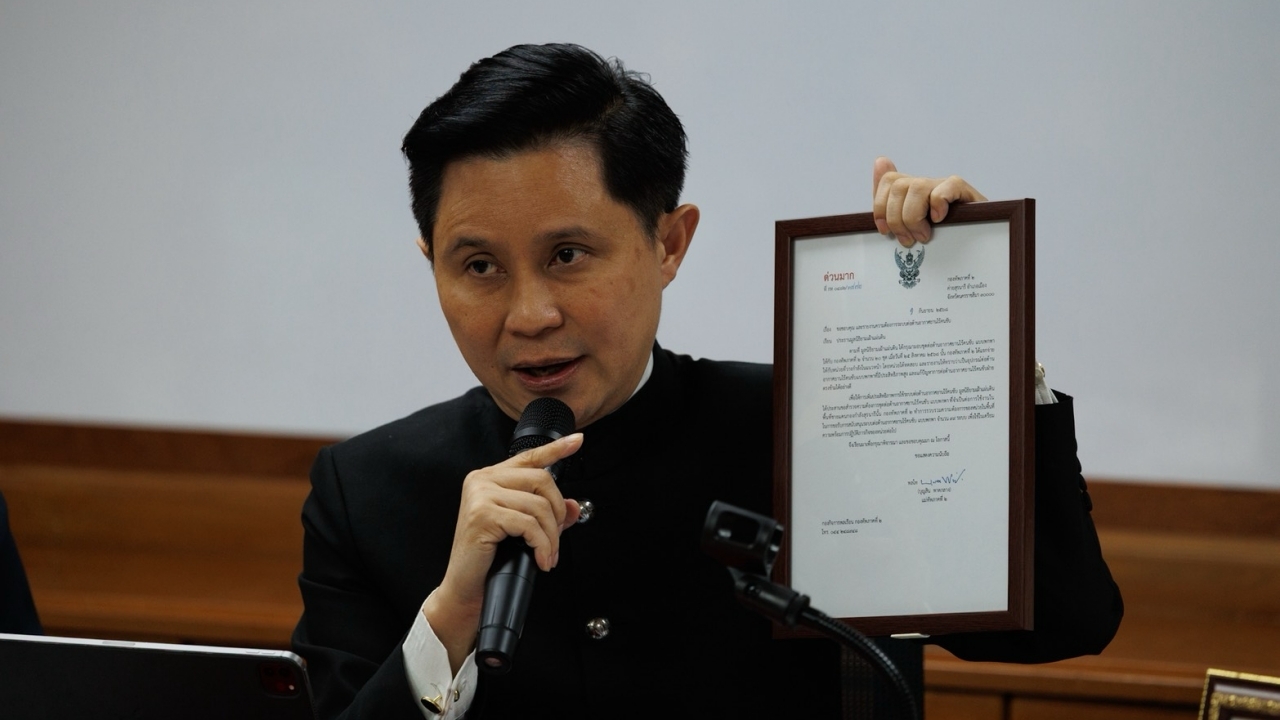
At 3:30 p.m. on 10 Nov 2026 at Ban Phra Athit, Yamfao Paendin Foundation on Phra Athit Road, Chana Songkhram Subdistrict, Phra Nakhon District, Bangkok, Mr. Panthep Puapongphan, chairman of the foundation, along with Ms. Ajara Thongkhao, the foundation’s lawyer, and Mr. Komsan Phokong, foundation advisor, held a press conference responding to lawyer Sittha Bhiabangkaew, or lawyer Tum. They announced plans to file a counter-complaint for false reporting and defamation that harms national security after lawyer Tum filed a police complaint with the Central Investigation Police alleging misuse of the foundation’s funds to purchase military equipment at suspiciously high prices.
Mr. Panthep said that lawyer Tum’s suspicions and accusations are defamatory against the foundation and the military, based on false information and constitute false reporting to officials. The foundation will gather evidence to proceed with criminal charges for false reporting and defamation and will inform the media when legal actions commence.

Regarding the prices and details lawyer Tum revealed, these were information the foundation itself had disclosed. Each time military equipment was delivered to the military, officers inspected the specifications and signed for receipt, with photos as evidence and quality certification documents. If the equipment lacked effectiveness, the military would not request additional procurement.
The procurement process is not arbitrarily decided by the foundation but follows the military’s needs, specifying product types, specifications, requirements, and sourcing. Particularly for equipment critical to soldiers’ lives and sovereignty protection, details cannot be publicly disclosed to avoid revealing military information to adversaries.
Furthermore, military equipment procurement requires approval from the Deputy Permanent Secretary and consent from the Permanent Secretary of the Ministry of Defense. Thus, purchases cannot be made arbitrarily. Deliveries include documentation specifying sender, recipient, and receipt details, with the foundation acting only as the payer.
Regarding allegations that the foundation deceives the military or provides ineffective equipment made from PVC pipes, Mr. Panthep firmly denied this. All procured equipment is made from carbon fiber, not PVC pipes as claimed by lawyer Tum. He urged lawyer Tum to verify whether the foundation’s delivered drones have blue bases, affirming there are none. He criticized using a single photo to cast doubt and defame both the foundation and the military.
Additionally, about five days before the conflict with Cambodia, the military urgently requested such equipment, including military equipment developed with Thai software. All procurements complied with military requests; the foundation did not arbitrarily determine quantities. While the first batch was imported from China, their use in patrols was compromised by remote control shutdowns, allowing enemies to detect locations. Consequently, the foundation developed applications and control systems domestically, integrating Thai-made components, preventing adversaries from detecting GPS or radio signals of drone controllers. This led to successful drone bombings and further military requests for drones. Some equipment defects were acknowledged due to urgent production and limited training of personnel. The foundation established a drone repair center to service and return equipment to the military.

However, these drones were not developed for general photography but for surveillance, patrol, and monitoring areas day and night. They feature thermal imaging cameras, long-range surveillance cameras, and laser rangefinders capable of measuring distances up to 5 kilometers to identify target coordinates without approaching targets closely.
Regarding price doubts, Mr. Panthep explained that while individual drone components may seem affordable, the drone's value lies in integrating all equipment with specialized control systems—including flight control, cameras, positioning, communications, and custom firmware—delivering a specialized unmanned aerial system designed for specific missions with domestic development potential. The foundation provides a one-year warranty and emphasized all purchases have receipts and that financial statements have been submitted fully to the Revenue Department and registrar.
Ms. Ajara stated that before raising suspicions or investigating any agency, one must know their own identity first before bullying others. Fundraising projects are created for specific objectives, and received funds are used only for those projects. At year-end, tax filings are submitted to the Revenue Department, documents to Phra Nakhon District Office, which reports to the Department of Provincial Administration, Ministry of Interior, the registrar authorizing the foundation’s establishment.
Regarding requests for the Ministry of Interior to verify whether fundraising complies with the law, Ms. Ajara explained that the 1944 Fundraising Act aims to control fraudsters causing public trouble by falsely claiming government agency affiliation. It does not regulate legal entities. Thus, if the Department of Provincial Administration prosecutes the foundation, the foundation will respond under Section 157. The department is aware if the foundation has committed any wrongdoing and would have issued warnings from the start if violations occurred.
Mr. Komsan urged lawyer Tum to investigate foundations established temporarily by government agencies instead of only pursuing legal entities that contribute positively to the country. He suggested that if lawyer Tum truly wants to be a good person, he should act on this urgently, though he believes lawyer Tum is hesitant because he knows what would happen.